



Conversational commerce has moved far beyond simple chat support. With the rise of advanced AI chatbots and multimodal assistants, businesses are now letting these systems handle real transactions—everything from recommending products to completing payments and scheduling deliveries. This shift opens massive opportunities, but it also changes how performance is measured. Traditional customer service metrics alone cannot capture the value of a revenue-generating chatbot.
To understand whether your AI-driven commerce channel is working, you need a clear measurement framework. This means tracking the right KPIs across sales, engagement, customer experience, and operational efficiency. Below, we break down the essential metrics to monitor once your chatbot evolves from a support tool into a revenue engine.
1. Conversion Rate: The Core Indicator of Transaction Success
Once a chatbot begins handling transactions, the most important KPI is conversion rate. This metric tells you how effectively your AI assistant moves customers from conversation to purchase.
Why it matters:
Unlike traditional e-commerce funnels, conversational flows are nonlinear. Shoppers may explore multiple products, ask detailed questions, request comparisons, or even negotiate pricing. A high conversion rate indicates that the chatbot can manage these dynamic interactions while still guiding users toward the checkout.
What to track:
-
Overall conversion rate (completed purchases / total conversations with purchase intent)
-
Product-specific conversion rate (helps identify which product categories perform best in conversational environments)
-
Channel-based conversions (WhatsApp, Messenger, in-app chat, website widget, SMS)
If conversion rate is low, it may suggest unclear responses, poor product recommendations, or friction during the payment process.

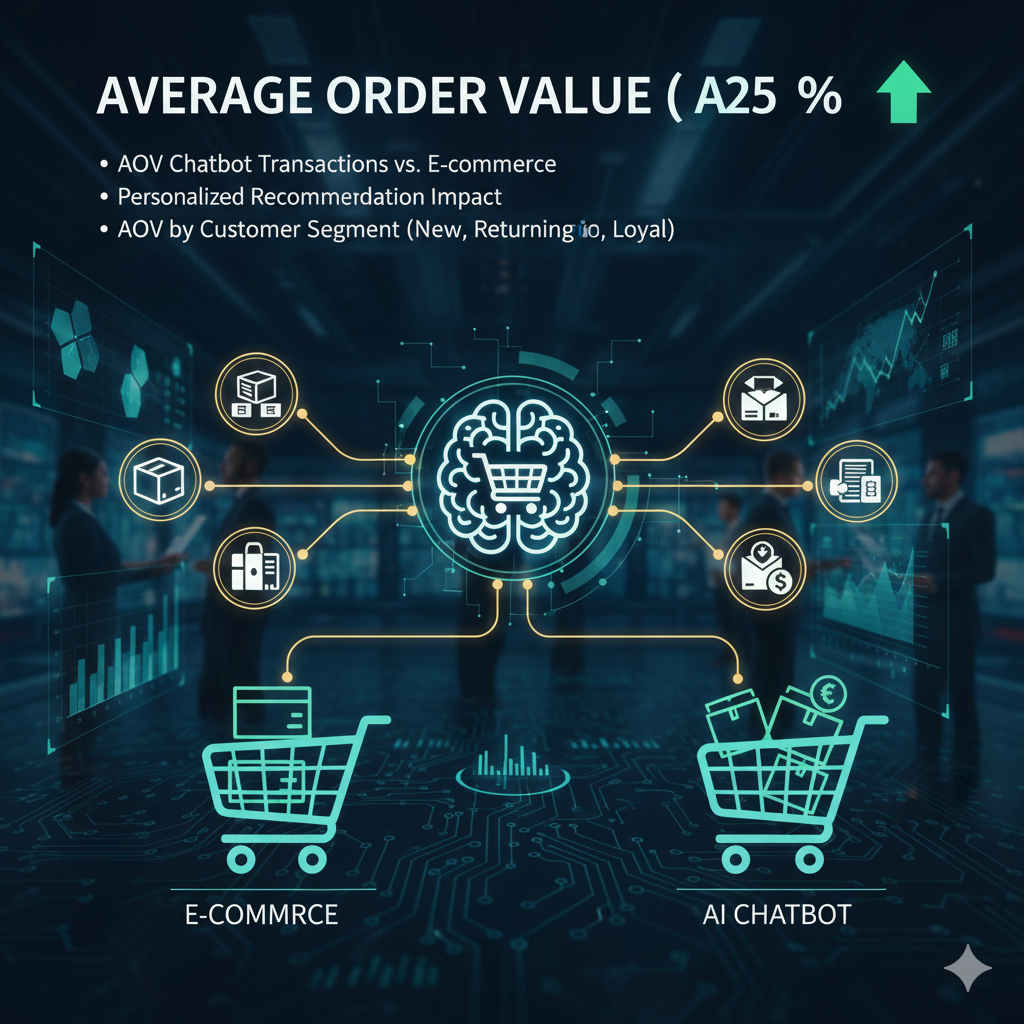
2. Average Order Value (AOV): Measuring Upsell and Cross-Sell Effectiveness
AI chatbots excel at personalizing recommendations in real time. A key metric to evaluate the quality of these recommendations is the average order value (AOV).
Why it matters:
A chatbot that intelligently suggests add-ons, bundles, or premium upgrades can lift transaction value without increasing customer acquisition costs.
What to monitor:
-
AOV for chatbot-driven transactions vs. normal e-commerce AOV
-
Impact of personalized recommendations on order value
-
AOV by customer segment (new visitors, returning users, loyal customers)
If AOV increases after introducing a chatbot, it is a strong indicator that the AI is successfully identifying customer needs and recommending relevant items.
3. Cart Completion Rate: Identifying Transaction Drop-Off Points
Even the most advanced chatbots can lose sales if the checkout experience isn’t smooth. Tracking cart completion rate helps determine how many shoppers follow through after adding items.
Why it matters:
A chatbot might successfully recommend products, but payment failures, poor handoffs, or unclear next steps can cause abandonment.
Key insights to track:
-
Abandoned cart rate within chat
-
Reasons for drop-off (payment friction, missing info, confusion)
-
Time to checkout completion
This metric often exposes technical or UX barriers that are not visible through traditional customer service analytics.

4. Engagement Rate: Understanding How Customers Interact with the Chatbot
Engagement is the foundation of conversational commerce. A chatbot must keep users interested long enough to drive them toward a purchase.
Why it matters:
If user engagement is low, even the most intelligent AI system will struggle to generate revenue.
What to measure:
-
Messages per session
-
Average session duration
-
Percentage of users who ask follow-up questions
-
Rate of product exploration (how many product cards or options users view)
A highly engaged user is far more likely to convert. Conversely, short, abrupt sessions may signal irrelevant responses, confusing UI elements, or a lack of personalization.

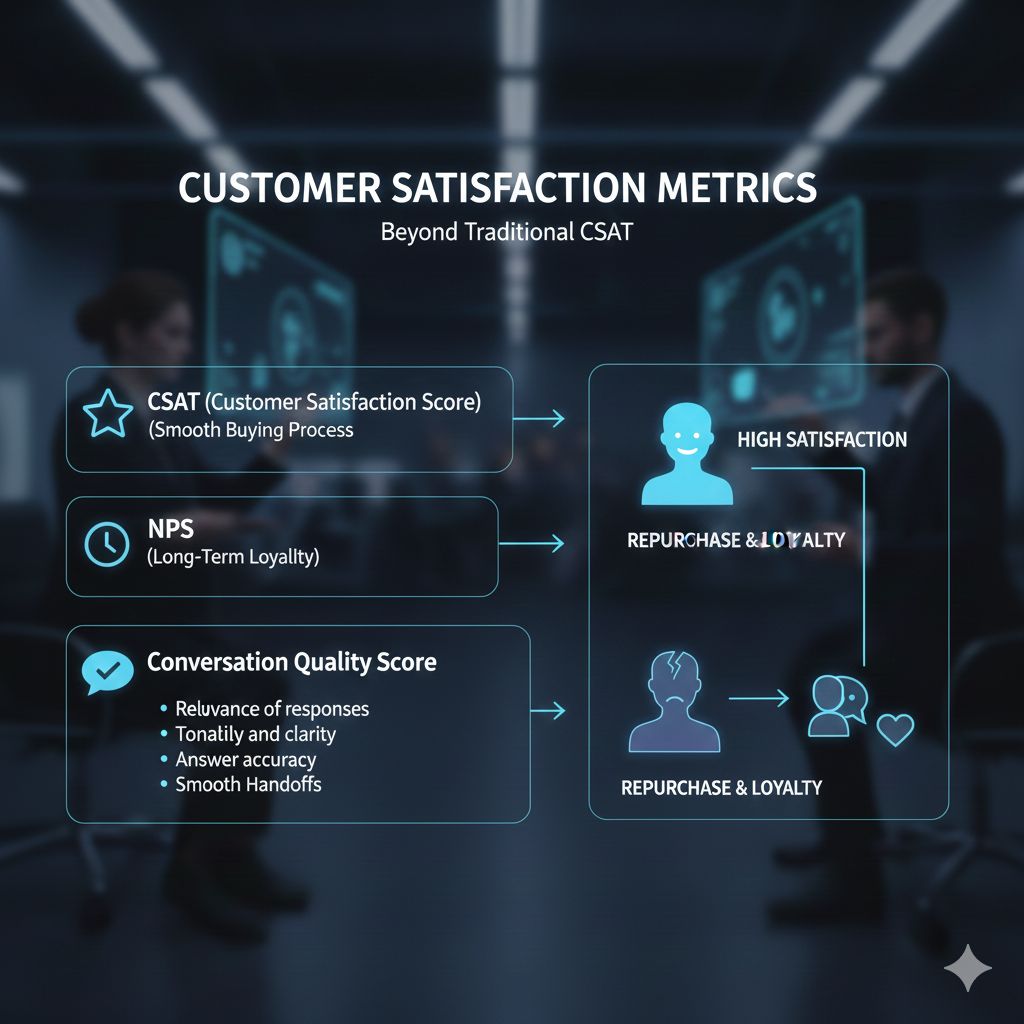
5. Customer Satisfaction Metrics: Beyond Traditional CSAT
Customer satisfaction is no longer just about resolving problems quickly. In conversational commerce, satisfaction directly impacts conversions, loyalty, and lifetime value.
KPIs to track include:
CSAT (Customer Satisfaction Score)
Given after a chat-based transaction, CSAT reveals how smooth the buying process felt.
NPS (Net Promoter Score)
Measures long-term loyalty—vital for AI systems that aim to build relationships, not just complete sales.
Conversation Quality Score
An emerging metric used to evaluate:
-
Relevance of responses
-
Tonality and clarity
-
Ability to answer questions correctly
-
Smoothness of handoff to human agents
A highly satisfied customer is more likely to repurchase through the chatbot, especially on messaging platforms where buying becomes habitual.
6. First Contact Resolution (FCR): The Efficiency Metric
When a chatbot handles transactions, first contact resolution becomes more than just a support metric—it helps measure how independently the AI can operate.
Why FCR matters in commerce:
-
Higher FCR means fewer handoffs to agents
-
Faster completion of purchases
-
Lower operational costs
-
Better user experience
A high FCR rate indicates that the conversational AI is mature enough to handle end-to-end interactions without relying heavily on human support.
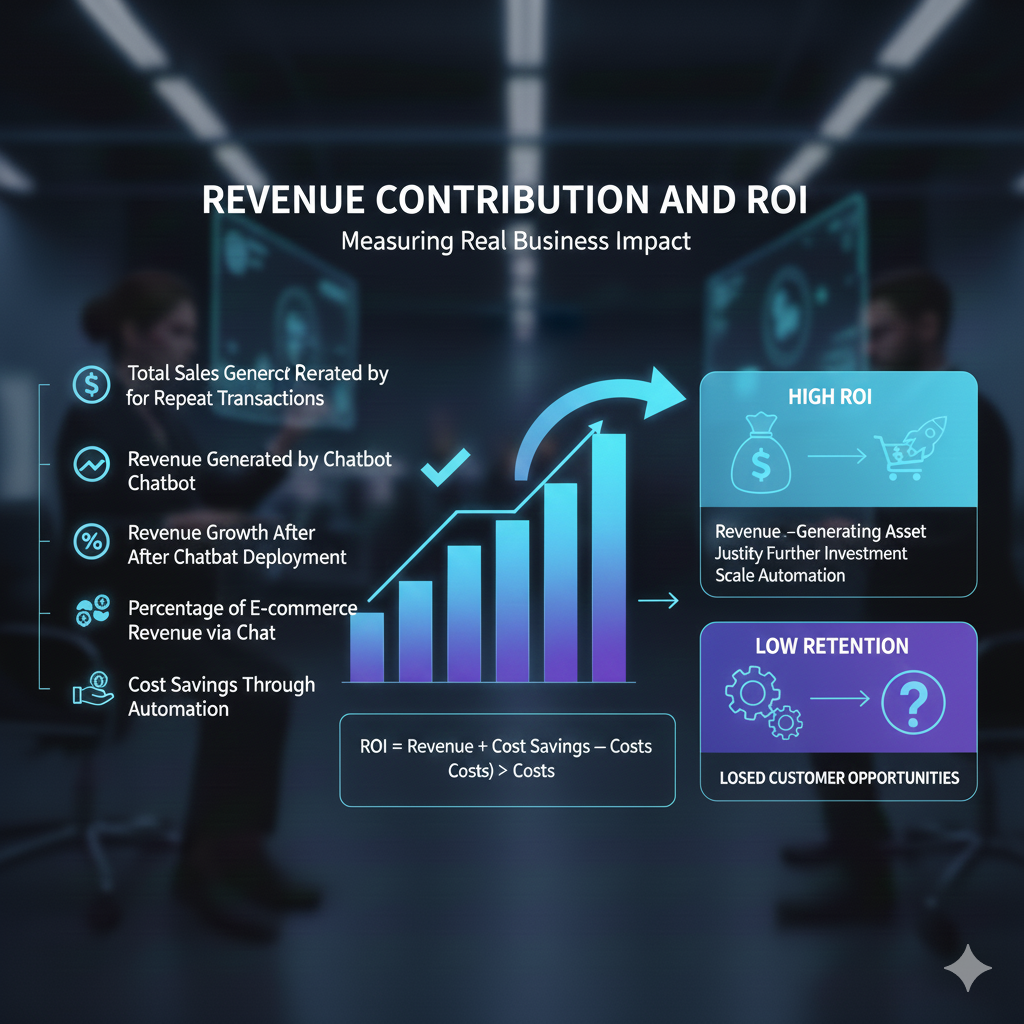
7. Revenue Contribution and ROI: Measuring Real Business Impact
Once AI chatbots begin transacting, they need to be seen as revenue-generating assets, not cost-saving tools.
Key revenue metrics to track:
-
Total sales generated by the chatbot
-
Revenue growth after chatbot deployment
-
Percentage of total e-commerce revenue driven by conversational channels
-
Cost savings through automation (agent workload reduction, fewer escalations)
Calculating ROI:
ROI = (Revenue generated + cost savings – chatbot operational costs) ÷ chatbot operational costs
This helps justify further investment in AI automation and identify opportunities to scale.
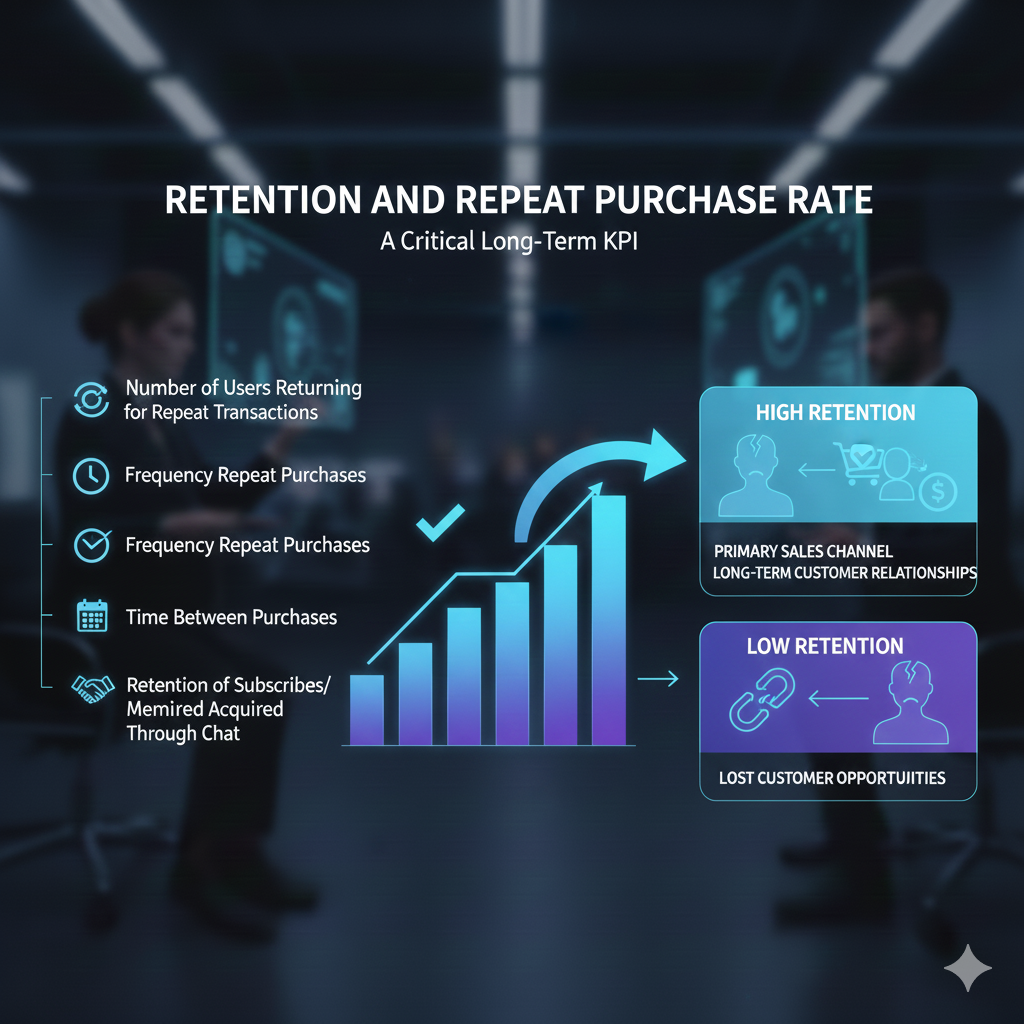
8. Retention and Repeat Purchase Rate: A Critical Long-Term KPI
Conversational commerce creates a highly personalized buying experience. If done well, it should significantly improve repeat purchases.
What to track:
-
Number of users returning to chat for repeat transactions
-
Frequency of repeat purchases
-
Time between purchases
-
Retention of subscribers or members acquired through chat
A chatbot that builds relationships can become a primary sales channel over time, especially for brands in beauty, wellness, food delivery, retail, and DTC.
9. AI Accuracy and Response Quality Metrics
AI accuracy directly influences trust—an essential factor when money is involved.
Monitor:
-
Response accuracy rate
-
Recommendation relevance score
-
Misunderstanding/clarification rate
-
Escalation frequency (when the bot fails and hands off to a human)
In commerce, even small misunderstandings can lead to lost sales. High accuracy translates to smoother conversations and greater customer confidence.
Final Thoughts: Building a KPI Strategy That Evolves With Your AI
As AI chatbots transition into transactional engines, businesses must shift from traditional support metrics to a more holistic performance framework. By combining revenue, satisfaction, accuracy, and engagement KPIs, you can gain a complete view of your conversational commerce ecosystem.
The businesses that win in this new era will be those that treat their AI assistants not just as tools—but as digital sales partners that require consistent monitoring, optimization, and refinement.


1 Comment
Pingback: Mastering the EU AI Act: Essential Compliance Guide for E-Commerce Executives - futureecommerce.online