
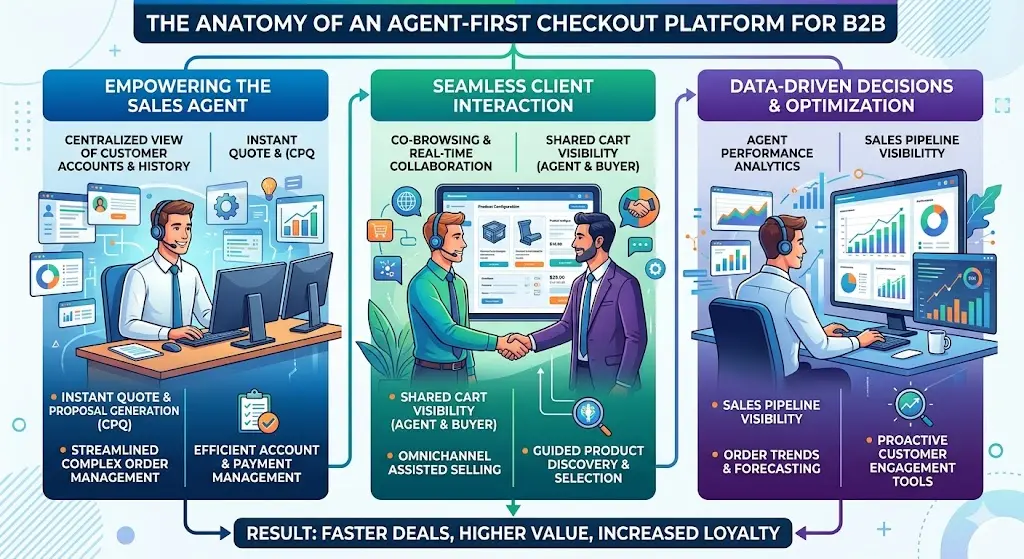
In the rapidly evolving world of B2B retail, traditional checkout processes are beginning to feel outdated. Businesses no longer rely solely on human buyers to navigate complex catalogs, verify prices, and complete orders. Instead, the next generation of commerce is moving toward agent-first checkout, a model where autonomous AI agents handle these tasks on behalf of organizations. This approach is transforming efficiency, accuracy, and scale in B2B transactions, making the choice of the right checkout provider a critical strategic decision.
Agent-first checkout is more than just automation—it’s a fundamental redesign of commerce workflows. Unlike consumer-facing systems designed for humans, agent-first platforms focus on machine-readable data, API-first integrations, and intelligent orchestration of payments and logistics. AI agents must not only identify the right products but also evaluate contracts, respect business rules, execute purchases, and ensure regulatory compliance—all without human intervention.
The following are three standout providers leading the charge in agent-first checkout for B2B retailers.
1. Rye – Universal Checkout for Autonomous Agents
Rye is designed for organizations that need a universal, agent-friendly checkout solution. Its platform allows AI agents to complete transactions across multiple merchants without requiring custom integrations for each store.
Features
-
Autonomous Checkout Automation: Rye’s system can navigate online storefronts, interpret product information, and complete purchases.
-
Tokenized Payments: Sensitive payment information is securely tokenized, minimizing compliance risks.
-
Adaptive Workflows: The system can adjust dynamically if merchants change their website layout or checkout flows.
-
Merchant-Agnostic Architecture: One API connects agents to multiple retailers, reducing integration complexity.
Why It Matters for B2B
B2B purchasing often involves multiple approvals, negotiated pricing, and complex product specifications. Rye allows AI agents to act within these constraints, executing orders quickly while reducing errors and freeing human staff for strategic tasks.
Legal and Operational Considerations
Because agents are executing transactions, Rye incorporates robust identity verification, authorization frameworks, and audit trails. These measures ensure that purchases are legally enforceable and compliant with financial regulations, protecting both the buyer and the retailer.
2. Checkout.com – Payment-Oriented Agent Infrastructure
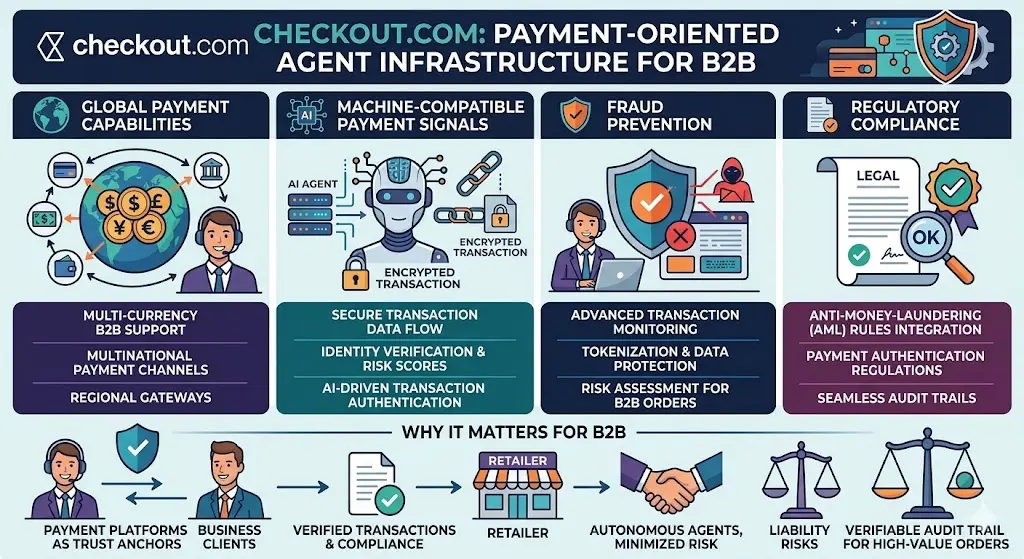
While Rye focuses on the mechanics of completing transactions, Checkout.com specializes in secure payment orchestration for agent-first commerce. Its platform ensures that AI-driven transactions can occur safely across different regions, currencies, and payment methods.
Features
-
Global Payment Capabilities: Supports multiple currencies and payment channels, essential for multinational B2B retailers.
-
Machine-Compatible Payment Signals: AI agents can receive and transmit transaction data securely, including identity verification and risk scores.
-
Fraud Prevention: Advanced monitoring and tokenization protect against unauthorized purchases.
-
Regulatory Compliance: The platform integrates seamlessly with anti-money-laundering rules and payment authentication regulations.
Why It Matters for B2B
In agent-first commerce, payment platforms become trust anchors, verifying transactions and enforcing compliance. Checkout.com ensures that AI agents can act autonomously without introducing risk to the retailer or buyer.
Legal Considerations
B2B transactions often involve high-value orders. Checkout.com mitigates liability risks by maintaining clear authorization flows and recording every transaction with a verifiable audit trail.
3. Composable Commerce Platforms – Flexible Agent-Ready Architecture
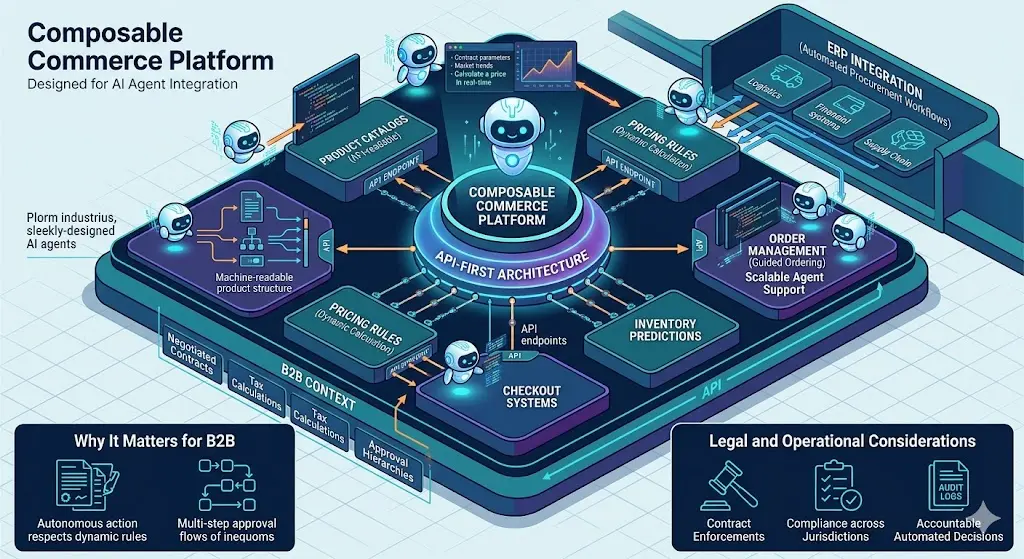
The third class of agent-first solutions comes from composable commerce platforms, which provide flexible, API-first architectures that allow AI agents to interact with products, pricing rules, and checkout systems programmatically.
Features
-
API-First Architecture: Provides machine-readable access to product catalogs, pricing, and inventory.
-
Intelligent Automation: AI-powered features can handle dynamic pricing, inventory predictions, and guided ordering.
-
ERP Integration: Seamlessly connects to enterprise resource planning systems, supporting automated procurement workflows.
-
Scalable Agent Support: Multiple AI agents can operate concurrently, executing large volumes of transactions without human supervision.
Why It Matters for B2B
B2B transactions are rarely simple. They involve negotiated contracts, tax calculations, and approval hierarchies. Composable platforms give agents the flexibility and data access they need to act autonomously while respecting these rules.
Legal and Operational Considerations
Composable platforms can enforce contract terms, maintain compliance across multiple jurisdictions, and log every automated decision to ensure accountability. For B2B retailers, this translates to both operational efficiency and legal security.
Key Legal and Governance Challenges
Transitioning to agent-first checkout is not without complexity. B2B retailers must address several critical legal and governance issues:
-
Agency and Authorization: AI agents act as proxies for buyers. Clear rules for authorization and recorded consent are essential.
-
Payment Liability: Who is responsible for errors or unauthorized transactions must be clearly defined in contracts and system policies.
-
Data Privacy: AI agents process sensitive company data, requiring strict adherence to privacy regulations.
-
Security and Trust: Platforms must ensure that AI-driven interactions are secure, verifiable, and tamper-proof.
Failing to address these issues can expose retailers to financial risk, regulatory penalties, and reputational damage.
Preparing for the Future
Agent-first checkout is not a futuristic concept—it is already reshaping B2B commerce. Retailers who embrace this technology can reduce operational friction, minimize errors, and scale purchasing operations efficiently.
Selecting the ideal platform relies on your organization’s key priorities:
-
Rye is ideal for universal, AI-automated checkout across multiple merchants.
-
Checkout.com ensures secure, compliant payment orchestration for autonomous transactions.
-
Composable commerce platforms provide the flexible, API-first architecture needed to integrate agents with enterprise systems.
The companies that succeed in this space will be those that make their product catalogs, pricing, and checkout processes machine-readable, secure, and legally enforceable. By doing so, they position themselves for a future where autonomous agents handle the majority of routine purchasing, freeing humans to focus on higher-value business strategy.
