


The technological landscape in 2026 is dramatically different from even a few years ago. Artificial intelligence (AI), machine learning (ML), and advanced automation are no longer optional tools—they are central to enterprise strategy. With these innovations comes complexity: multiple AI models, hybrid cloud infrastructures, and diverse applications often operate in silos, leading to inconsistencies, inefficiencies, and operational risks. To address this growing challenge, the Model Context Protocol (MCP) has emerged as a critical framework for organizations seeking to unify their AI and digital operations.
CTOs can no longer rely on fragmented integrations or ad-hoc data pipelines. Adopting MCP is becoming a strategic mandate because it ensures contextual consistency, operational interoperability, regulatory compliance, and future-ready architecture. This blog explores MCP in depth, explaining how it works, why it matters, and how CTOs can implement it to transform enterprise operations.
What is the Model Context Protocol (MCP)?
The Model Context Protocol (MCP) is a standardized framework that ensures AI models, applications, and enterprise systems operate with a shared understanding of context. Context here refers to the surrounding information that influences a model’s decision-making, such as:
User context: Who is interacting with the system and what are their preferences or past interactions?
Operational context: Current business processes, system states, and active workflows.
Historical context: Prior decisions, past model outputs, and longitudinal data trends.
Traditional APIs and integration frameworks allow data exchange but do not convey semantic meaning or operational intent. MCP fills this gap by defining structured context layers, metadata standards, and secure protocols to ensure that models interpret data consistently and act in alignment with organizational objectives.

Why MCP Matters for CTOs in 2026
1. AI is Everywhere, and Silos Are Risky
Most large enterprises now operate dozens, if not hundreds, of AI models across customer service, logistics, finance, cybersecurity, and operations. Without a standardized context protocol, these models risk misinterpreting data or giving inconsistent outputs. MCP enables cohesive communication between AI systems, preventing conflicts and ensuring decisions are accurate across the enterprise.
2. Regulatory Compliance Is Non-Negotiable
Governments worldwide are implementing stricter AI governance frameworks, including GDPR in Europe, CCPA in California, and AI ethics mandates in multiple jurisdictions. MCP incorporates context-aware compliance controls, making it easier for organizations to demonstrate responsible AI usage and regulatory adherence.
3. Hybrid and Multi-Cloud Environments
Enterprises increasingly deploy workloads across multiple cloud providers and on-premise systems. MCP ensures that AI models maintain a consistent understanding of operational context, regardless of environment, reducing errors and streamlining system orchestration.
4. Enhanced Customer Experiences
Modern customers expect hyper-personalization. MCP allows AI systems to share context across touchpoints—whether a chatbot, recommendation engine, or CRM—ensuring consistent and adaptive responses that improve engagement and loyalty.
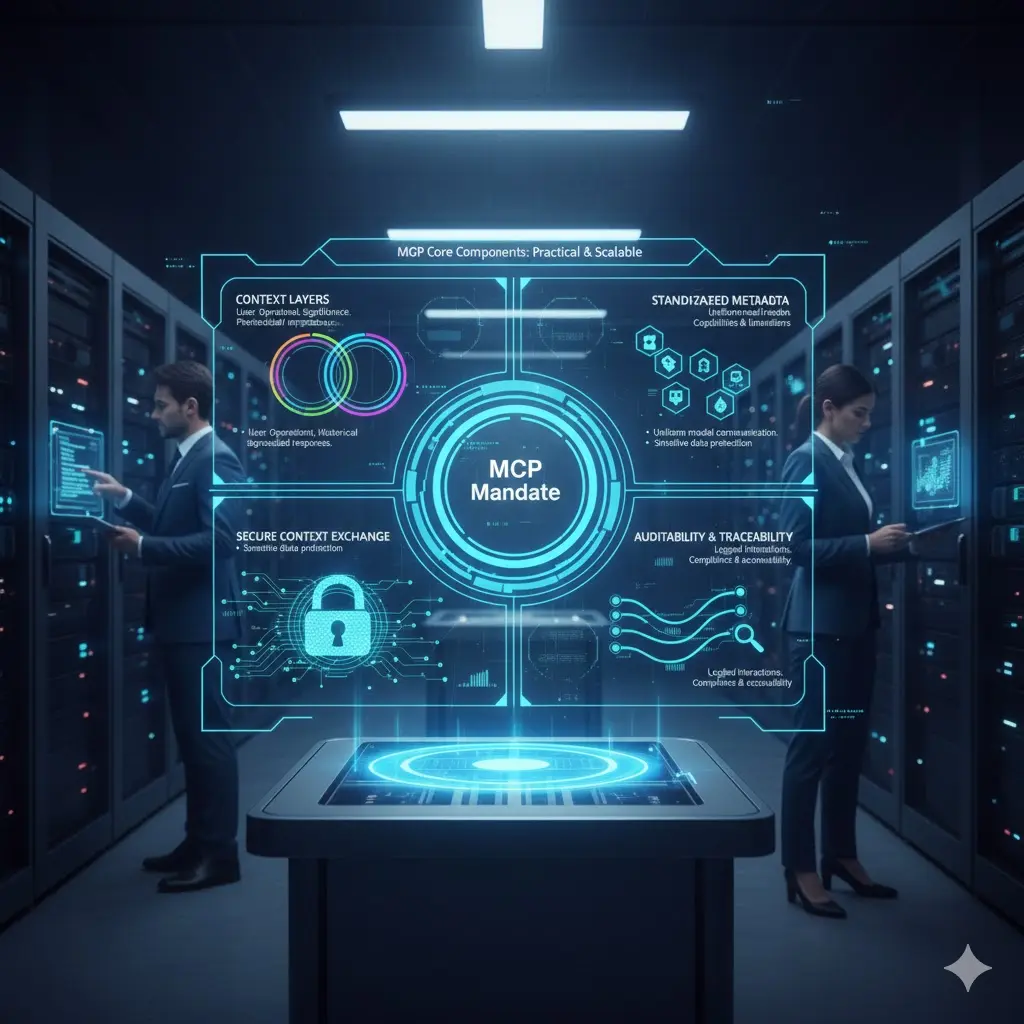
How MCP Works: The Core Components
MCP relies on several key technical components that make it both practical and scalable:
Context Layers
MCP defines multiple layers, including user, operational, and historical context. These layers ensure that AI models not only have access to data but understand its significance. For instance, an AI model processing customer support tickets can combine user history with current operational policies to deliver accurate and personalized responses.Standardized Metadata
Every AI model or application communicates its capabilities, limitations, and environmental requirements through a uniform metadata structure. This prevents misinterpretation and ensures models can collaborate effectively.Secure Context Exchange
MCP mandates encrypted communication protocols and secure authentication to protect sensitive context data. This is crucial in industries handling personal information, financial transactions, or medical records.Auditability and Traceability
Each interaction between systems under MCP can be logged and traced. This allows CTOs to monitor system behavior, verify compliance, and troubleshoot anomalies, all while maintaining accountability.
Benefits of MCP for Enterprise Operations
Implementing MCP offers CTOs measurable advantages:
Improved Decision-Making: Context-aware AI models generate outputs aligned with business objectives and operational priorities.
Operational Efficiency: Reduces errors from miscommunication between models, speeding up workflows and minimizing resource wastage.
Scalable Architecture: MCP is compatible with advanced AI tools, autonomous systems, and IoT networks, allowing enterprises to grow without re-engineering context handling.
Enhanced Collaboration: Cross-functional teams (engineering, data science, operations, security) operate from the same contextual understanding, improving project outcomes.
Regulatory Compliance: Built-in compliance layers make audits easier, and MCP’s traceability features support ethical AI practices.
Practical Steps to Implement MCP
CTOs can take a structured approach to adopting MCP:
Audit Existing Systems: Identify gaps in context management across AI models, applications, and data sources.
Design the MCP Framework: Define context layers, metadata standards, and secure exchange protocols tailored to your enterprise.
Pilot Projects: Start with a business-critical function, such as predictive analytics in supply chain or AI-based customer support.
Integrate Across the Enterprise: Expand MCP implementation to all AI-driven operations, ensuring consistent context sharing.
Continuous Monitoring and Updates: Establish real-time monitoring, audits, and updates to maintain context integrity and compliance.
Future-Proofing Your Enterprise
Adopting MCP today is a proactive step for enterprises aiming to remain competitive in 2026 and beyond. As AI systems evolve, complexity will only increase. MCP ensures that enterprises have a resilient, standardized, and context-aware foundation for AI-driven decision-making. CTOs who embrace this protocol gain not just operational efficiency but also the strategic agility required to leverage emerging technologies effectively.
By implementing MCP, CTOs can achieve:
Seamless AI model interoperability
Consistent, context-aware decision-making
Enhanced operational efficiency and automation
Compliance with emerging AI regulations
Future readiness for next-generation AI tools
Conclusion
The Model Context Protocol (MCP) is more than a technical standard—it is a strategic enabler for modern enterprises. In 2026, CTOs cannot afford to ignore the benefits of context-aware AI operations. MCP ensures that enterprise AI systems communicate effectively, act consistently, and comply with legal and ethical standards. By adopting MCP, CTOs can future-proof their organizations, enhance decision-making, and deliver operational excellence in a complex, AI-driven landscape.
For any organization looking to scale AI responsibly, reduce operational risk, and achieve measurable business impact, MCP adoption is no longer optional—it is essential.
