

The world of B2B sales is rapidly evolving. Traditional sales cycles—long email threads, fragmented content delivery, scattered meetings, and endless document exchanges—are becoming increasingly inefficient. Buyers want speed, personalization, and transparency, while sellers need control, analytics, and seamless collaboration.
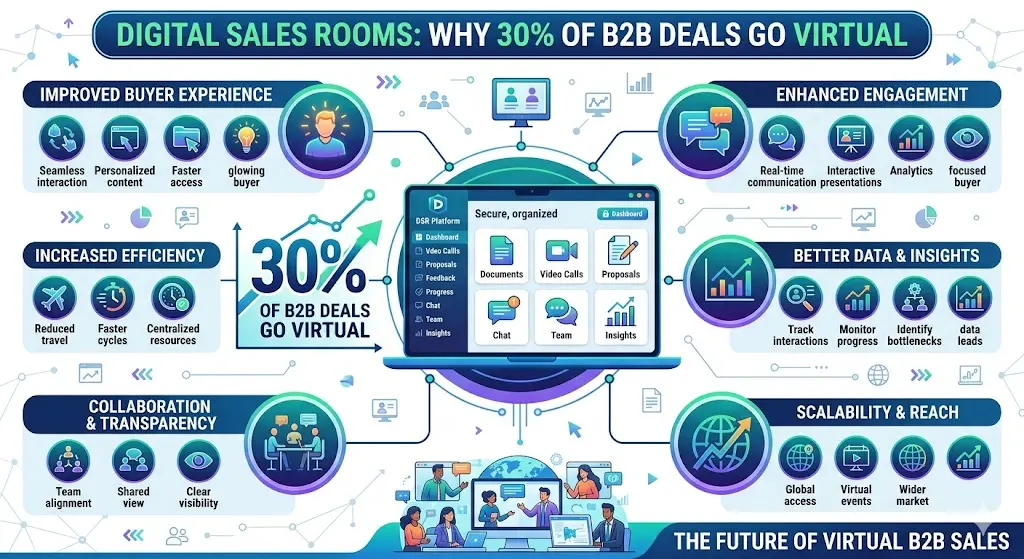
Enter Digital Sales Rooms (DSRs): secure, private virtual spaces designed specifically for managing the end-to-end B2B sales experience. Over the next few years, industry analysts predict that up to 30% of B2B transactions will move into these private, digitally orchestrated environments. This shift isn’t just about technology—it’s about transforming buyer-seller relationships and redefining trust, engagement, and efficiency in high-value deals.
What Are Digital Sales Rooms?
A Digital Sales Room is essentially a centralized, virtual hub where all stakeholders in a B2B deal can interact. Unlike traditional emails or generic file-sharing platforms, DSRs provide:
- Secure access: Only invited participants can enter.
- Organized content: Proposals, contracts, pricing, presentations, and case studies are consolidated.
- Real-time collaboration: Buyers and sellers can comment, annotate, and update documents live.
- Analytics and insights: Sellers gain visibility into which content buyers engage with and for how long.
- Integrated workflows: Meeting scheduling, approvals, e-signatures, and follow-ups are embedded in one environment.
In essence, a DSR transforms a fragmented sales process into a structured, trackable, and interactive journey.
Why B2B Sales Are Moving to Digital Sales Rooms
1. Buyer Expectations Have Changed
Modern B2B buyers resemble B2C consumers in their expectations:
- They want on-demand access to relevant content.
- They expect personalization and context—not generic PDFs or generic presentations.
- They value transparency and the ability to track a deal’s progress.
Traditional sales methods often fail to meet these expectations, resulting in longer cycles, stalled deals, and lower engagement. Digital Sales Rooms address this by giving buyers a self-directed, personalized, and interactive experience.
2. Sales Teams Need Better Insights
Sales reps have long relied on intuition or basic CRM reports to gauge buyer interest. DSRs provide granular analytics, including:
- Which documents were opened
- How long buyers spent on each section
- Who on the buying team engaged
- What questions or comments were left
This insight allows sellers to prioritize high-value leads, tailor follow-ups, and anticipate objections, reducing guesswork and increasing close rates.
3. Increased Efficiency and Reduced Cycle Time
With all content and communication centralized, DSRs eliminate unnecessary back-and-forth across email chains and multiple platforms. Buyers can access what they need immediately, and sellers can control versioning and approvals in real time. This accelerates the decision-making process and reduces procurement cycle times by weeks in many cases.
4. Enhanced Security and Compliance
B2B sales often involve sensitive pricing, contracts, and proprietary information. Digital Sales Rooms offer granular access controls, encryption, and audit trails, ensuring that confidential information is shared securely. This not only protects organizations but also builds buyer confidence in the integrity of the process.
Key Features Driving Adoption
Centralized Content Hub
Buyers no longer need to sift through countless emails, attachments, or shared drives. Every proposal, product spec, case study, and contract is accessible in a single, well-organized location.
Interactive Collaboration Tools
DSRs enable real-time commenting, document editing, and live Q&A. Stakeholders can clarify doubts immediately, which reduces delays caused by asynchronous communication.
Smart Insights and Analytics
Integrated analytics reveal buyer behavior and engagement patterns, helping sellers understand which sections of content resonate and where additional support may be needed.
Integrated Workflow and eSignatures
From approvals to signatures, DSRs integrate end-to-end transactional workflows, eliminating the need to switch between multiple platforms.
Personalization
Each buyer can receive a customized experience, including tailored content, branding, and journey progression, which drives engagement and trust.
Industries Leading the Shift
While Digital Sales Rooms can benefit almost any B2B sector, adoption is particularly strong in:
- Technology & SaaS: Complex pricing models, multi-tiered subscriptions, and integration requirements benefit from centralized, interactive negotiation spaces.
- Financial Services: Investment products, insurance packages, and corporate banking deals require secure collaboration and regulatory compliance.
- Healthcare & Life Sciences: Medical equipment, pharmaceuticals, and health IT solutions benefit from centralized access to technical specifications, compliance documentation, and contract management.
- Industrial & Manufacturing: Multi-part supply deals, custom engineering services, and long-term procurement benefit from structured, transparent workflows.
In these industries, DSRs are not just tools—they are strategic platforms that differentiate sellers and accelerate revenue growth.
The ROI of Digital Sales Rooms
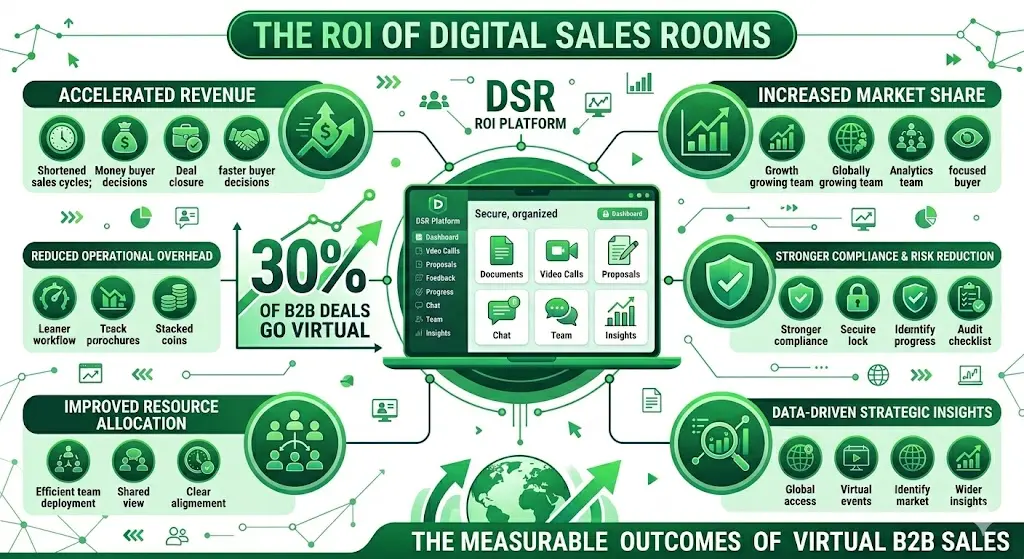
Organizations implementing DSRs report measurable outcomes:
- Shortened sales cycles: Buyers make decisions faster due to centralized, interactive content.
- Higher win rates: Engaging, personalized, and transparent experiences increase buyer confidence.
- Reduced operational overhead: Fewer emails, follow-ups, and manual tracking reduce administrative workload.
- Stronger compliance: Built-in audit trails and secure access protect sensitive deals and reduce risk exposure.
- Data-driven improvement: Analytics provide feedback loops to optimize content, messaging, and engagement strategies continuously.
In other words, Digital Sales Rooms combine efficiency, insight, and trust-building into a single platform.
Challenges and Considerations
While the benefits are compelling, organizations should be mindful of:
- User adoption: Both sales teams and buyers must embrace the platform for it to be effective. Training and change management are essential.
- Integration complexity: DSRs should integrate seamlessly with existing CRM, ERP, and communication tools.
- Content management: Effective DSRs require well-curated, up-to-date content to provide value and build credibility.
- Security policies: Implementing role-based access, encryption, and compliance protocols is critical to protect sensitive information.
Addressing these challenges upfront ensures that Digital Sales Rooms deliver the full spectrum of expected value.
The Future of B2B Sales
Digital Sales Rooms are poised to become core infrastructure for B2B transactions. As more buyers demand transparency, personalization, and immediate access to information, sellers who leverage DSRs will:
- Increase deal velocity
- Strengthen buyer relationships
- Gain actionable insights from engagement data
- Reduce risk and compliance overhead
Analysts predict that within the next 5 years, 30% of B2B sales will shift to private virtual spaces, making DSRs not just a competitive advantage but an operational necessity.
Final Thoughts
The traditional B2B sales process—with its fragmented communication, scattered content, and slow approval cycles—is becoming increasingly untenable in a world that demands speed, personalization, and security. Digital Sales Rooms provide a centralized, interactive, and data-driven environment that meets these expectations while reducing sales cycles, increasing win rates, and enhancing trust.
Organizations that adopt Digital Sales Rooms early will gain a strategic advantage, creating a more efficient, insightful, and buyer-focused sales process. In this new era, the private virtual space isn’t just a tool—it’s the future of B2B commerce.
