

Introduction: The Intersection of Profit and Sustainability
In today’s fast-evolving retail landscape, businesses face a dual challenge: managing returns efficiently while simultaneously reducing their environmental footprint. Return fraud and inefficient logistics not only eat into profit margins but also contribute to carbon emissions and waste.
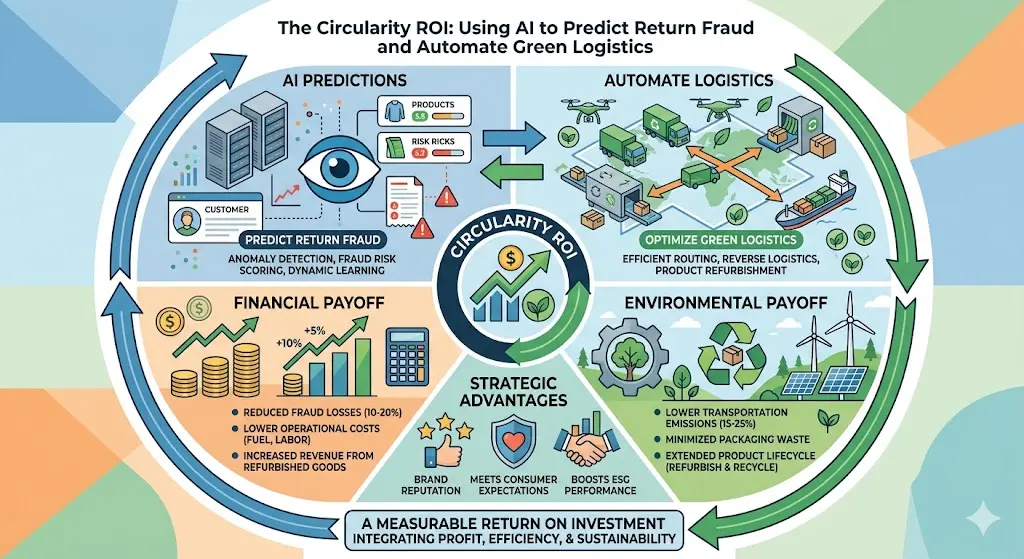
Artificial intelligence (AI) is emerging as a transformative solution, enabling companies to tackle these challenges head-on. By predicting return fraud and optimizing green logistics, AI empowers retailers to enhance operational efficiency while fostering sustainable business practices. The combination of financial and environmental gains is what we call Circularity ROI—a measurable return on investment that integrates profit, efficiency, and sustainability.
Understanding the Cost of Returns
Returns are an inevitable part of commerce, particularly in the e-commerce sector. While brick-and-mortar stores traditionally saw return rates of 8–10%, online retailers experience return rates as high as 30%, with certain categories like fashion, electronics, and footwear reaching even higher percentages. These returns come with both direct costs, such as restocking, shipping, and inspection, and indirect costs, such as lost inventory value, customer churn, and additional labor for processing returns.
Return fraud—where products are falsely returned for monetary gain—amplifies the problem. Fraudulent returns not only inflate operational costs but can create discrepancies in inventory tracking and disrupt supply chains. Traditional methods of fraud detection, such as manual review or rule-based alerts, are increasingly insufficient in a landscape where fraudsters continually adapt their methods.
Predictive AI: Fighting Return Fraud at Scale
AI offers a sophisticated approach to mitigating return fraud. By analyzing vast datasets, including purchase histories, transaction patterns, product-specific trends, and customer profiles, AI can predict the likelihood of fraudulent returns before they occur.
Key Features of AI-Driven Fraud Prevention:
-
Anomaly Detection: Machine learning models detect unusual patterns, such as repeated high-value returns from a single account or geographical inconsistencies in return behavior.
-
Fraud Risk Scoring: Each return request can be assigned a risk score, guiding retailers in making informed decisions, such as requesting additional verification or issuing partial refunds.
-
Dynamic Learning: Every transaction contributes to the AI model’s knowledge, allowing continuous refinement and adaptation to evolving fraud tactics.
By automating the identification of high-risk returns, AI minimizes human intervention in routine checks and allows fraud prevention teams to focus on complex cases. Over time, this predictive capability leads to significant cost savings and improved accuracy, boosting both operational efficiency and customer trust.
Green Logistics: Making Supply Chains Circular
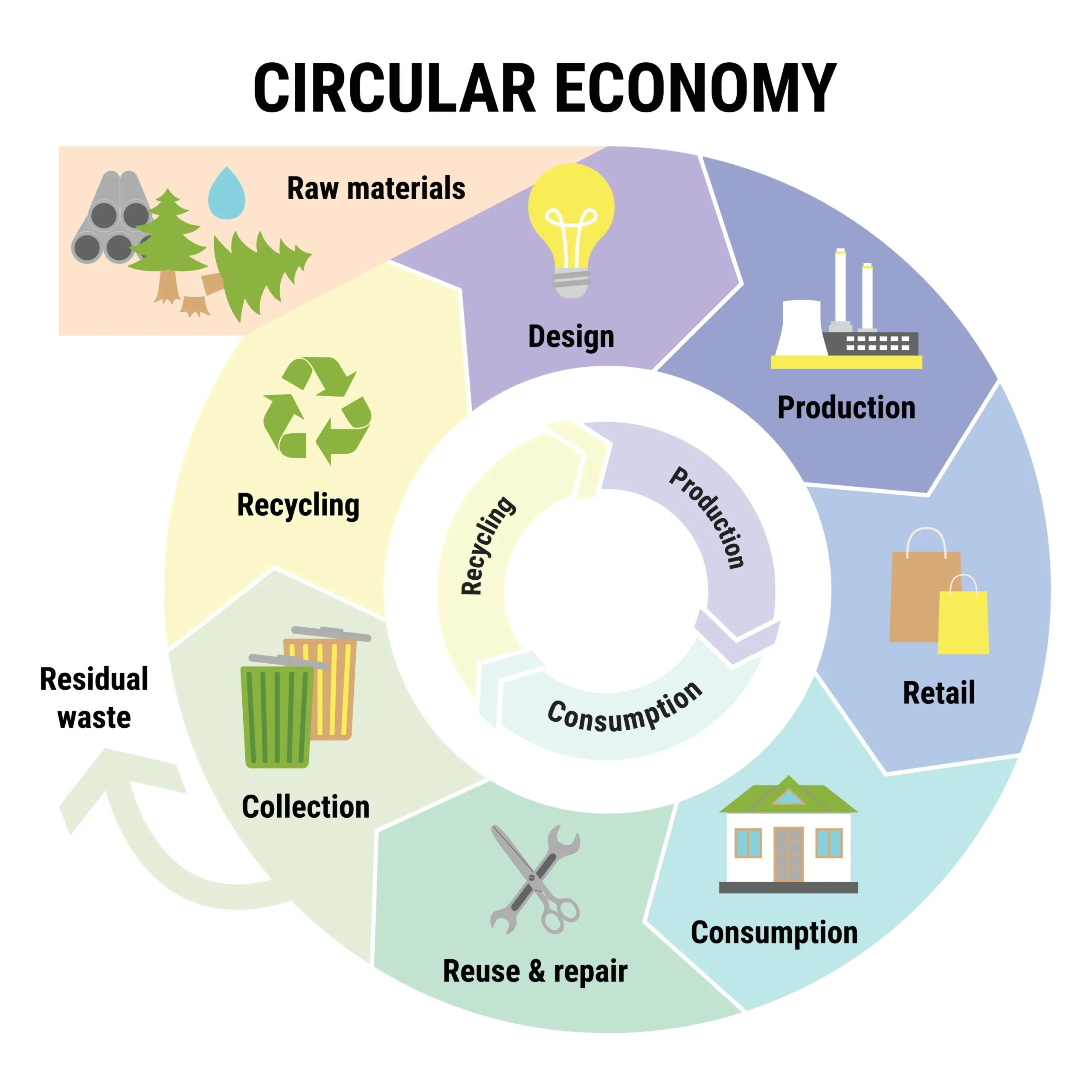
While fraud prevention secures revenue, optimizing logistics addresses sustainability—a critical component of the circular economy. Green logistics seeks to minimize the environmental impact of transportation, warehousing, and delivery, while maximizing product lifecycle reuse.
AI plays a pivotal role in creating sustainable supply chains. By analyzing real-time data on routes, transportation modes, packaging, and inventory locations, AI can optimize delivery networks to reduce fuel consumption, emissions, and unnecessary handling.
AI in Reverse Logistics
Reverse logistics—the process of returning goods back to warehouses, refurbishing centers, or recycling hubs—benefits immensely from AI integration. Predictive algorithms can determine the most eco-friendly return paths, balancing factors such as speed, cost, and carbon footprint. In practice, this means AI can:
-
Consolidate return shipments to minimize empty miles.
-
Direct products to refurbishment or recycling centers efficiently.
-
Optimize packaging to reduce waste while maintaining product safety.
When combined with IoT-enabled tracking and smart warehouse management systems, AI creates a closed-loop system that extends product lifecycles, reduces waste, and ensures materials remain in productive use as long as possible.
The Financial and Environmental Payoff: Circularity ROI
The convergence of fraud prevention and green logistics produces tangible Circularity ROI, which encompasses both financial gains and environmental benefits.
Financial Impact:
-
Reducing return fraud directly improves profit margins by 10–20% in many retail sectors.
-
Optimized logistics cuts operational costs, including fuel, labor, and shipping, while preventing losses from misplaced or mishandled returns.
-
Automation reduces manual intervention, freeing employees to focus on higher-value tasks.
Environmental Impact:
-
Optimized routes and consolidated returns reduce transportation emissions by 15–25%.
-
Reduced packaging waste and energy-efficient warehousing contribute to lower environmental footprints.
-
Refurbishment and recycling extend product lifecycles, supporting the circular economy.
Strategic Advantages:
-
Enhances brand reputation as a sustainable and responsible retailer.
-
Meets growing consumer expectations for environmentally conscious practices.
-
Positions the business competitively for investors and regulators who prioritize ESG (Environmental, Social, and Governance) performance.
The synergy between profitability and sustainability demonstrates that environmental initiatives and financial returns are not mutually exclusive; when managed effectively, one reinforces the other.
Challenges and Considerations
Despite the clear benefits, implementing AI-driven circular operations presents challenges:
-
Data Quality and Availability: AI models require accurate, comprehensive data. Incomplete or biased datasets can reduce predictive accuracy.
-
System Integration: Combining AI tools with existing logistics, ERP, and customer service systems can be complex.
-
Privacy and Compliance: Predictive models must handle sensitive customer data responsibly, adhering to regulations such as GDPR and CCPA.
-
Change Management: Employees and management must trust AI insights and adapt workflows to fully realize potential benefits.
Addressing these challenges requires a phased implementation, robust training, and continuous monitoring to ensure AI delivers both operational and sustainability outcomes.
The Future: AI-Enabled Circular Supply Chains
The future of retail lies in AI-enabled circular supply chains where every decision is optimized for financial and environmental efficiency. Imagine a system where AI:
-
Predicts fraudulent returns before they occur.
-
Determines the most sustainable path for returned products—refurbishment, resale, or recycling.
-
Optimizes delivery and reverse logistics to minimize emissions and costs.
-
Continuously learns and adapts, improving over time.
This vision represents true circularity, where materials remain in productive use, operational efficiency is maximized, and both revenue and sustainability goals are achieved simultaneously.
Case Example: A Retailer’s AI Transformation
Consider a mid-sized e-commerce retailer:
-
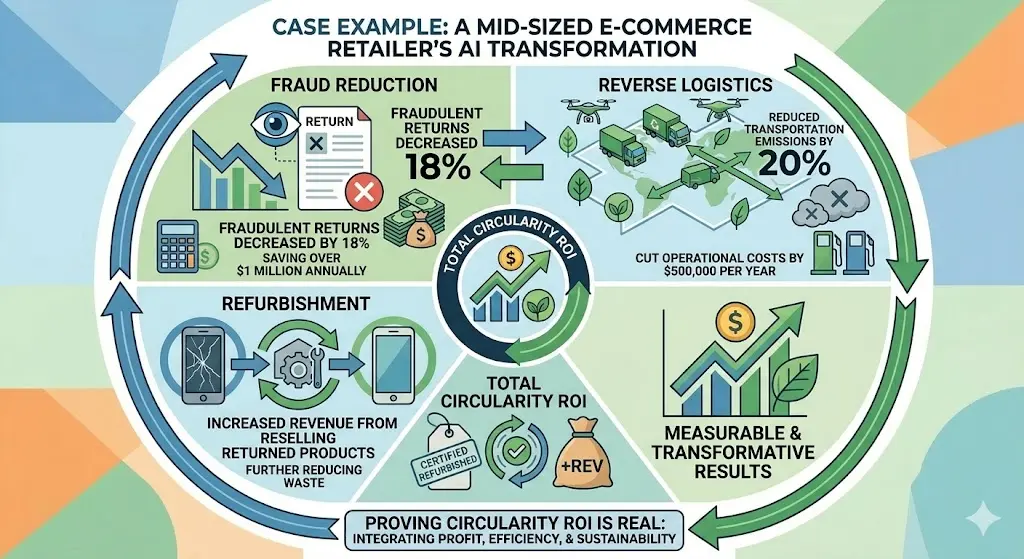
By implementing AI-driven predictive fraud models, fraudulent returns decreased by 18%, saving over $1 million annually.
-
Optimizing reverse logistics reduced transportation emissions by 20% and cut operational costs by $500,000 per year.
-
Integration with refurbishment centers enabled the retailer to resell returned products, further increasing revenue and reducing waste.
This example illustrates how Circularity ROI is not theoretical—it is measurable and transformative for businesses willing to embrace AI and sustainable practices.
Conclusion
The combination of AI, predictive fraud prevention, and green logistics is reshaping the retail industry. By leveraging AI to predict return fraud and optimize sustainable logistics, businesses achieve a Circularity ROI—a tangible return on investment that balances profit, efficiency, and environmental responsibility.
Organizations that adopt these strategies today not only safeguard their bottom line but also contribute to a more sustainable, circular economy, positioning themselves as industry leaders in a world increasingly driven by environmental awareness and operational excellence.
