


The world of business-to-business (B2B) payments is evolving faster than ever. Traditional invoicing and delayed payments are increasingly being replaced by innovative fintech solutions that enhance cash flow, improve operational efficiency, and create seamless buyer experiences. Among the most transformative trends in this space are Buy Now, Pay Later (BNPL) and real-time ACH (Automated Clearing House), especially when integrated into a composable checkout system.
For B2B companies, embracing these tools isn’t just about keeping up—it’s about reshaping how businesses transact, manage working capital, and strengthen client relationships.
Understanding Composable Checkout in B2B
A composable checkout is a modular, flexible payment infrastructure that allows businesses to select, integrate, and scale different payment methods and features based on their unique needs. Unlike traditional “one-size-fits-all” payment solutions, composable systems provide full control over the checkout experience, enabling businesses to offer tailored options for each customer segment.
For example, a wholesale distributor might offer large retailers BNPL options for bulk orders, while providing smaller clients with real-time ACH payments to speed up the settlement process. This flexibility not only enhances customer satisfaction but also reduces friction that could lead to abandoned orders.
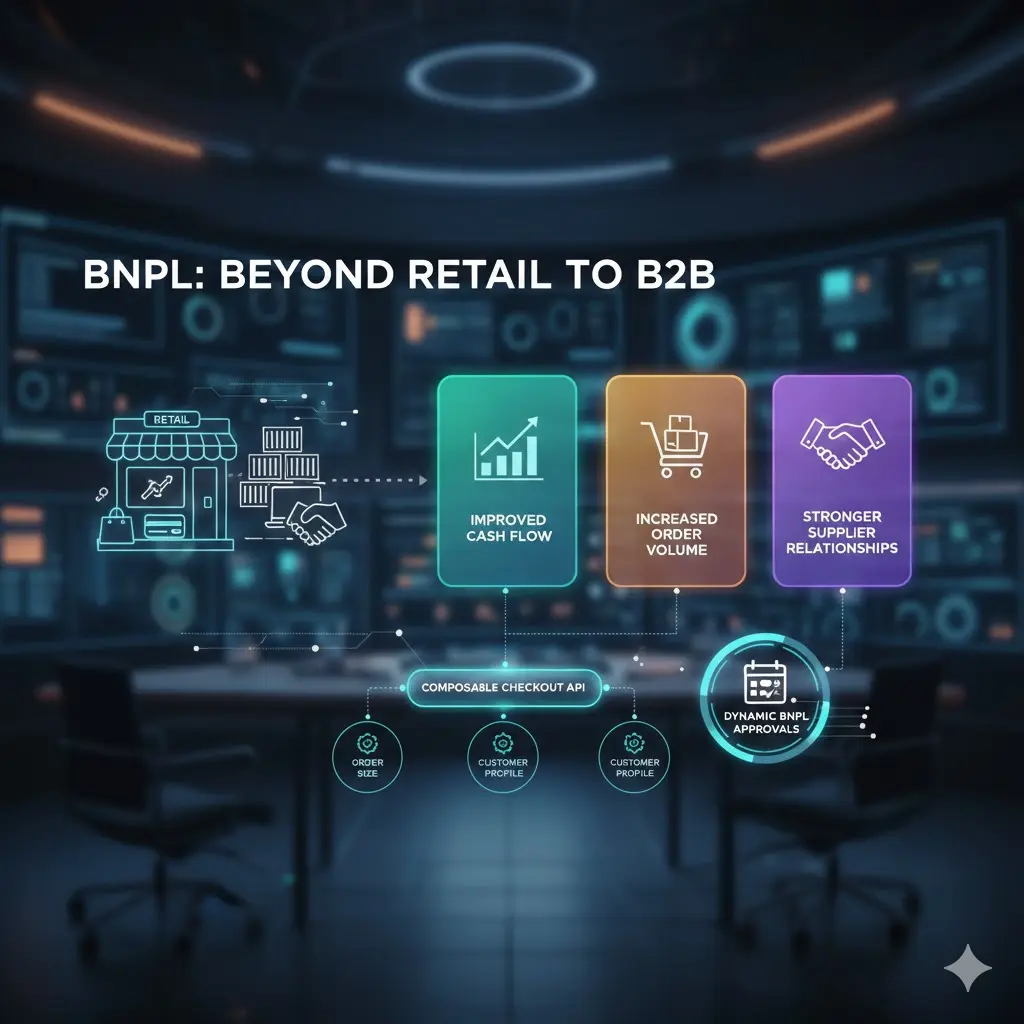
BNPL: Beyond Retail to B2B
Buy Now, Pay Later has traditionally been associated with consumer retail, but its impact on B2B payments is growing rapidly. In a B2B context, BNPL allows companies to purchase goods or services immediately while deferring payment for a defined period—often 30, 60, or 90 days.
The benefits are compelling:
-
Improved Cash Flow: Businesses can access products without tying up working capital. This is especially useful for smaller enterprises or startups with limited cash reserves.
-
Increased Order Volume: Offering BNPL can incentivize larger orders, as clients feel empowered to buy more without immediate financial strain.
-
Stronger Supplier Relationships: Flexible payment terms create goodwill and foster long-term partnerships.
Integrating BNPL into a composable checkout allows businesses to dynamically present BNPL options to eligible buyers, based on order size, customer profile, or creditworthiness. Modern fintech platforms provide APIs that automate credit assessments, approval workflows, and payment scheduling, making it seamless for both the seller and the buyer.
Real-Time ACH: Speeding Up Settlements
ACH payments have long been a backbone of B2B transactions, but traditional ACH transfers can take days to clear, delaying reconciliation and financial planning. Real-time ACH changes the game by enabling instant or near-instant transfers directly from one bank account to another.
Key advantages include:
-
Faster Cash Flow: Businesses receive funds immediately, improving liquidity and reducing dependency on credit lines.
-
Reduced Risk: Instant settlement lowers the risk of bounced checks or delayed payments.
-
Operational Efficiency: Automated, real-time clearing reduces manual reconciliation and accounting overhead.
When embedded in a composable checkout, real-time ACH allows businesses to offer immediate payment options alongside BNPL. Clients can choose the method that best fits their financial strategy, while the seller enjoys faster settlements and predictable cash flow.
The Synergy of BNPL and Real-Time ACH
At first glance, BNPL and real-time ACH might seem like opposing approaches—one defers payment, while the other accelerates it. However, their combination within a composable checkout creates a powerful, customer-centric payment ecosystem.
-
Large enterprise clients may opt for BNPL to manage internal budgeting and align with purchase cycles.
-
Mid-sized clients might prefer real-time ACH to maintain liquidity and streamline reconciliation.
By offering both options dynamically, businesses can maximize conversion rates, reduce cart abandonment, and strengthen customer satisfaction. This flexibility is critical in today’s competitive B2B landscape, where buyers expect tailored experiences similar to consumer retail.
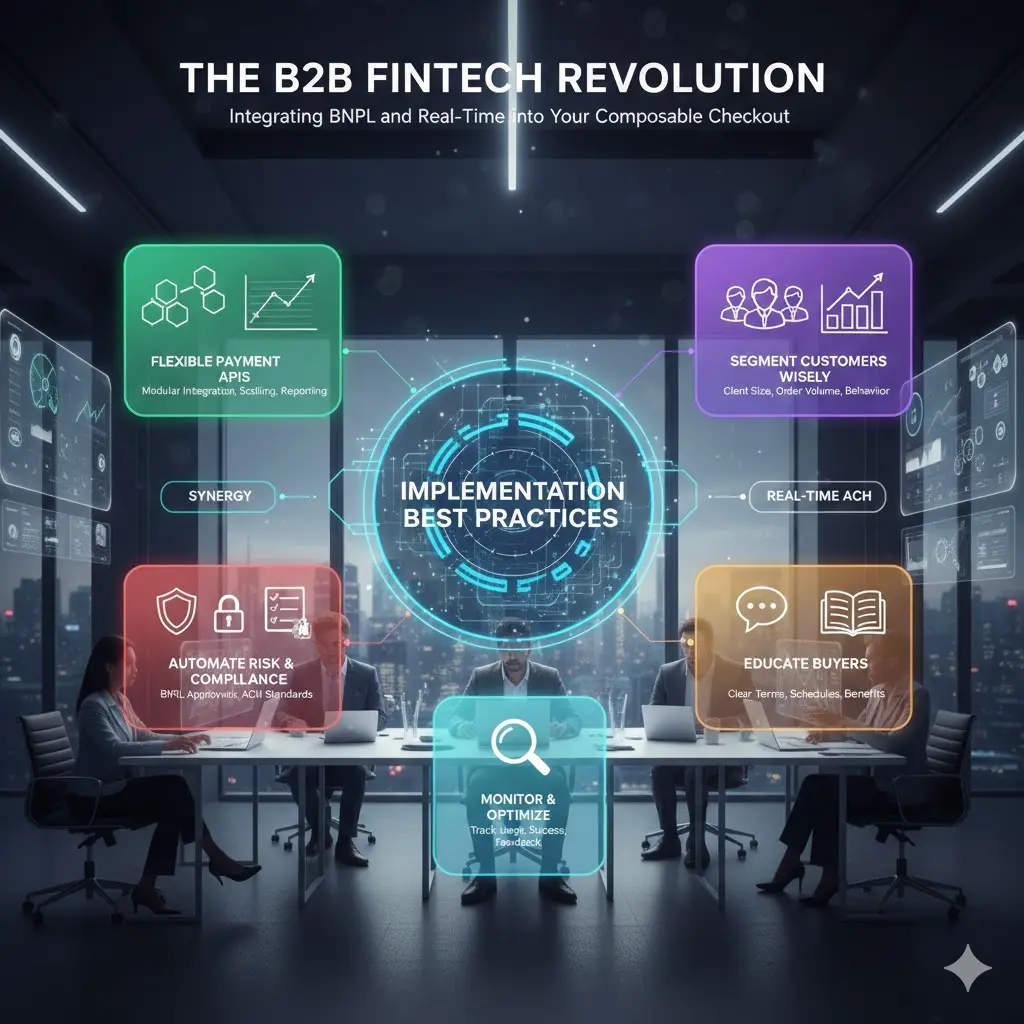
Implementation Best Practices
Successfully integrating BNPL and real-time ACH into a composable checkout requires a strategic approach:
-
Choose Flexible Payment APIs: Select providers that allow modular integration, easy scaling, and robust reporting.
-
Segment Customers Wisely: Tailor payment options based on client size, order volume, and historical payment behavior.
-
Automate Risk and Compliance Checks: Ensure BNPL approvals follow regulatory requirements and that ACH transfers comply with banking standards.
-
Educate Buyers: Clear communication about payment terms, schedules, and benefits builds trust and reduces confusion.
-
Monitor and Optimize: Continuously track usage patterns, transaction success rates, and customer feedback to refine the checkout experience.
Future Outlook
The B2B fintech revolution is still unfolding. Emerging technologies such as AI-driven credit assessments, cross-border BNPL, and blockchain-based settlement networks promise to make B2B payments even faster, smarter, and more secure. Companies that adopt composable checkout models now will be well-positioned to adapt to new payment innovations without overhauling their entire infrastructure.
In short, BNPL and real-time ACH are not just trendy features—they are strategic tools that redefine the B2B purchasing experience. By integrating them thoughtfully, businesses can empower clients, improve cash flow, and gain a competitive edge in a rapidly evolving market.
Conclusion
The combination of BNPL, real-time ACH, and a composable checkout represents a paradigm shift in B2B payments. It gives businesses unprecedented flexibility, speeds up cash flow, and creates a seamless, customer-friendly buying experience.
In an era where convenience and efficiency are paramount, B2B companies that embrace these fintech innovations are not just keeping up—they are leading the way. The future of B2B payments is composable, flexible, and fast, and the time to integrate these solutions is now.
