

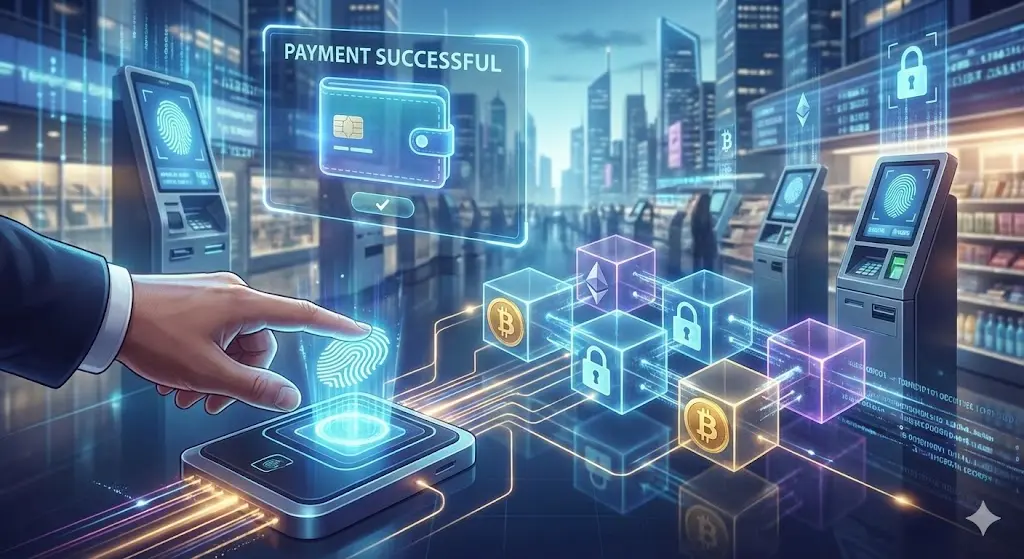
The way we pay for goods and services is undergoing a profound transformation. Traditional payment methods—credit cards, cash, and even online banking—are increasingly being supplemented, and in some cases replaced, by innovative technologies that promise speed, security, and convenience. At the forefront of this revolution are blockchain technology, biometric authentication, and emerging innovations that collectively aim to create a frictionless, trustless payment ecosystem. This article takes a deep dive into the payment security stack, exploring how these technologies work, their implications for the future, and what businesses and consumers need to know.
The Evolution of Payments
For decades, the payment industry relied heavily on intermediaries to facilitate transactions. Banks, card networks, and payment processors acted as trusted third parties, verifying transactions and reducing risk. While this system worked reasonably well, it introduced several inefficiencies:
-
Latency: Cross-border transactions often take days to settle.
-
Costs: Intermediaries charge fees that can be significant, especially for microtransactions.
-
Vulnerability: Centralized systems are prime targets for fraud and data breaches.
The rise of digital commerce, mobile wallets, and global remittances highlighted the limitations of traditional payment systems. Consumers and businesses now demand payments that are faster, cheaper, and more secure—requirements that are driving innovation in the payment security stack.
Blockchain: The Backbone of Trustless Payments
Blockchain technology is fundamentally changing how transactions are validated. Unlike traditional systems that rely on centralized authorities, blockchain is decentralized. Every transaction is recorded on a distributed ledger that is cryptographically secured and shared across multiple nodes in a network. This architecture provides several advantages:
-
Transparency: All participants in the network can see and verify transactions in real time, reducing the need for trust in intermediaries.
-
Immutability: Once recorded, transactions cannot be altered, mitigating fraud and tampering.
-
Efficiency: Smart contracts—self-executing code on the blockchain—can automate settlement processes without human intervention.
For payments, blockchain enables trustless transactions, where two parties can exchange value without needing to trust each other or a central authority. Cryptocurrencies such as Bitcoin and stablecoins are early examples, but enterprise-focused blockchain networks like Hyperledger and Corda are now being used to facilitate B2B payments, supply chain transactions, and cross-border remittances.
Challenges and Considerations
Despite its promise, blockchain is not a silver bullet. Scalability remains a concern, as networks like Bitcoin and Ethereum can process far fewer transactions per second than traditional card networks. Additionally, regulatory uncertainty in many jurisdictions can limit adoption. However, emerging Layer 2 solutions, sharding techniques, and private blockchain implementations are addressing these challenges.

Biometrics: Redefining Authentication
While blockchain secures the transaction layer, biometrics enhance the authentication layer. Biometrics use unique physiological or behavioral traits—such as fingerprints, facial recognition, or voice patterns—to verify the identity of a user. Compared to traditional passwords or PINs, biometrics offer several benefits:
-
Convenience: Users can authenticate payments quickly without remembering complex passwords.
-
Security: Biometric traits are nearly impossible to replicate, reducing identity fraud.
-
Integration: Biometrics can be combined with mobile wallets, payment cards, and online platforms for seamless user experiences.
For instance, Apple Pay, Samsung Pay, and Google Wallet leverage fingerprint and facial recognition to approve transactions. Banks and fintech companies are also exploring multimodal biometric authentication, combining two or more biometric factors to further reduce fraud risk.
Privacy and Ethical Concerns
The adoption of biometrics raises privacy considerations. Biometric data is inherently sensitive; a breach could have long-term consequences since traits like fingerprints and facial patterns cannot be “reset” like passwords. Therefore, it is crucial that organizations adopt secure storage practices, such as local device encryption or decentralized biometric verification, to protect user data.

Frictionless Payments: Merging Speed, Security, and Simplicity
Frictionless payments aim to remove barriers from the payment process, allowing users to complete transactions quickly and intuitively. Several technologies contribute to this vision:
-
Contactless Cards and Mobile Wallets: Tap-and-go payments reduce checkout time and improve convenience.
-
Tokenization: Replacing sensitive card data with encrypted tokens reduces the risk of data theft.
-
Instant Settlement Networks: Emerging payment rails, such as real-time gross settlement systems and blockchain-based networks, enable instant transfers.
-
Contextual Payments: IoT devices, smart appliances, and connected vehicles can automatically initiate payments, creating new user experiences.
By combining blockchain, biometrics, and advanced tokenization, frictionless payments can be both secure and user-friendly, eliminating the need for physical cash, cards, or passwords while mitigating fraud.
Trustless Systems: Eliminating the Need for Intermediaries
In a trustless payment system, parties can transact without relying on a third party to enforce rules. Blockchain provides the foundational infrastructure, while smart contracts automatically execute terms when conditions are met. For example:
-
Supply Chain Payments: Vendors can receive payments automatically once delivery is confirmed via IoT sensors and smart contracts.
-
Cross-Border Remittances: Individuals can transfer funds globally without banks or foreign exchange intermediaries, reducing cost and settlement time.
-
Peer-to-Peer Services: Platforms like decentralized marketplaces enable trustless transactions between buyers and sellers, with escrow and dispute resolution managed algorithmically.
Trustless systems also reduce operational risk and increase transparency, as every participant can audit transactions independently.
Emerging Innovations Beyond Blockchain and Biometrics
The future of payment security extends beyond these two pillars. Other emerging technologies are poised to reshape the payment landscape:
-
Artificial Intelligence (AI) and Machine Learning: AI can detect unusual transaction patterns in real-time, preventing fraud before it occurs.
-
Quantum-Resistant Cryptography: As quantum computing advances, new cryptographic methods will ensure that blockchain networks remain secure.
-
Decentralized Identity (DID): Users can control their personal identity and authentication credentials, reducing reliance on centralized authorities.
-
Wearables and Voice Payments: Smartwatches, earbuds, and voice assistants will enable hands-free transactions, further enhancing convenience.
Together, these technologies promise a future where payments are fast, secure, intuitive, and decentralized.
Implications for Businesses and Consumers
For businesses, adopting frictionless, trustless payments can result in:
-
Reduced Transaction Costs: Fewer intermediaries mean lower fees.
-
Faster Cash Flow: Instant settlement improves liquidity.
-
Enhanced Security: Blockchain and biometrics reduce fraud and chargebacks.
-
Customer Loyalty: Seamless payments improve user experience, increasing satisfaction and retention.
For consumers, the benefits include:
-
Convenience: Instant, one-touch payments without remembering passwords or PINs.
-
Security: Stronger authentication and encrypted transactions reduce exposure to fraud.
-
Global Access: Cross-border payments become easier and faster.
However, adoption challenges include regulatory compliance, privacy concerns, and the need for technical literacy among users.

Conclusion
The payment ecosystem is evolving rapidly. Blockchain, biometrics, and complementary technologies are creating a future where transactions are fast, secure, frictionless, and trustless. By removing intermediaries, enhancing authentication, and leveraging smart contracts, this new era of payments promises a combination of convenience and security that was unimaginable just a decade ago.
Businesses, financial institutions, and consumers who embrace these innovations will not only benefit from operational efficiencies but will also play a role in shaping the next generation of global commerce.
The path forward is clear: the future of payments lies in decentralization, intelligence, and human-centric security, creating a world where sending and receiving money is seamless, instantaneous, and trustworthy.
