

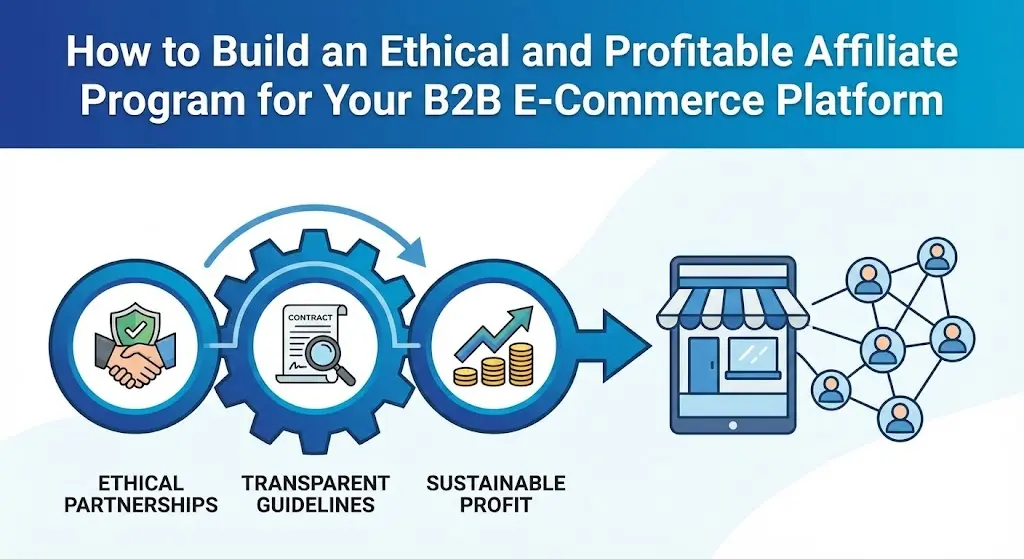
In today’s competitive B2B e-commerce software market, companies are constantly seeking new ways to drive sales, build brand awareness, and increase customer loyalty. While traditional marketing methods such as paid advertising, content marketing, and email campaigns remain effective, one strategy has steadily gained traction due to its low risk, high scalability, and measurable ROI: affiliate marketing.
For B2B e-commerce software companies, structuring an ethical affiliate program is a powerful method to expand reach while maintaining credibility. Unlike consumer-focused affiliate programs, B2B programs require a nuanced approach that aligns with long sales cycles, high-value transactions, and sophisticated buyer personas. This guide will break down the blueprint for creating a successful, ethical, and sustainable affiliate program tailored for B2B e-commerce software.
Why Affiliate Programs Are Valuable for B2B Software
Before diving into the structure, it’s important to understand why affiliate programs can be a game-changer for B2B software companies:
-
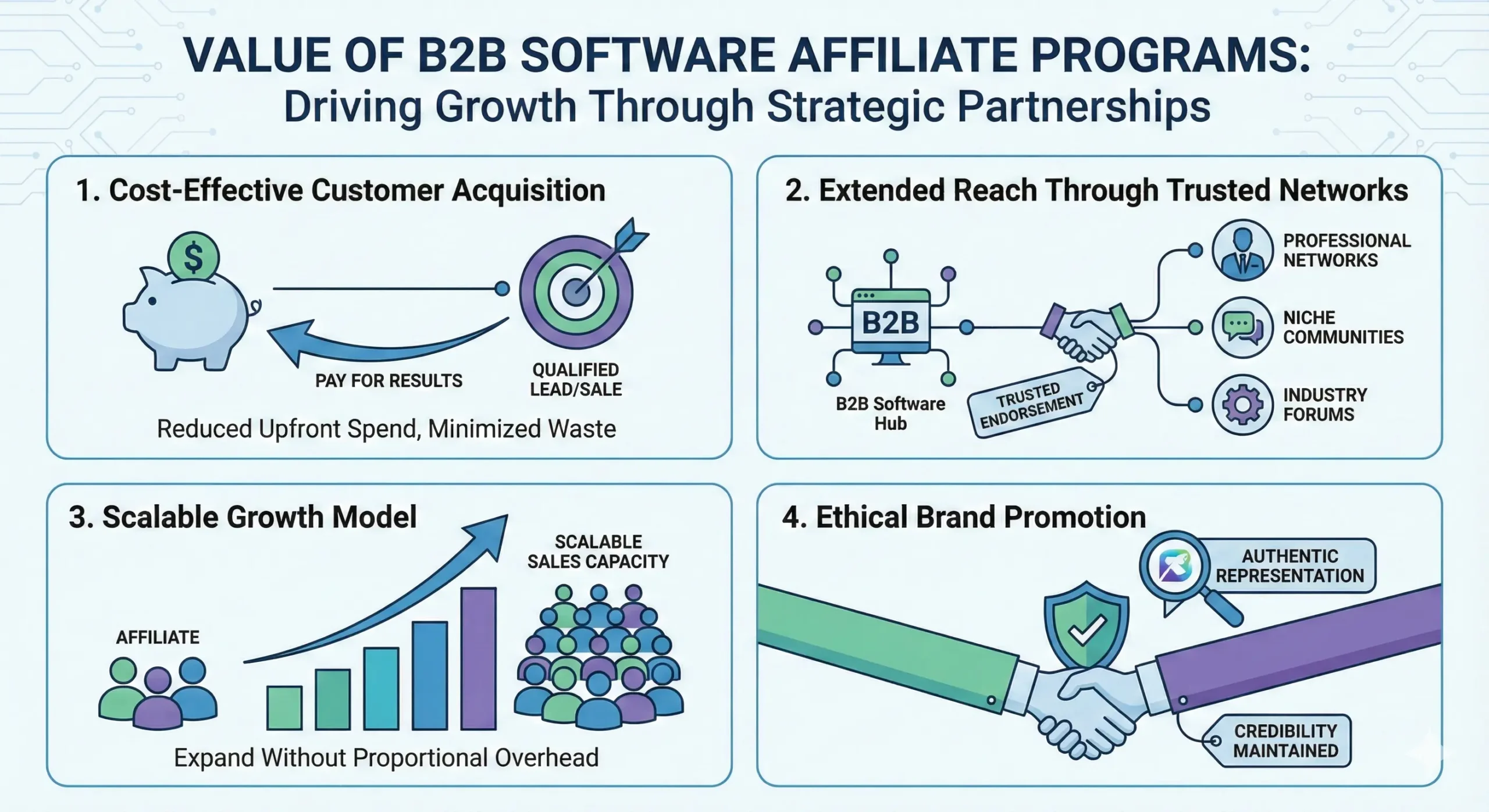
Cost-Effective Customer Acquisition: You only pay for results—commissions are typically tied to qualified leads, demo signups, or completed purchases. This reduces upfront marketing spend and minimizes wasted budget.
-
Extended Reach Through Trusted Networks: Affiliates bring access to their established audiences, which may include niche communities, professional networks, or industry-specific forums. Their endorsement can significantly shorten the trust-building phase with potential customers.
-
Scalable Growth Model: Affiliate programs can expand organically as more partners join. Unlike direct sales teams, affiliates operate on commission, providing scalable sales capacity without proportional overhead costs.
-
Ethical Brand Promotion: When structured properly, affiliate programs can promote your software ethically, ensuring that affiliates represent your brand authentically and maintain credibility with their audience.

Step 1: Define Your Affiliate Program Goals
Start with clarity. Ask yourself:
-
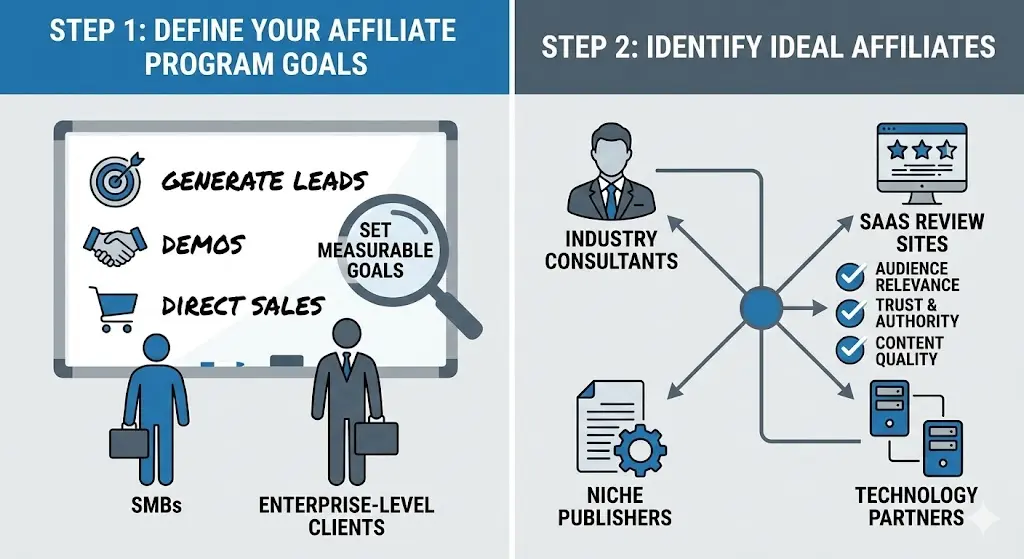
Do you want to generate leads, demos, or direct sales?
-
Are you targeting small and medium businesses (SMBs) or enterprise-level clients?
-
How does the affiliate program complement your existing marketing channels?
Setting measurable goals is critical. For example, an affiliate program aimed at enterprise B2B software might focus on qualified demo requests rather than immediate sales, as the purchase decision often involves multiple stakeholders and longer evaluation periods.
Step 2: Identify Ideal Affiliates
Unlike B2C programs that may rely on bloggers or influencers, B2B software affiliates are often industry-specific consultants, SaaS review sites, niche publishers, or technology partners. Key characteristics to look for:
-
Audience Relevance: Do they reach decision-makers like CTOs, e-commerce managers, or operations heads?
-
Trust and Authority: Are they respected voices in their domain? B2B buyers are skeptical of endorsements from unverified sources.
-
Content Quality: Do they produce detailed guides, webinars, or case studies that align with your software’s value proposition?
Building a selective network ensures that your software is promoted ethically, without over-reliance on clickbait or misleading tactics.
Step 3: Structure the Commission Model
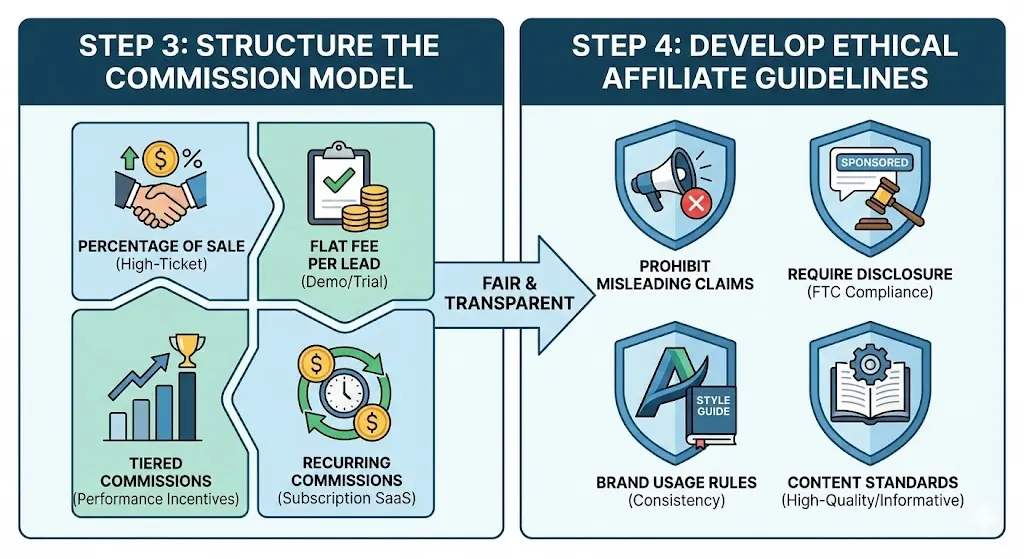
Choosing the right commission structure is one of the most important elements of an affiliate program. Common models include:
-
Percentage of Sale: Affiliates earn a percentage of the software purchase or subscription. Ideal for high-ticket enterprise solutions.
-
Flat Fee per Lead: Affiliates earn a fixed amount for a qualified lead, such as a demo signup or a free trial registration. Best for software with long sales cycles.
-
Tiered Commissions: Offers higher payouts for affiliates who bring more customers, incentivizing performance and loyalty.
-
Recurring Commissions: For subscription-based SaaS, affiliates can earn a percentage of the revenue for as long as the customer remains active.
It’s essential that commissions are transparent and fair, ensuring that affiliates are motivated without promoting unethical marketing practices.
Step 4: Develop Ethical Affiliate Guidelines
Ethics are paramount in B2B affiliate marketing. Clear guidelines protect your brand and ensure affiliates align with your company values:
-
Prohibit Misleading Claims: Affiliates should not exaggerate features or promise outcomes that your software cannot deliver.
-
Require Disclosure: Affiliates must disclose their partnership to comply with FTC regulations and maintain trust.
-
Brand Usage Rules: Provide clear instructions on logos, brand voice, and messaging to maintain consistency.
-
Content Standards: Encourage high-quality, informative content rather than spammy link placements.
Ethical guidelines not only protect your brand but also enhance affiliate credibility, making their promotion more effective.
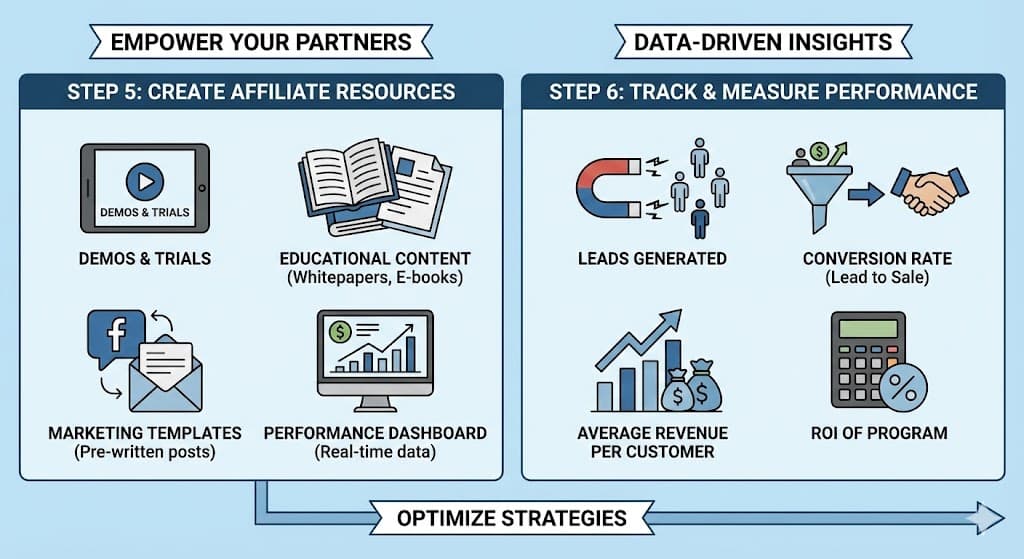
Step 5: Create Affiliate Resources
Successful B2B affiliates often need more than just a tracking link—they need tools and resources that make promotion easy and credible:
-
Product Demos and Trial Access: Enable affiliates to showcase your software accurately.
-
Educational Content: Provide whitepapers, e-books, webinars, or case studies that they can share.
-
Marketing Templates: Pre-written emails, social media posts, and banners help maintain brand consistency.
-
Performance Dashboard: Give affiliates access to real-time data about leads, conversions, and commissions.
These resources ensure that affiliates are equipped to promote effectively and ethically, increasing the chances of conversions.
Step 6: Track and Measure Performance
B2B affiliate programs must rely on data-driven insights. Metrics to monitor include:
-
Number of leads generated
-
Conversion rate from lead to demo or sale
-
Average revenue per referred customer
-
ROI of the affiliate program
Advanced tracking software can integrate with your CRM and analytics platforms, providing detailed reports. Regular evaluation allows you to optimize commission rates, improve partner engagement, and refine program strategies.
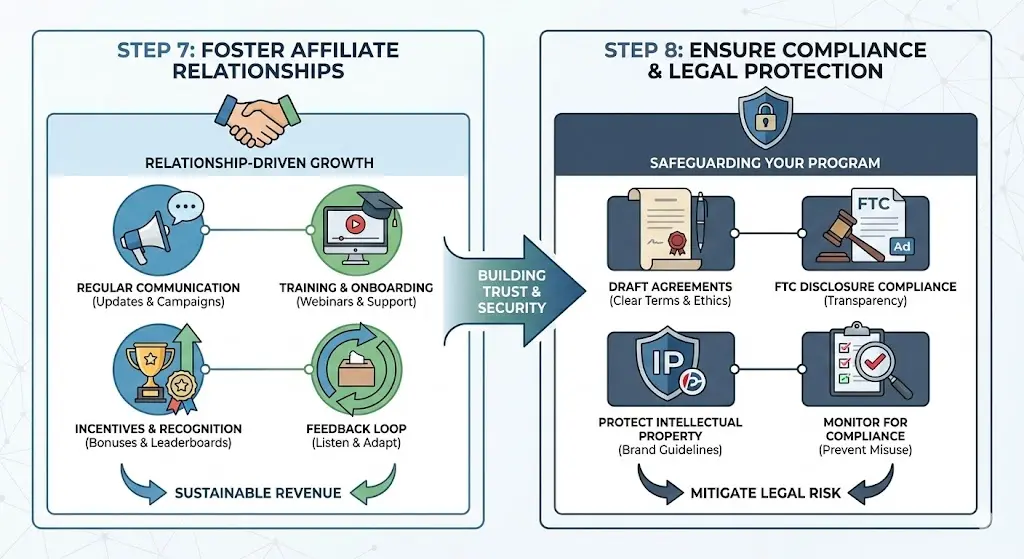
Step 7: Foster Affiliate Relationships
Affiliate marketing is not purely transactional—it’s relationship-driven, especially in B2B. Best practices include:
-
Regular Communication: Keep affiliates informed about product updates, feature releases, and marketing campaigns.
-
Training and Onboarding: Provide webinars, tutorials, and one-on-one support for new affiliates.
-
Incentives and Recognition: Highlight top-performing affiliates, offer bonuses, and create affiliate leaderboards.
-
Feedback Loop: Listen to affiliates’ suggestions on what content or campaigns work best.
Long-term relationships with affiliates lead to higher-quality leads and sustainable revenue growth.
Step 8: Ensure Compliance and Legal Protection
Affiliate programs must comply with contractual, regulatory, and ethical standards:
-
Draft affiliate agreements specifying commissions, terms, and ethical obligations.
-
Ensure FTC disclosure compliance, particularly for digital promotion.
-
Protect your intellectual property through brand guidelines and usage rules.
-
Monitor affiliates for compliance regularly to prevent misuse or misleading promotion.
A well-documented and enforceable program safeguards your software company from legal risk while maintaining affiliate trust.
Conclusion
An ethical and well-structured affiliate program for B2B e-commerce software can significantly enhance growth, extend market reach, and generate high-quality leads. By following a strategic blueprint—defining goals, identifying ideal affiliates, structuring fair commissions, providing resources, maintaining ethical standards, and tracking performance—companies can create a mutually beneficial ecosystem where affiliates and the business thrive together.
B2B affiliate marketing is not a short-term tactic but a sustainable, ethical monetization strategy that complements other sales and marketing channels. When executed with integrity, it can build credibility, strengthen brand reputation, and accelerate revenue growth—while providing affiliates with meaningful income through honest, value-driven promotion.
