



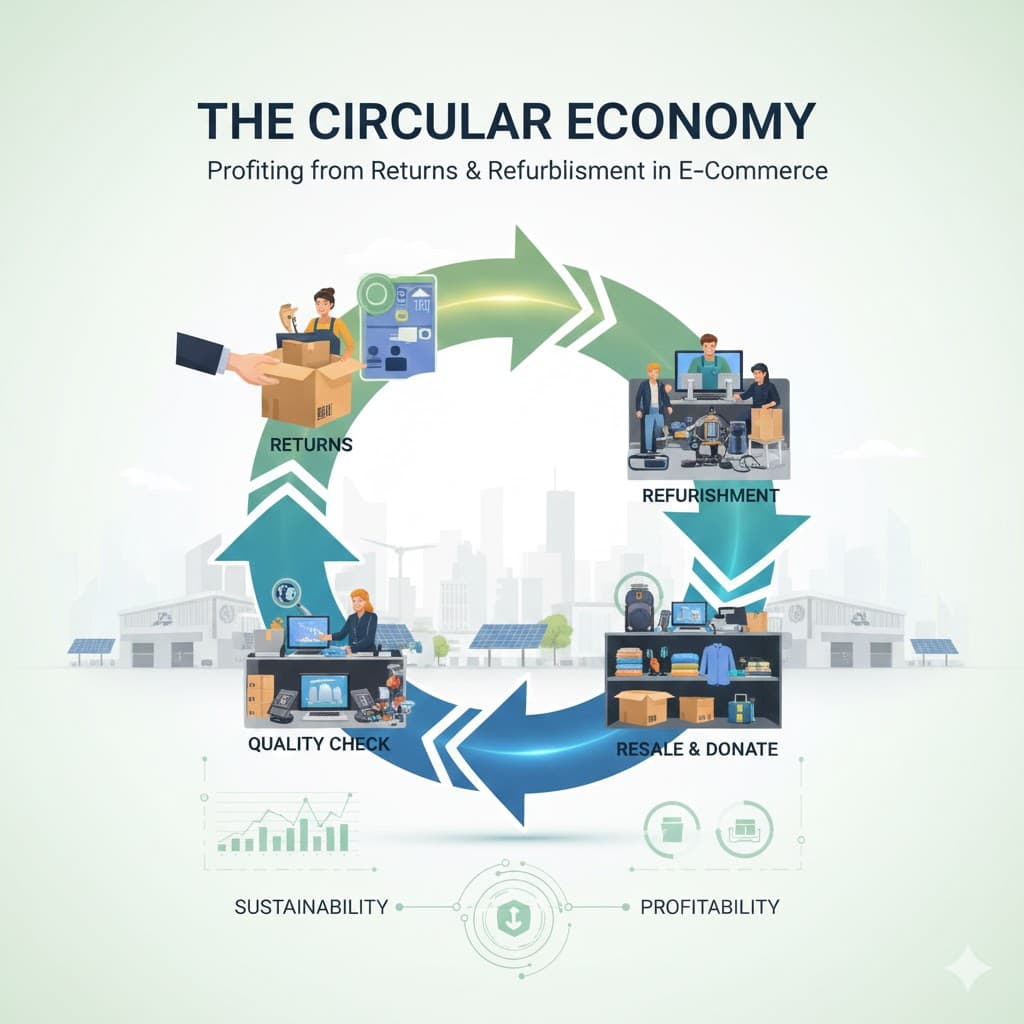
In today’s rapidly evolving e-commerce landscape, businesses face a growing challenge: managing returns efficiently while maintaining profitability. Traditional linear models—where products are manufactured, sold, and eventually discarded—are becoming increasingly unsustainable, both economically and environmentally. The circular economy offers a solution, transforming returns and refurbishment into revenue-generating opportunities while reducing waste. By adopting a closed-loop e-commerce strategy, companies can optimize operations, extend product life cycles, and create a new dimension of customer value.
Understanding the Circular Economy in E-Commerce
At its core, the circular economy is a model that emphasizes reuse, refurbishment, recycling, and reintegration of products into the supply chain. Unlike the linear approach, which treats returns as a cost burden, the circular approach sees them as a source of value. In the context of e-commerce, returns are inevitable—customers often change their minds, order multiple sizes, or discover defects—but these returns don’t have to erode profits.
A closed-loop e-commerce system transforms returned goods into refurbished or resellable inventory. By carefully managing returns, inspecting items, and restoring them to like-new condition, companies can resell products at reduced prices, donate items, or recycle components. This not only improves profitability but also aligns with sustainable business practices that appeal to environmentally conscious consumers.
The Operational Challenges of Returns
Returns represent a significant operational challenge in e-commerce. On average, online retailers experience return rates between 15% and 30%, with some categories, like fashion and electronics, seeing rates as high as 50%. The operational impact includes:
-
Reverse Logistics: Managing the transport of returned goods from the customer back to the warehouse.
-
Inspection and Sorting: Identifying whether items are defective, resellable, or recyclable.
-
Restocking and Refurbishment: Repairing or repackaging items to reintroduce them to the market.
-
Inventory Management: Integrating returned items into inventory systems without causing stock inaccuracies.
A circular approach addresses these challenges strategically, converting returns from a cost center into a profit center.
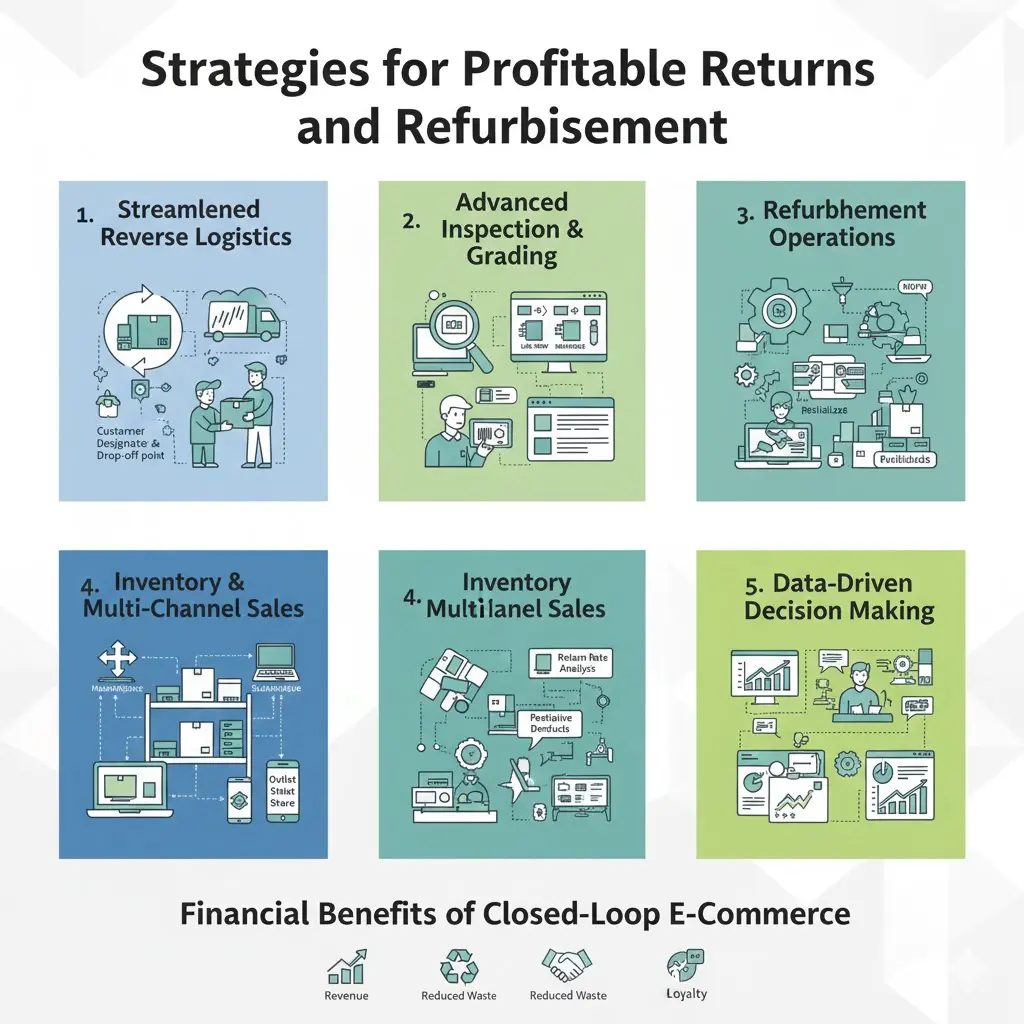
Strategies for Profitable Returns and Refurbishment
1. Streamlined Reverse Logistics
Efficient reverse logistics is the backbone of a closed-loop system. Retailers can implement smart return policies that optimize shipping routes and reduce handling costs. Partnering with logistics providers that specialize in reverse flows ensures that returned items reach inspection facilities quickly and safely. Some e-commerce companies even incentivize customers to return items to designated drop-off points, reducing shipping costs and environmental impact.
2. Advanced Inspection and Grading Systems
Once products return, businesses need to assess their condition accurately. Using grading systems—such as “like-new,” “good,” or “repairable”—allows companies to determine the appropriate next step for each item. Advanced technologies like AI-powered visual inspection and barcode scanning can accelerate sorting while minimizing human error, improving operational efficiency.
3. Refurbishment Operations
Refurbishment involves restoring products to a resellable state. This may include minor repairs, cleaning, or repackaging. Electronics often require component replacements, while apparel might need minor alterations. Efficient refurbishment operations rely on modular repair stations, trained technicians, and standardized processes that reduce turnaround time. By refurbishing products effectively, companies can sell them at competitive prices without compromising quality.
4. Inventory Integration and Multi-Channel Sales
Refurbished items must be seamlessly reintegrated into inventory systems. This allows companies to track refurbished stock, monitor performance, and plan future production. Multi-channel sales strategies—such as selling refurbished items on dedicated marketplaces, through outlet stores, or via subscription services—help businesses reach different customer segments while maximizing revenue from returned products.
5. Data-Driven Decision Making
A closed-loop system generates valuable data on returns patterns, defects, and customer preferences. By analyzing this data, e-commerce businesses can:
-
Identify products with high return rates and investigate design or sizing issues.
-
Predict refurbishment demand and allocate resources efficiently.
-
Optimize inventory and pricing strategies for refurbished items.
Data-driven insights ensure that operations are not only efficient but also aligned with market demand.
Financial Benefits of Closed-Loop E-Commerce
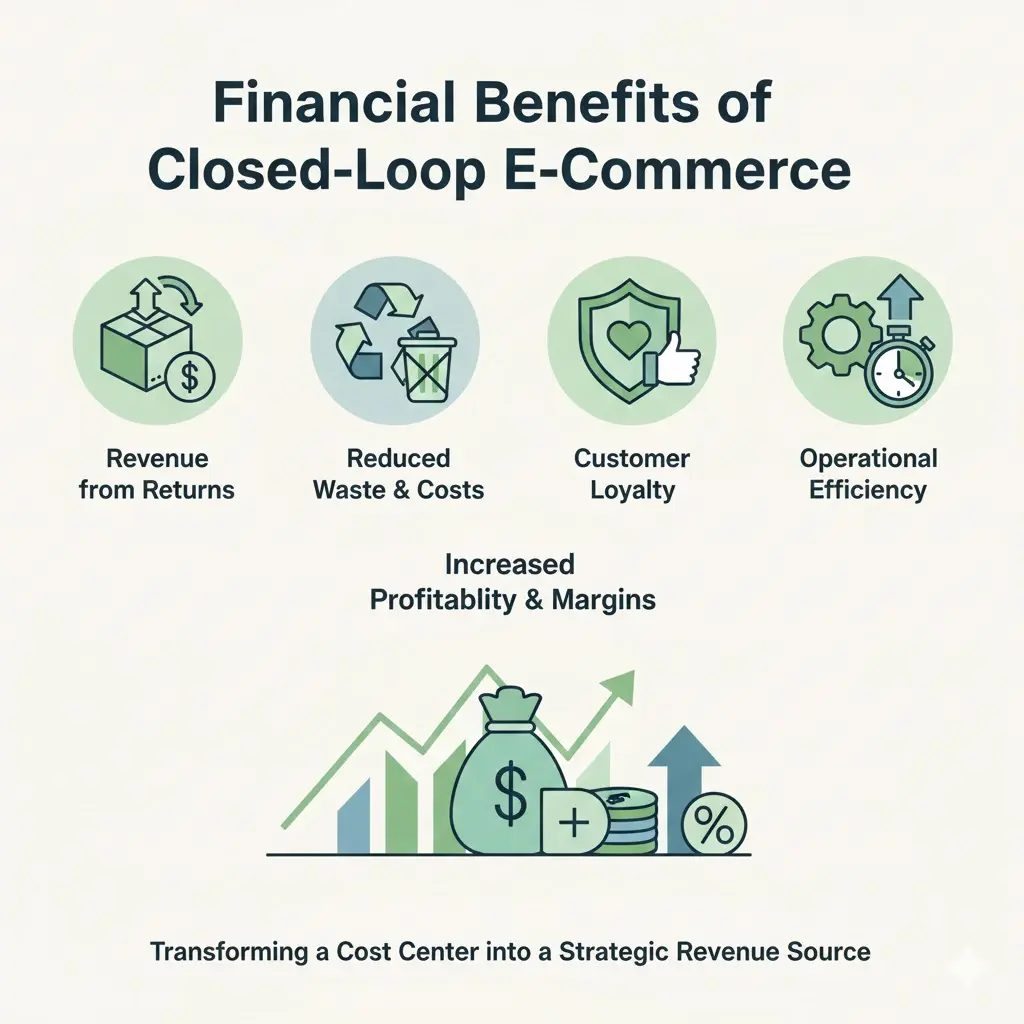
Implementing a circular model in e-commerce provides several financial advantages:
-
Revenue from Returns: Instead of writing off returned items, companies can resell or refurbish them for profit.
-
Reduced Waste Disposal Costs: Recycling and refurbishment minimize landfill fees and associated disposal expenses.
-
Customer Loyalty and Brand Value: Sustainable practices enhance brand reputation, attracting environmentally conscious consumers and encouraging repeat purchases.
-
Operational Efficiency: Streamlined reverse logistics and refurbishment processes reduce overhead and improve profitability.
Companies that successfully implement closed-loop strategies often see a significant increase in gross margins on returned and refurbished products, transforming a traditional cost center into a strategic revenue source.
Sustainability and Competitive Advantage
Beyond immediate profitability, a circular e-commerce strategy strengthens long-term competitiveness. Consumers increasingly prioritize sustainability, and companies that demonstrate commitment to environmental responsibility gain a market edge. By incorporating circular operations, businesses can:
-
Lower their carbon footprint by reducing waste.
-
Extend product life cycles, making better use of materials and energy.
-
Align with global sustainability goals and regulations.
This approach not only benefits the planet but also resonates with the growing demographic of eco-conscious shoppers, translating sustainability into a tangible competitive advantage.
Conclusion: Closing the Loop for Profit and Sustainability
The shift toward a circular economy in e-commerce represents more than a trend—it is a strategic imperative. By focusing on returns, refurbishment, and closed-loop operations, companies can unlock new revenue streams, reduce operational costs, and reinforce their brand reputation. Efficient reverse logistics, advanced inspection, refurbishment processes, and data-driven decision-making form the foundation of this strategy.
E-commerce businesses that embrace circularity can transform returns from a financial burden into a source of profit and sustainability, demonstrating that environmental responsibility and operational efficiency can go hand-in-hand. In an era where consumers expect convenience and companies seek profitability, a circular, closed-loop model is the key to thriving in the modern e-commerce ecosystem.


