

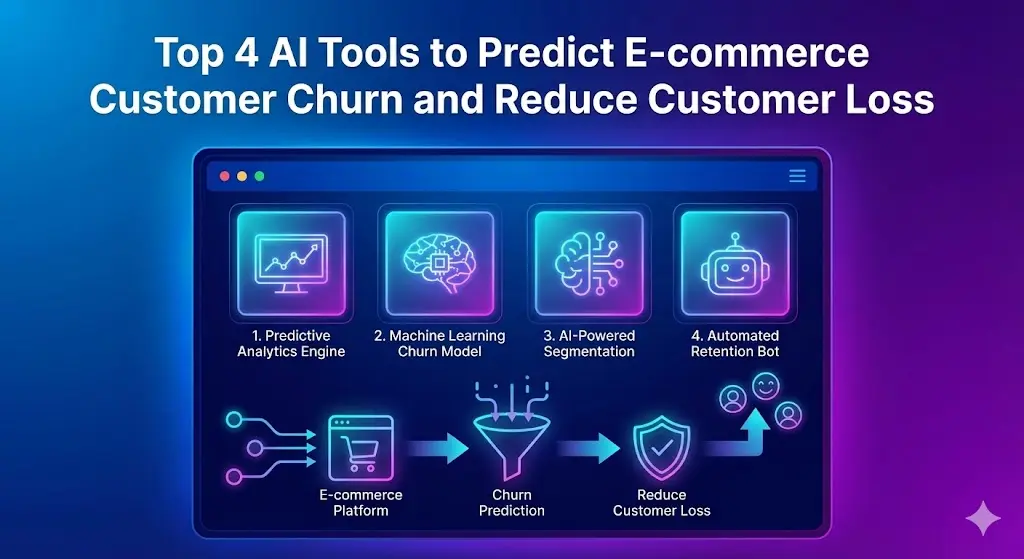
Customer churn is one of the most expensive problems in e-commerce. Acquiring new customers often costs significantly more than retaining existing ones, yet many online businesses still focus most of their resources on acquisition rather than prevention. The challenge has always been identifying which customers are likely to leave—and when—before it’s too late.
Modern AI tools can analyze massive volumes of customer behavior data, detect subtle patterns humans would miss, and predict churn with remarkable accuracy. But prediction alone isn’t enough. The real value comes from knowing how to act on those insights to retain customers and increase lifetime value.
This article explores four powerful categories of AI-driven tools used for predicting e-commerce churn and explains how businesses can turn predictions into profitable action.
Understanding Customer Churn in E-commerce
Before diving into tools, it’s important to understand what churn looks like in an online retail environment. Unlike subscription services where churn is explicit, e-commerce churn is often silent. A customer doesn’t cancel anything—they simply stop buying.
Common signs of churn include:
-
Declining purchase frequency
-
Reduced session duration
-
Abandoned carts with no return
-
Lower email engagement
-
Increased time since last purchase
AI tools are designed to monitor these signals continuously and assess the likelihood that a customer will disengage entirely.
Why Traditional Churn Analysis Falls Short
Manual churn analysis typically relies on static rules such as “hasn’t purchased in 90 days” or “order frequency dropped by 50%.” While useful, these rules are reactive and overly simplistic.
AI-based churn prediction improves accuracy by:
-
Analyzing thousands of behavioral variables at once
-
Detecting non-obvious patterns
-
Updating predictions in real time
-
Adapting as customer behavior changes
Instead of asking who already churned, AI helps answer who is about to churn.
Tool Category 1: Predictive Analytics Platforms
What They Do
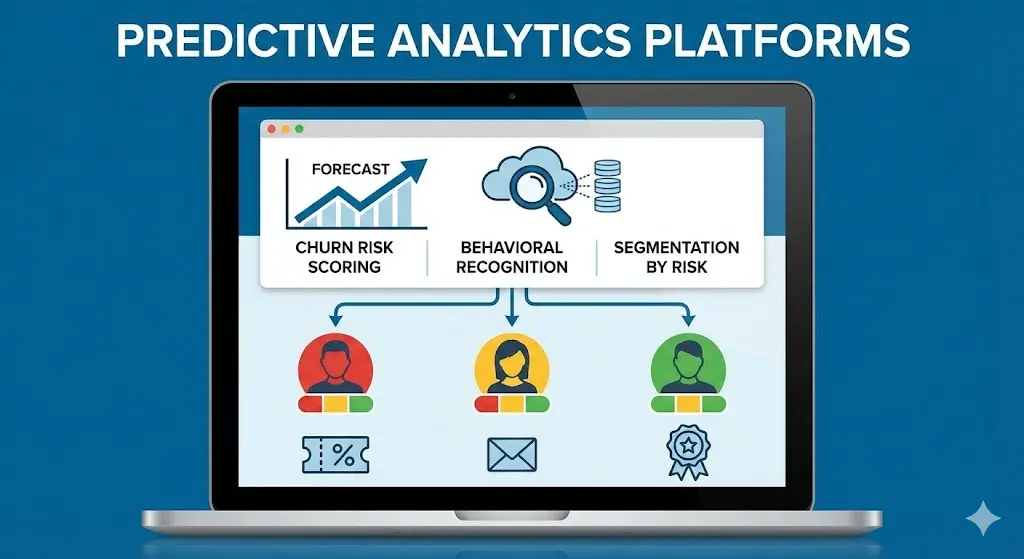
Predictive analytics tools use machine learning models to assign each customer a churn probability score. These platforms process historical and real-time data such as purchases, browsing activity, and engagement metrics.
Key Capabilities
-
Churn risk scoring for individual customers
-
Behavioral pattern recognition
-
Automated model retraining
-
Customer segmentation by risk level
How to Act on the Data
Once customers are categorized by churn risk, businesses can deploy targeted retention strategies:
-
High-risk customers: Offer time-sensitive incentives or personalized discounts
-
Medium-risk customers: Re-engagement campaigns with product recommendations
-
Low-risk customers: Loyalty programs and upsell opportunities
The key is prioritization. AI allows teams to focus retention efforts where they will have the highest impact.
Tool Category 2: AI-Powered Customer Data Platforms (CDPs)
What They Do
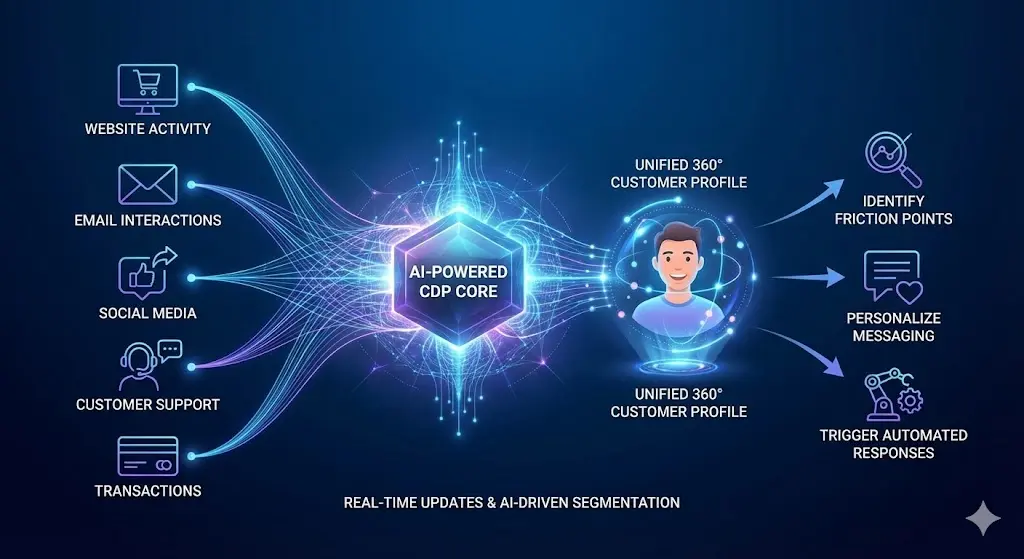
AI-driven CDPs unify customer data from multiple touchpoints—website activity, email interactions, social media, customer support, and transactions—into a single profile.
Why They Matter for Churn Prediction
Churn rarely results from one action. It’s usually the result of cumulative experiences. CDPs allow AI models to see the full customer journey, not isolated events.
Key Capabilities
-
Cross-channel behavior tracking
-
Identity resolution across devices
-
Real-time profile updates
-
AI-driven segmentation
How to Act on the Data
With a complete customer view, businesses can:
-
Identify friction points in the journey
-
Personalize messaging across channels
-
Trigger automated responses when negative patterns emerge
For example, if AI detects declining engagement and recent support complaints, it can trigger a proactive service outreach before the customer disengages.
Tool Category 3: Behavioral AI and Recommendation Engines
What They Do
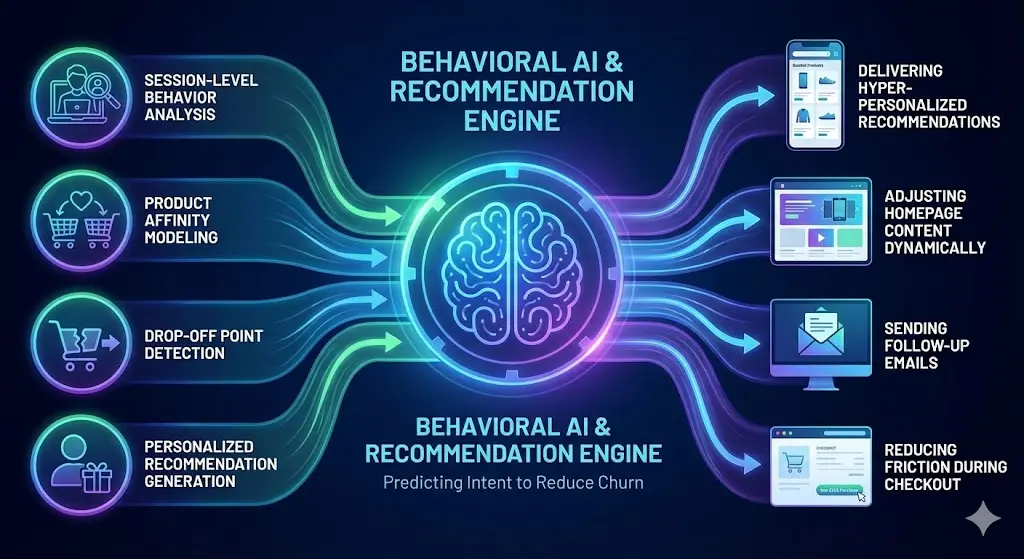
Behavioral AI tools analyze how customers interact with products, pages, and content. They use this information to predict intent and disengagement.
Why They’re Powerful
Customers often churn because they fail to find relevant products or feel overwhelmed by choice. Behavioral AI detects these struggles early.
Key Capabilities
-
Session-level behavior analysis
-
Product affinity modeling
-
Drop-off point detection
-
Personalized recommendation generation
How to Act on the Data
Businesses can reduce churn by:
-
Delivering hyper-personalized product recommendations
-
Adjusting homepage content dynamically
-
Sending follow-up emails based on browsing behavior
-
Reducing friction during checkout
If a customer repeatedly browses but never purchases, AI can adjust pricing visibility, product placement, or incentives to re-engage them.
Tool Category 4: AI-Driven Customer Engagement and Automation Tools
What They Do
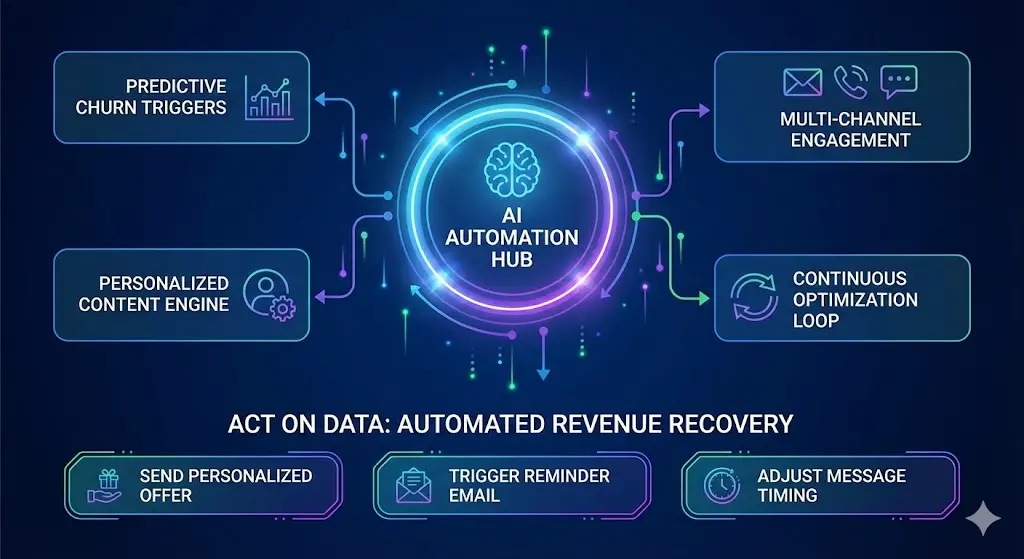
These tools combine churn prediction with automated engagement. Instead of just identifying risk, they act immediately through emails, push notifications, or in-app messages.
Key Capabilities
-
Predictive trigger-based messaging
-
Multi-channel automation
-
Personalized content generation
-
Continuous performance optimization
How to Act on the Data
This category is where churn prediction turns into revenue recovery.
Examples of AI-driven actions:
-
Sending a personalized offer when churn probability spikes
-
Triggering reminder emails after browsing inactivity
-
Adjusting message timing based on customer responsiveness
-
Testing different retention messages automatically
By automating responses, businesses can act faster than human teams ever could.
Turning Churn PredictionsInto a Retention Strategy
Having AI tools is only half the solution. The most successful e-commerce brands build structured processes around the insights.
Step 1: Define Churn Clearly
Decide what churn means for your business—90 days of inactivity, 6 months, or another benchmark.
Step 2: Segment Customers by Risk
Group customers into tiers based on churn probability rather than treating everyone the same.
Step 3: Match Actions to Risk Level
Not every customer needs a discount. Some need better recommendations, others need reassurance or support.
Step 4: Measure Retention Impact
Track retention rates, repeat purchases, and lifetime value to evaluate which interventions work best.
Step 5: Continuously Refine
AI models improve over time—but only if feedback loops are in place.
Ethical Use of AI in Churn Prediction
While AI offers powerful insights, transparency and customer trust remain critical. Businesses should:
-
Avoid overly aggressive retention tactics
-
Respect data privacy regulations
-
Provide real value, not manipulation
-
Focus on improving experience, not just preventing churn
When used responsibly, AI benefits both businesses and customers.
The Future of AI and Customer Retention
As AI technology evolves, churn prediction will become:
-
More real-time
-
More personalized
-
More integrated across platforms
-
More focused on lifetime relationship building
Instead of reacting to churn, businesses will increasingly prevent it altogether.
Conclusion
Predicting customer churn in e-commerce is no longer guesswork. With the right AI tools, businesses can identify at-risk customers early, understand why they’re disengaging, and take meaningful action before revenue is lost.
The real advantage isn’t just in prediction—it’s in execution. Companies that combine AI insights with thoughtful, customer-first strategies will not only reduce churn but build stronger, longer-lasting relationships.
In a competitive e-commerce landscape, retention powered by AI is no longer optional—it’s essential.
