



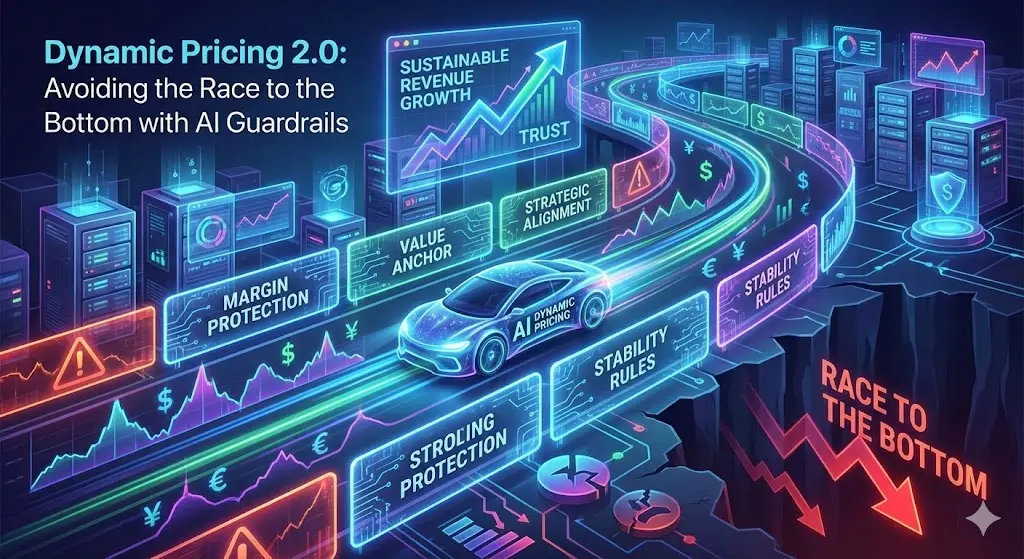
Dynamic pricing is not new. Airlines, hotels, ride-hailing platforms, and e-commerce marketplaces have used price adjustments for decades to match supply and demand. What is new is the scale, speed, and intelligence with which pricing decisions are now made.
Welcome to Dynamic Pricing 2.0 — an era where artificial intelligence doesn’t just react to demand but predicts behavior, adapts to market shifts, and continuously optimizes prices in real time. While this evolution offers immense potential for revenue growth, it also introduces a serious risk: the race to the bottom.
Without proper controls, AI-driven pricing systems can unintentionally erode margins, damage brand value, and trigger destructive price wars. This is where AI guardrails become essential.
This article explores what Dynamic Pricing 2.0 really means, why the race to the bottom is a growing threat, and how businesses can use intelligent guardrails to protect value while remaining competitive.

What Is Dynamic Pricing 2.0?
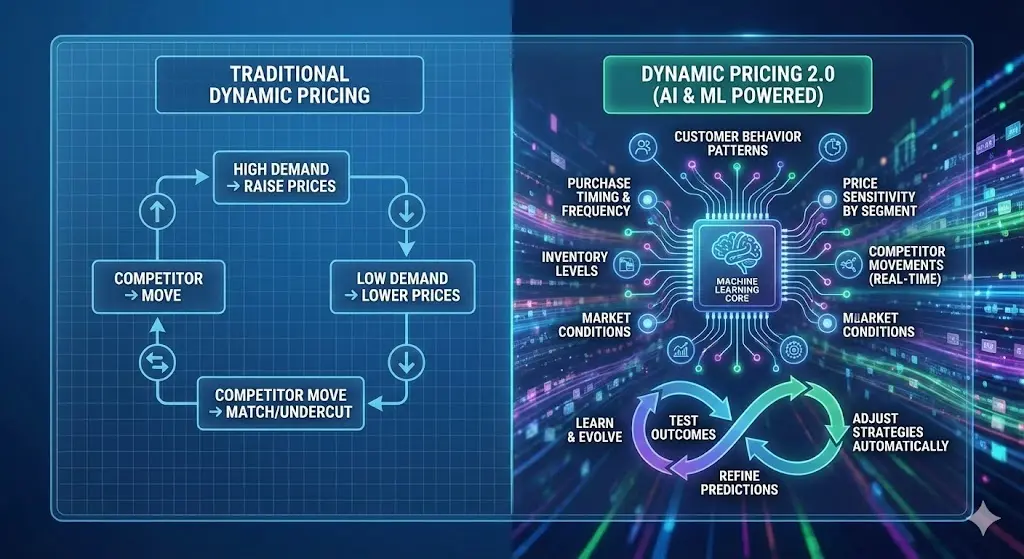
Traditional dynamic pricing relied on relatively simple rules:
-
Raise prices when demand is high
-
Lower prices when demand drops
-
Match or undercut competitors
Dynamic Pricing 2.0 goes much further. Powered by machine learning and real-time data, modern systems analyze hundreds of variables simultaneously, such as:
-
Customer behavior patterns
-
Purchase timing and frequency
-
Price sensitivity by segment
-
Competitor movements
-
Inventory levels
-
Market conditions
Instead of static rules, pricing models learn and evolve. They continuously test outcomes, refine predictions, and adjust pricing strategies automatically.
This intelligence can dramatically improve revenue optimization — but only if it’s used responsibly.
The Hidden Risk: The Race to the Bottom
When AI systems are optimized solely for short-term conversion or volume, they often converge toward the same behavior: price reduction.
Here’s why this happens:
-
Algorithms detect that lower prices increase short-term sales
-
Competitor price matching triggers downward spirals
-
Models prioritize immediate performance metrics
-
Long-term brand impact is often excluded from training data
Over time, businesses may find themselves trapped in:
-
Shrinking profit margins
-
Commoditized offerings
-
Price-led competition instead of value-led differentiation
Ironically, the same intelligence meant to maximize profit can destroy it if left unchecked.
Why Price Wars Are More Dangerous in the AI Era
In the past, price wars unfolded slowly. Humans set prices, monitored results, and reacted over days or weeks. Today, AI systems can respond in milliseconds.
This speed amplifies risk:
-
One price cut can trigger automated responses across an entire market
-
Algorithms “learn” aggressive behavior from each other
-
Small errors scale instantly across thousands of products
Without guardrails, AI pricing systems don’t just compete — they collide.
What Are AI Guardrails in Pricing?
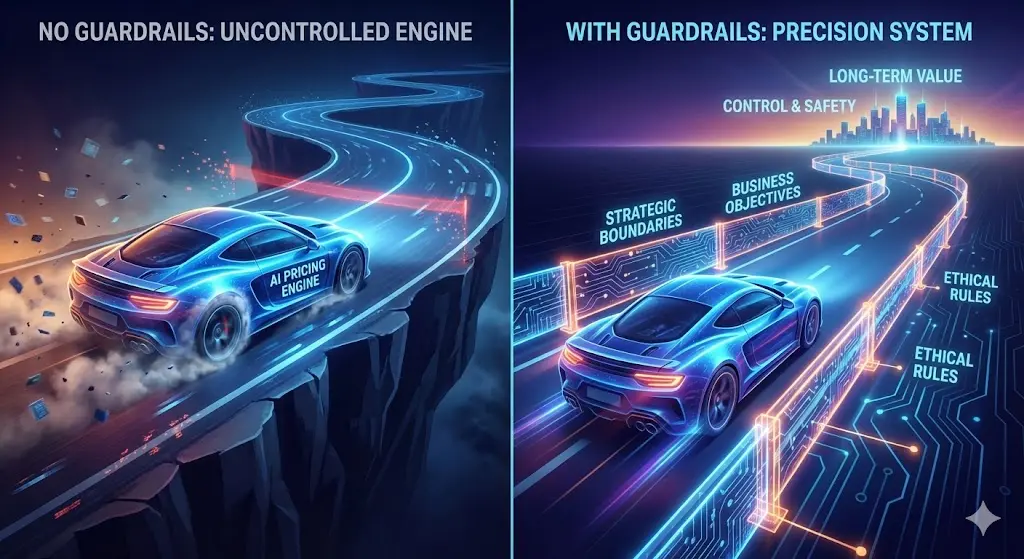
AI guardrails are intentional constraints, rules, and strategic boundaries built into pricing systems to ensure decisions align with business objectives, ethics, and long-term value.
They do not limit intelligence — they direct it.
Think of guardrails as the difference between:
-
A powerful engine with no brakes
-
A high-performance system designed for control, safety, and precision
Core Guardrails Every Dynamic Pricing System Needs
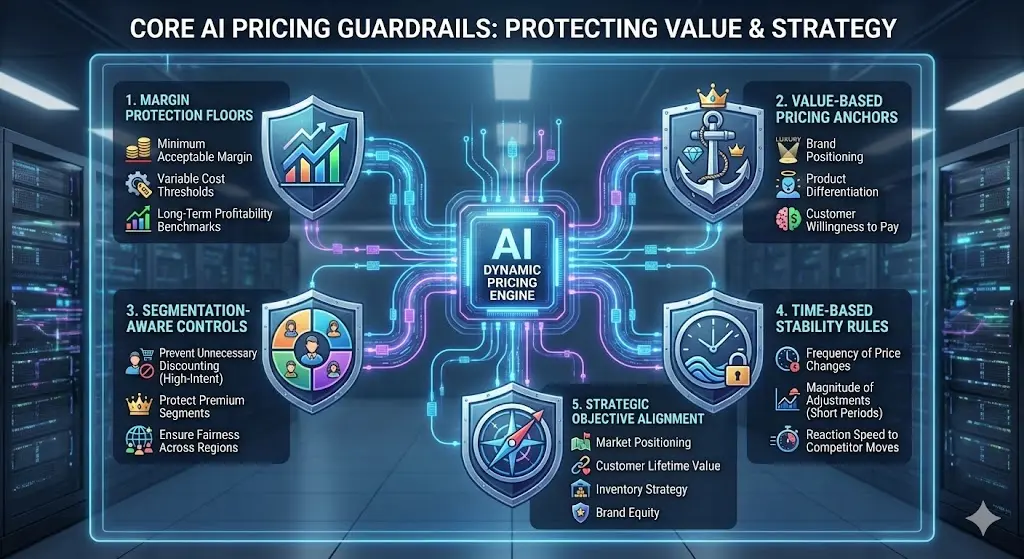
1. Margin Protection Floors
AI should never be allowed to optimize prices below sustainable margins. A pricing guardrail must define:
-
Minimum acceptable margin by product or category
-
Variable cost thresholds
-
Long-term profitability benchmarks
This ensures that volume growth never comes at the expense of financial health.
2. Value-Based Pricing Anchors
Dynamic pricing should not be detached from perceived value. Guardrails should anchor prices to:
-
Brand positioning
-
Product differentiation
-
Customer willingness to pay
AI systems must learn that not all demand is price-driven. In many cases, consistency and trust drive loyalty more than discounts.
3. Segmentation-Aware Controls
Advanced pricing must recognize that not all customers behave the same. Guardrails can:
-
Prevent unnecessary discounting for high-intent customers
-
Protect premium segments from price erosion
-
Ensure fairness across regions and demographics
This avoids blanket price drops that harm revenue potential.
4. Time-Based Stability Rules
Constant price fluctuations can confuse customers and weaken trust. Guardrails should limit:
-
Frequency of price changes
-
Magnitude of adjustments within short periods
-
Reaction speed to competitor moves
Stability is often as important as competitiveness.
5. Strategic Objective Alignment
Dynamic pricing should reflect strategic goals, not just transactional outcomes. Guardrails can align AI decisions with objectives such as:
-
Market positioning
-
Customer lifetime value
-
Inventory strategy
-
Brand equity
This shifts pricing from reactive to intentional.
Dynamic Pricing 2.0 Is About Intelligence, Not Aggression
The biggest misconception about AI pricing is that “smarter” always means “cheaper.”
In reality, advanced pricing systems should:
-
Identify where price sensitivity is low
-
Recognize when demand is value-driven
-
Know when not to compete on price
True intelligence means knowing when to hold, when to raise, and when to walk away.
The Role of Human Oversight
AI guardrails are not a replacement for human judgment — they are a collaboration tool.
Pricing leaders should:
-
Define strategic constraints
-
Review model behavior regularly
-
Adjust guardrails as markets evolve
-
Monitor unintended outcomes
Dynamic Pricing 2.0 works best when human strategy sets the destination and AI handles the navigation.
Ethical and Brand Considerations
Unchecked AI pricing can also create ethical and reputational risks:
-
Perceived price discrimination
-
Sudden price spikes during high demand
-
Inconsistent customer experiences
Guardrails help ensure:
-
Transparent pricing behavior
-
Consistent brand trust
-
Fair treatment across customer groups
In a world where consumers are increasingly price-aware, trust is a competitive advantage.
The Competitive Advantage of Guardrail-Driven Pricing
Businesses that adopt AI guardrails gain more than protection — they gain leverage.
Benefits include:
-
Sustainable profit growth
-
Reduced volatility
-
Stronger customer relationships
-
Differentiation beyond price
Instead of racing to the bottom, these organizations compete on intelligence, value, and resilience.
Looking Ahead: The Future of Pricing Strategy
As AI systems become more autonomous, pricing will increasingly reflect the values embedded in the models. Companies that fail to define guardrails will allow algorithms to define their strategy — often unintentionally.
Dynamic Pricing 2.0 is not about automation alone. It is about controlled intelligence, where speed is balanced with wisdom.
Final Thoughts
Dynamic pricing powered by AI has the potential to transform revenue management. But without guardrails, it can just as easily destroy value as create it.
Avoiding the race to the bottom requires:
-
Clear strategic intent
-
Intelligent constraints
-
Continuous oversight
Dynamic Pricing 2.0 is not about winning every price comparison. It’s about building a system that understands when price matters — and when it doesn’t.
In the age of AI, the smartest pricing strategy isn’t the cheapest one — it’s the most intentional one.


