
Introduction
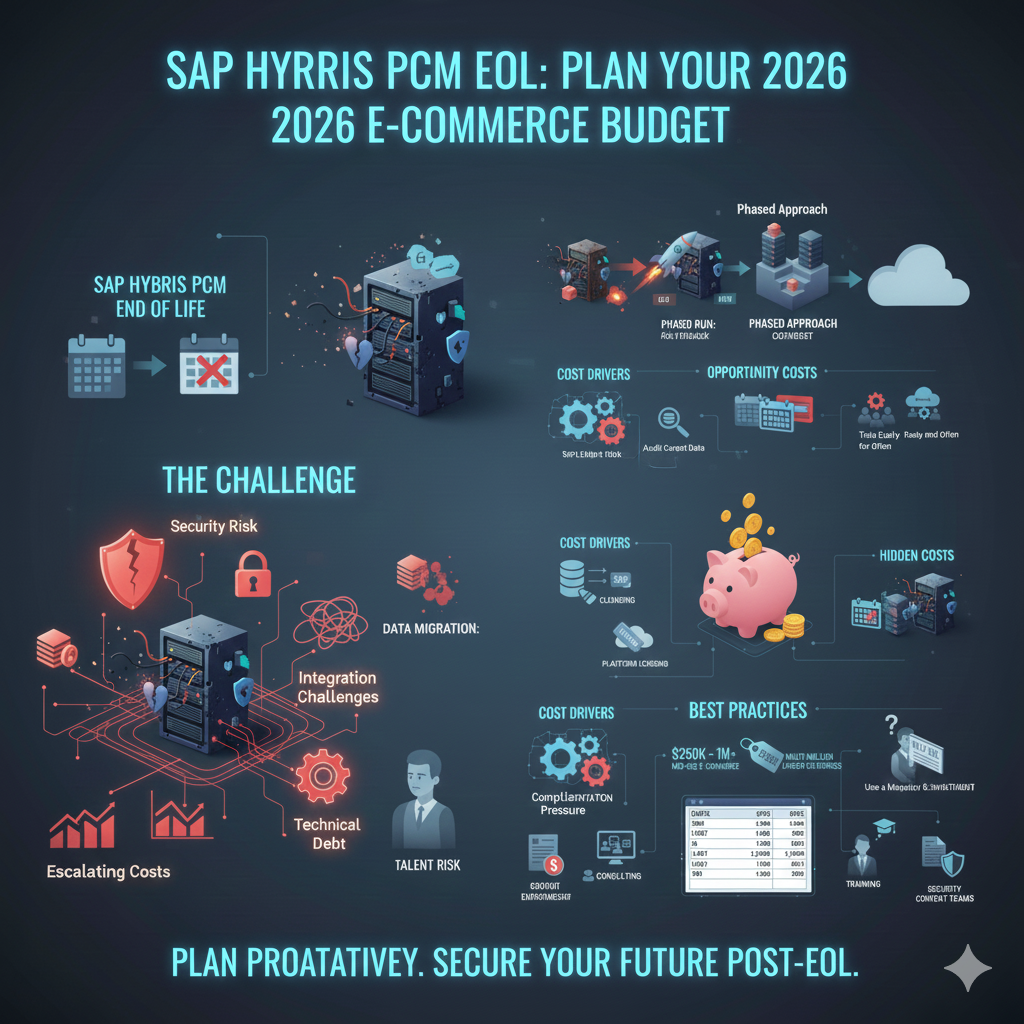
In today’s fast‑moving e‑commerce landscape, staying ahead means more than just launching a digital storefront — it means ensuring that the underlying technology powering your product catalog and content management remains secure, supported, and scalable. The concept of EOL (End of Life) for software is increasingly important for platform decision‑makers, because when a provider stops supporting a component, businesses face risks that can disrupt operations and damage the bottom line.
One such piece of software catching attention now is SAP Hybris PCM (Product Content Management). For years, Hybris PCM has been a reliable backbone for many e‑commerce companies managing extensive and complex product catalogs. If you use or plan to use Hybris PCM, understanding its EOL timeline is critical — especially when planning your 2026 budget. Failing to address this deadline proactively could mean spiraling costs or operational risk just as consumer demand continues to scale.
Understanding EOL and SAP Hybris PCM
What EOL Means for Software and E-commerce Platforms
End of Life (EOL) refers to the point at which a software vendor stops providing support, updates, and patches for a given product. For e‑commerce platforms, this can be particularly serious: without security patches, vulnerabilities may go unaddressed; without performance improvements, scaling issues can arise; and without feature updates, the platform may lag behind competitors.
When a core component such as Product Content Management reaches EOL, businesses relying on it must weigh their options — migrate, upgrade, or continue at their own risk — and account for these choices in future budget cycles.
Features and Benefits of SAP Hybris PCM
SAP Hybris PCM has historically offered a robust set of capabilities:
Centralized Product Repository: It allows companies to store, manage, and enrich product information (attributes, media, pricing) in a central location.
Multi‑Channel Distribution: PCM supports channel syndication, enabling consistent product data delivery to web, mobile, marketplaces, and print.
Role-Based Governance: Teams can collaborate via workflows: marketing, catalog management, operations, and merchandising can edit or approve product data.
Rich Data Modeling: Hybris PCM lets businesses define complex product hierarchies, variant configurations, and localized product views.
Integration Capability: PCM integrates tightly with other modules in the SAP Commerce / Hybris suite, such as order management, pricing, and personalization.
These features have made Hybris PCM a preferred choice for enterprises handling large, diverse catalogs that demand strict data governance and multi-channel consistency.
Timeline of SAP Hybris PCM’s EOL Announcement
In mid-2024, SAP officially announced that support for Hybris PCM would end by December 31, 2026. This gives organizations roughly 18–24 months (depending on contract renewal terms) to plan their strategy. The implications are significant: after that date, SAP will no longer deliver critical updates, security patches, or technical support for PCM.
For many companies, this announcement may come at a manageable lead time — but it underscores the need to proactively plan migration or replacement to avoid business disruption, data risk, and escalating costs.
Impact on Businesses
Effects on Current Users
Current users of Hybris PCM will feel the impact in several ways:
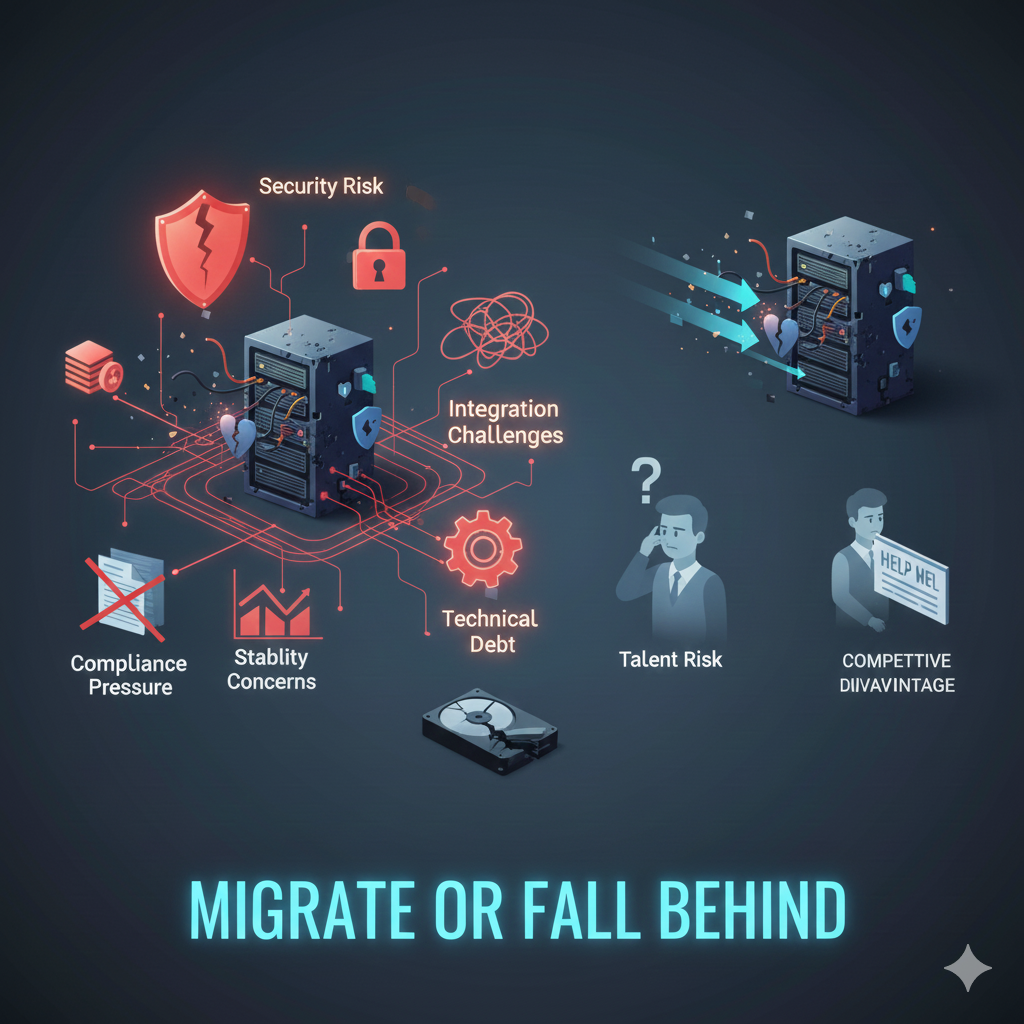
Security Risk: Without updates, platforms become more vulnerable to cyber threats.
Compliance Pressure: For companies in regulated industries, unsupported software could violate compliance standards.
Stability Concerns: Bugs or performance issues discovered after EOL may remain unpatched, affecting reliability and user experience.
Integration Challenges: As other parts of the e‑commerce stack evolve, PCM may not keep pace, creating integration friction with newer modules or third‑party systems.
Risks of Continuing with an EOL Product
Technical Debt: Maintaining an unsupported system often means building custom patches or paying for extended support, both of which drain resources.
Talent Risk: As PCM becomes obsolete, finding engineers with deep expertise may become harder and more expensive.
Competitive Disadvantage: Rivals migrating to more modern PIM/PCM systems could gain speed, flexibility, or cost advantage.
Disaster Recovery: Unsupported platforms may lack the resilience that enterprise-grade, modern SaaS PIMs now offer.
Importance of Migration Planning
Given these risks, migrating off Hybris PCM is not just a technical project — it’s a strategic business priority. Companies that delay risk being stuck with deprecated infrastructure, while those that plan now can budget in phases, test properly, and avoid last-minute crises.
Budgeting for 2026
How the EOL Announcement Drives Budget Decisions
The EOL date of December 2026 means that businesses must allocate a portion of their 2026 technology budget for migration, upgrades, or extended support. For many organizations, this will become a capital expense (CAPEX) or operating expense (OPEX) line item with significant implications. Finance leaders, product teams, and CIOs must collaborate now to forecast costs, allocate funds, and build a roadmap.
Estimating Migration Costs
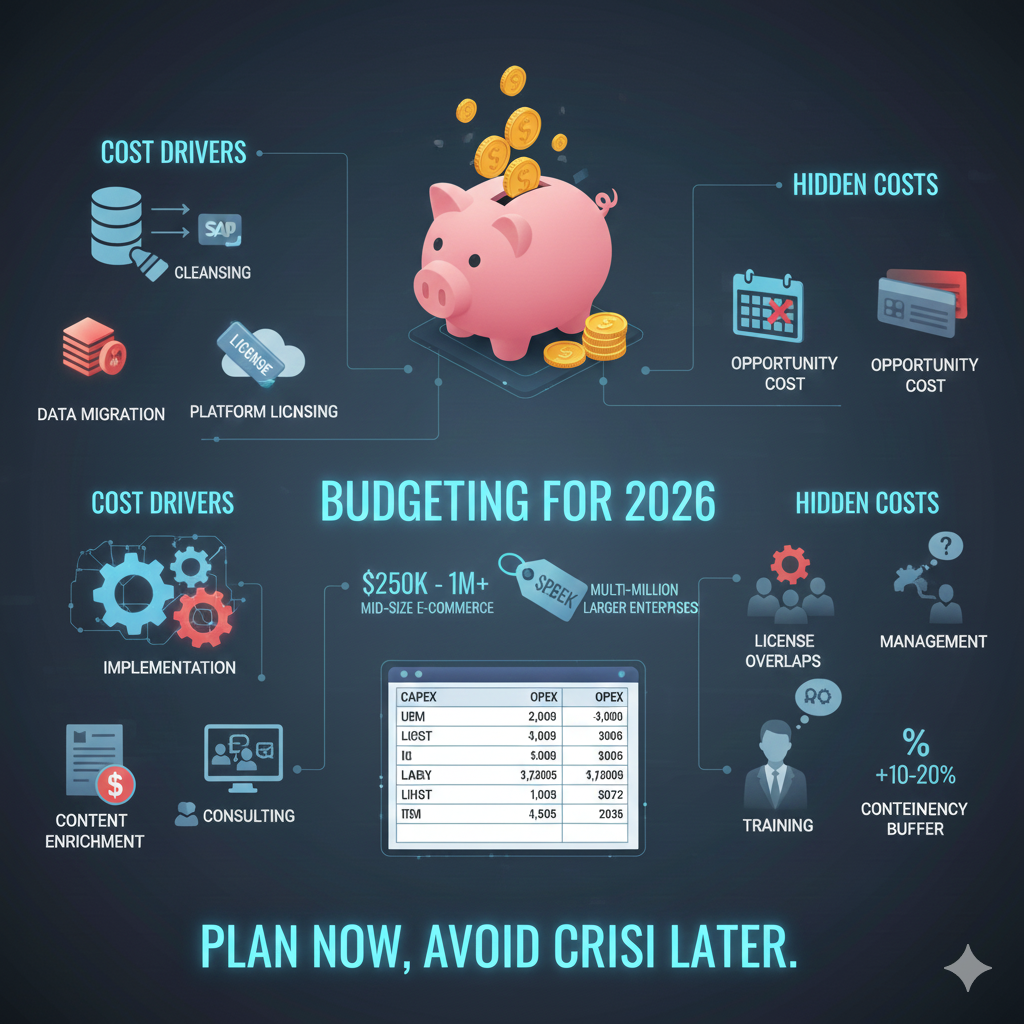
Cost drivers in a migration from Hybris PCM include:
Data Migration: Moving product data, digital assets, and taxonomy from PCM to the new system. This involves data cleansing, normalization, and reconciliation.
Platform Licensing: A new PIM or PCM platform license may be needed, whether cloud-based or on-premise.
Implementation: Consulting, engineering, and integration work to connect the new platform to existing e‑commerce, ERP, and order management systems.
Training: Teams will need training on the new system’s UI, workflows, and governance.
Content Enrichment: Rebuilding or improving workflows, product templates, and data governance in the new platform may require additional resources.
As a rough benchmark, mid-size e-commerce companies might budget $250,000–$1 million+ depending on scale, complexity, and the choice of platform. Larger enterprises may see multi‑million‑dollar migrations, particularly if they also revamp content workflows and digital asset management.
Hidden Costs and Budget Considerations
Opportunity Cost: During migration, teams may be less focused on innovation or product launches.
License Overlaps: You may pay two system licenses concurrently while migrating.
Change Management: Internal resistance or productivity loss during transition can reduce ROI.
Contingency Buffer: It’s wise to budget for 10–20% more than initial estimates for unexpected issues.
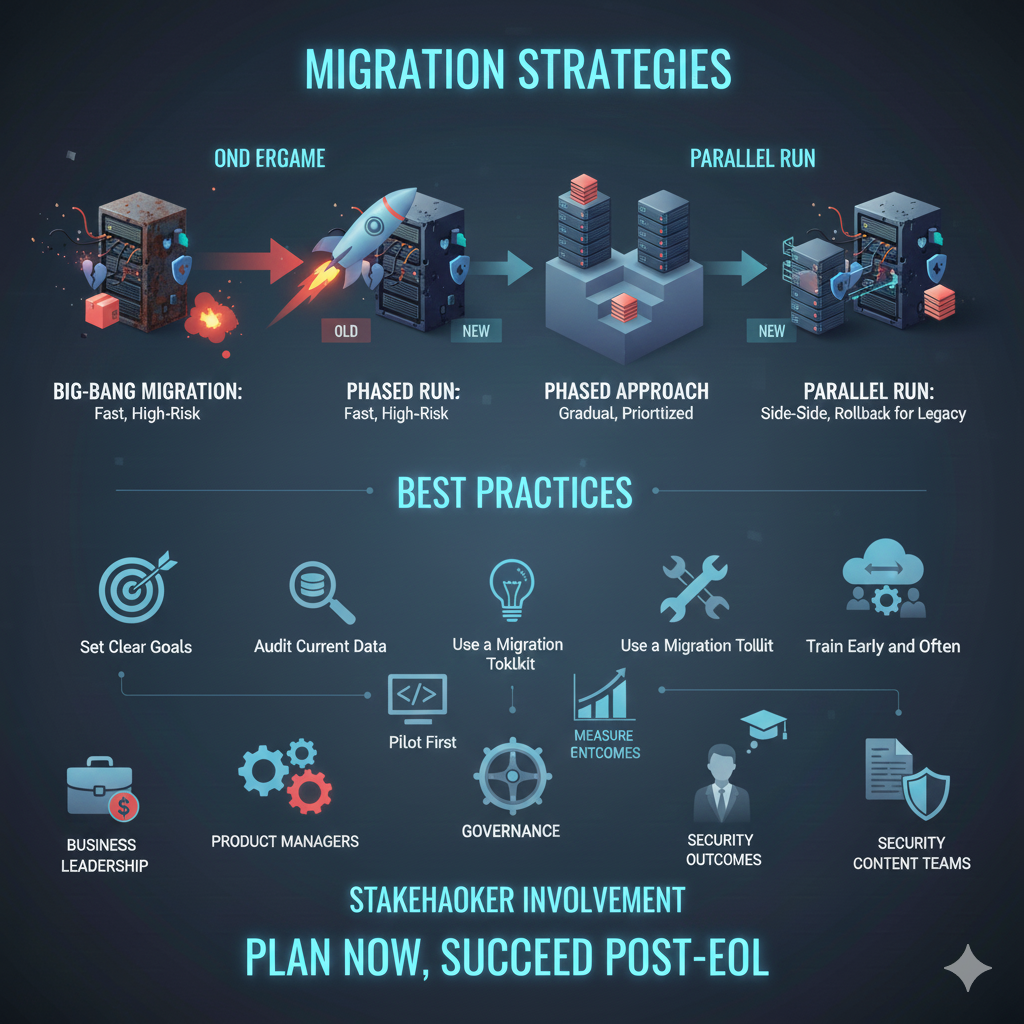
Migration Strategies
Possible Approaches to Migration
There are several strategies organizations can adopt:
Big-Bang Migration: All functionality is migrated in one go. High-risk but fast.
Phased Approach: Migrate business-critical product lines first, then gradually transition the rest.
Parallel Run: Run PCM and the new platform side by side for a transition period, enabling rollback if needed.
Hybrid Strategy: Keep PCM for a subset of legacy product lines while using a modern PIM for newer or growing catalogs.
Best Practices for a Smooth Transition
Set Clear Goals: Define business outcomes (e.g., performance, data quality, time-to-market) before choosing a migration path.
Audit Current Data: Conduct a data health check to identify obsolete or inconsistent product entries.
Use a Migration Toolkit: Leverage ETL/ELT tools, scripts, and connectors to speed data transfer.
Pilot First: Start migration with a small, representative product set to identify roadblocks early.
Train Early and Often: Involve business users, content managers, and stakeholders in training sessions before go-live.
Measure Outcomes: Define KPIs (e.g., time to enrich data, number of errors, user satisfaction) to monitor success.
Stakeholder Involvement
Successful migration requires cross-functional cooperation:
Business Leadership: to fund and prioritize
Product Managers: to define required workflows
IT/Engineering: to architect and implement
Merchandisers and Content Teams: to validate data and governance
Security and Compliance: to ensure risks are mitigated
Regular steering committees and a clear governance model will help maintain alignment and accountability.
Choosing the Right Alternative
Key Alternatives to SAP Hybris PCM
Some well-known PIM or PCM platforms that businesses may consider include:
Akeneo: Open‑source or enterprise PIM, strong data model and federation features.
inRiver: Feature-rich, cloud-based, and built for multi-channel, high-volume product environments.
Salsify: SaaS-first PIM/PCM with digital experience and syndication capabilities.
Contentserv: Focused on rich product storytelling, DAM integration, and omnichannel readiness.
Oracle CPQ & PIM: For enterprises seeking tight integration with Oracle stack.
Comparing Features, Pricing, and Scalability
Feature Set: Akeneo excels at data modeling; Salsify offers front-end syndication; inRiver is strong in channel integrations.
Pricing Model: SaaS platforms like Salsify typically charge per SKU or per user, while licenses for on‑premise tools (like Akeneo Enterprise) involve upfront fees.
Scalability: Cloud-native PIMs scale more easily; on-premise may require more infrastructure investment but provide deeper control.
Support and Community: Open-source tools may need custom support; commercial tools offer vendor-led professional services.
Choosing Based on Business Needs
Here’s a quick decision guide:
Large enterprise with complex catalog → inRiver or Contentserv
Fast-growing mid-market → Salsify or Akeneo SaaS
Tight integration with existing systems → consider PIM that aligns with your CRM/ERP
Global and multi-channel focus → select a solution with strong localization and syndication support
Evaluate vendors based on a combination of functional requirements, total cost of ownership (TCO), and platform roadmap.
Future Trends in E‑commerce Platforms
Emerging Technologies to Watch
Headless PIM/PCM: Separates backend product data from front-end presentation, enabling faster omnichannel innovation.
AI‑Driven Enrichment: Uses artificial intelligence to auto-populate product attributes, translate content, or generate media.
Graph-Based Data Models: Allows more flexible relationships between products, bundles, and variants.
Composable Commerce: Assembling microservices to build modular, best‑of‑breed architectures.
Real‑Time Syndication: Instant updates across marketplaces, mobile apps, and catalogs via APIs.
Staying Ahead of the Curve
To remain competitive, businesses should:
Monitor vendor roadmaps for AI, headless PIM, and cloud-native features
Allocate budget for experimentation (POCs) on emerging platforms
Invest in internal expertise — data architects, product managers, and developers — to support modern e‑commerce architecture
Establish a governance framework that supports change without chaos
Conclusion
The EOL of SAP Hybris PCM, scheduled for December 31, 2026, is far more than a technology footnote — it’s a pivotal moment that demands strategic attention. Businesses still leveraging PCM must take proactive steps now. By understanding the risks, acknowledging the cost implications, and exploring migration paths, you can align your 2026 budget with a future-ready e-commerce architecture.
Successful migration requires thoughtful planning, stakeholder engagement, and clear goals — but the payoff is significant: better performance, reduced risk, and the freedom to innovate without legacy constraints. Meanwhile, selecting the right PIM/PCM alternative involves evaluating platform fit, scale, cost, and strategic direction.
Looking ahead, the rise of AI-based enrichment, headless models, and composable architectures will reshape e-commerce platforms. By preparing today, you position your company not just to survive the EOL of Hybris PCM, but to thrive in the next era of digital commerce.
Proactive planning and informed budgeting are essential. As you build your 2026 budget, make the EOL deadline for Hybris PCM a top‑line item. Begin your migration conversations now — and ensure that your product content management is aligned with tomorrow’s opportunities.
