



In digital commerce and content-driven platforms, search is more than a basic tool — it is a core engagement engine. As online catalogs expand and user expectations rise, faster, smarter, and more personalized search experiences have become essential. That has led to the rise of AI-powered search vendors that promise relevance, speed, personalization, and conversion uplift.
Among the leaders in this fast-evolving space are Algolia, Bloomreach, and Constructor.io. Each provider claims excellence in search performance, AI ranking, personalization, and analytics. But when organizations evaluate search platforms, key differences in architecture, machine learning models, integration flexibility, and commercial models become critical.
This post breaks down the AI search competition — comparing Algolia, Bloomreach, and Constructor.io across capabilities, performance, relevance, personalization, enterprise readiness, and long-term value.
The Rise of AI-Driven Search
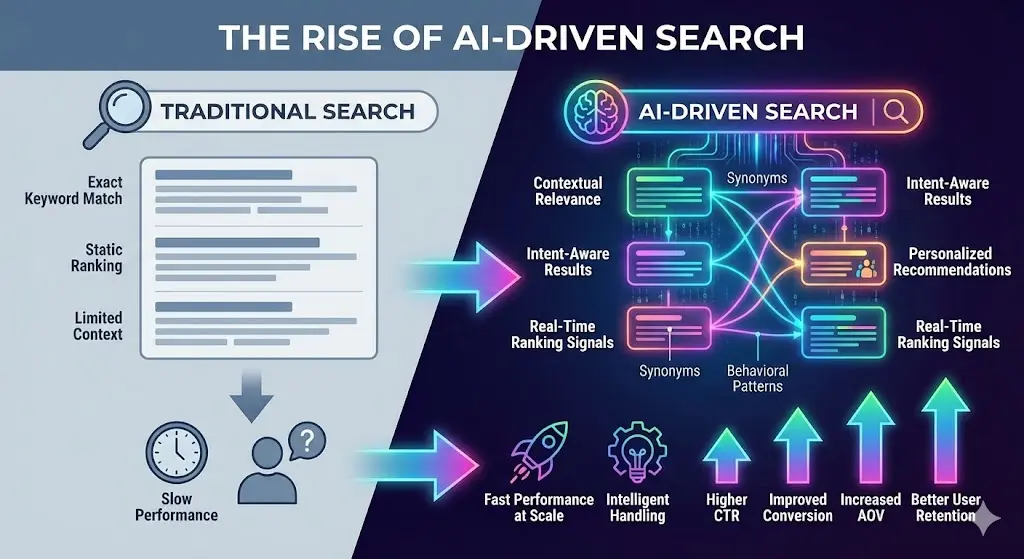
Traditional search systems focus on exact keyword matches and static ranking algorithms. But modern users expect more:
-
Contextual relevance
-
Intent-aware results
-
Personalized recommendations
-
Fast performance at scale
-
Intelligent handling of synonyms, typos, and behavioral patterns
AI search platforms combine machine learning, natural language processing (NLP), behavioral analytics, and real-time ranking signals to meet these demands. They also deliver key business outcomes such as:
-
Higher click-through rates (CTR)
-
Improved conversion rates
-
Increased average order value (AOV)
-
Better user retention
With these strategic requirements, choosing the right vendor becomes a high-impact decision.

Overview: Algolia, Bloomreach, and Constructor.io
Before diving into comparisons, here is a brief introduction to the three rivals in the AI search space:
-
Algolia — A cloud-native search and discovery platform known for its speed, developer-friendly APIs, and customizable ranking models. Algolia powers search experiences across e-commerce, digital content, customer support, and mobile apps.
-
Bloomreach — Positioned as a full digital experience platform (DXP), Bloomreach integrates AI search with merchandising, content management, and customer data. Its AI core focuses on relevance and personalization informed by user behavior data.
-
Constructor.io — A search and recommendations platform built around advanced ranking intelligence. Constructor.io differentiates with strong behavioral learning, machine learning-based relevance tuning, and tools for merchandising control.
Though all three use machine learning and NLP, their strategic focus, integration models, and optimization tools vary significantly.
Core Search Capabilities
Relevance and Ranking
-
Algolia: Offers a robust ranking pipeline where developers can define multiple ranking criteria — including geolocation, business metrics, and custom attributes. Algolia’s relevance tuning is powerful when you have engineering support.
-
Bloomreach: Excels at intent-driven relevance because it combines search signals with comprehensive user behavior across channels. Bloomreach’s AI adjusts ranking weights dynamically based on session behavior and historical interaction data.
-
Constructor.io: Uses machine learning to continuously optimize ranking directly from user interactions. Constructor.io emphasizes adaptive ranking, which can lead to more accurate personalized search results over time.
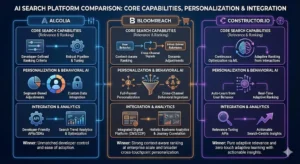
Winner: For pure adaptive relevance, Constructor.io often edges out, but Bloomreach delivers strong context-aware ranking at enterprise scale, while Algolia offers unmatched developer control.
Personalization and Behavioral AI
-
Algolia: Supports personalization through user tokens and segment-based adjustments, but it requires custom data integration and strategy.
-
Bloomreach: Combines search with full-funnel personalization. Because Bloomreach ingests cross-channel behavioral events, it can reflect content affinity, purchase history, and interaction patterns in search results.
-
Constructor.io: Built from the ground up to auto-learn from user behavior. Constructor.io’s engines adapt ranking and recommendations in real time, with minimal manual intervention.
Winner: For zero-touch adaptive learning, Constructor.io is strong. For cross-touchpoint personalization with rich CDP data, Bloomreach’s DXP offers broader personalization.
Integration and Developer Experience
APIs and SDKs
-
Algolia: Known for its developer-friendly APIs, SDKs for most languages, and instant indexing. Teams can launch search quickly and customize ranking logic without heavy backend dependencies.
-
Bloomreach: Requires more configuration and cross-platform alignment but integrates deeply with other Bloomreach modules like CMS and CDP. Implementation is stronger for enterprises seeking an integrated digital platform.
-
Constructor.io: Offers flexible APIs with an emphasis on relevance tuning and machine learning feedback loops. Constructor.io’s integration is straightforward for search, though adding complex pipelines may require technical resources.
Winner: Algolia leads in ease of adoption and developer friendliness.
Analytics, Merchandising, and Insights
-
Algolia: Provides search analytics and dashboards that help optimize ranking, understand search trends, and identify zero-results queries.
-
Bloomreach: Offers a wide set of analytical tools that correlate search behavior with customer journeys, merchandising performance, and content engagement.
-
Constructor.io: Includes analytics focused on relevance scoring, query performance, and recommendation outcomes — often with actionable optimization suggestions.
Winner: For holistic business analytics tied to search impact, Bloomreach is strongest. For actionable search-centric insights, Constructor.io competes closely.
Scalability and Reliability
All three vendors operate on cloud infrastructure designed for high throughput with low latency:
-
Algolia: Extremely fast response times with distributed indexing layers.
-
Bloomreach: Built for enterprise workloads and global performance.
-
Constructor.io: Focused on real-time learning without sacrificing performance.
Winner: All three are competitive, but Algolia tends to be recognized for speed at scale.

Pricing Models and Commercial Considerations
Pricing for AI search platforms varies widely:
-
Algolia: Often usage-based (requests, records, queries), which can scale well for startups or high-control enterprise needs.
-
Bloomreach: Positioned for enterprise clients with bundled digital experience services, leading to higher entry price points.
-
Constructor.io: Flexible tiering with value based on relevance optimization, often favorable for mid-sized commerce sites.
Commercial buyers must weigh total cost of ownership (TCO) against business value delivered — especially in conversion uplift, reduced bounce rates, and improved user engagement.
Use Cases and Best Fit
Here’s a quick guide on which vendor might fit specific organizational needs:
-
Best for Developer-Led Custom Search: Algolia
Organizations that want fast, customizable search APIs with control over ranking and logic. -
Best for Unified Digital Experience: Bloomreach
Enterprises seeking search integrated deeply into personalization, content, and customer journey tools. -
Best for Automated Relevance and Learning: Constructor.io
Platforms that want adaptive AI learning without extensive manual tuning.
Final Thoughts: The AI Search Wars
The competition between Algolia, Bloomreach, and Constructor.io showcases how search has evolved from keyword matching to intelligence-driven discovery. Selecting a search vendor today is no longer a technical detail — it is a strategic business decision that affects customer experience, revenue, retention, and engagement.
Key takeaways:
-
AI ranking and personalization are table stakes, not optional.
-
Developer experience accelerates time to value.
-
Real-time learning impacts long-term relevance.
-
Analytics and merchandising drive better business outcomes.
As commerce, media, and content platforms pursue higher engagement, intelligent search will remain a core differentiator. Whether your priority is developer agility, enterprise integration, or adaptive AI, this vendor showdown highlights that finding the right match is essential for success.
Stay updated on the latest in AI search and digital experience tools by following our deep-dive content on search platforms and optimization strategies.
You may also interseted


