

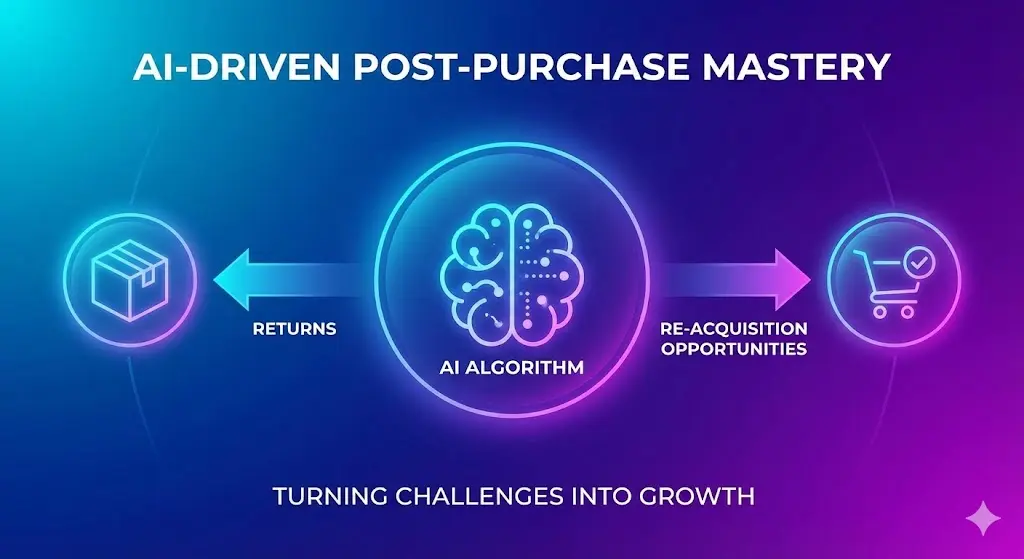
Returns are often seen as a cost center for businesses, a point of friction that impacts profits and customer satisfaction. However, with the rise of artificial intelligence (AI), returns can be reframed as an opportunity to retain and re-engage customers. By understanding customer behavior, analyzing patterns, and applying predictive models, companies can transform returns from a transactional challenge into a strategic advantage.
This article explores how AI can be applied in the post-purchase phase to create re-acquisition opportunities and drive long-term customer value.
Understanding the Post-Purchase Landscape
The post-purchase phase begins the moment a customer completes a transaction. Traditionally, businesses focus on fulfillment, shipping, and handling complaints. Returns often represent a loss, both in revenue and in customer trust. However, every return is also a source of data. Customers provide information about product fit, quality expectations, purchase patterns, and preferences.
AI can analyze this data to identify actionable insights, such as:
Patterns in returns: Which products are most commonly returned and why.
Customer sentiment: Whether a return is likely to indicate dissatisfaction or a temporary issue.
Behavior prediction: Understanding which customers are likely to return or repurchase.
With these insights, businesses can create targeted strategies to not only reduce return rates but also to re-engage customers.
Leveraging AI for Returns Analysis
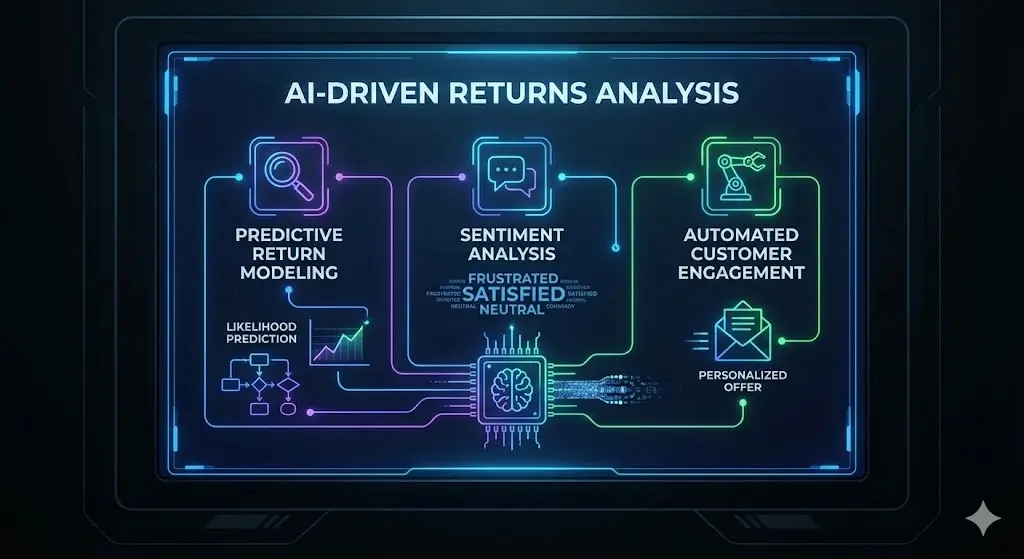
AI-driven analytics can process vast amounts of post-purchase data far faster than traditional methods. Machine learning models can identify patterns and correlations that humans might miss. Key applications include:
1. Predictive Return Modeling
AI can predict the likelihood of a product being returned based on historical data, customer behavior, and product attributes. For example:
Customers who purchase multiple items in one order may have a higher probability of returning some products.
Certain product categories, like apparel or electronics, may have higher return rates.
By anticipating returns, businesses can proactively offer solutions such as personalized sizing recommendations, tutorials, or pre-emptive support. This reduces friction and increases the chance of customer retention.
2. Sentiment Analysis
Natural language processing (NLP), a branch of AI, can analyze customer communication during the return process. Emails, chat messages, and social media comments reveal whether the customer is frustrated, neutral, or satisfied. Businesses can use this insight to tailor responses:
Offer incentives to dissatisfied customers.
Provide personalized recommendations to neutral customers.
Encourage positive engagement from satisfied customers.
By addressing the emotional state of the customer, businesses can turn a return experience into a relationship-building opportunity.
3. Automated Customer Engagement
AI-driven automation allows businesses to reach out to customers with personalized offers, replacement suggestions, or loyalty incentives immediately after a return. For example:
A customer returning a pair of shoes might receive an AI-curated list of alternative styles or sizes.
A returned electronic device could trigger a follow-up email highlighting accessories or complementary products.
Automated engagement ensures that customers feel valued and understood, increasing the likelihood of re-acquisition.
Turning Returns into Re-Acquisition Opportunities
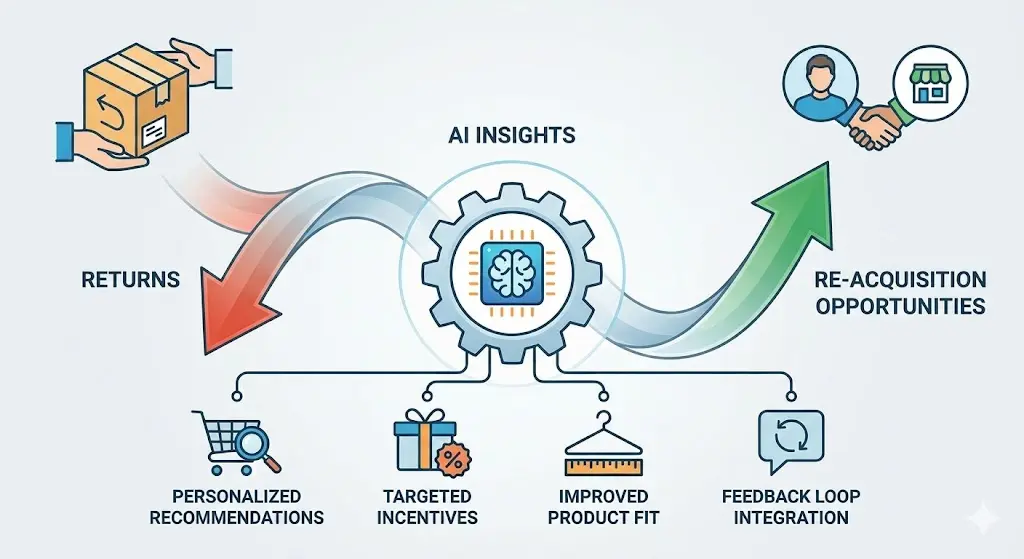
To convert returns into re-engagement opportunities, businesses must combine AI insights with strategic action. Here are practical approaches:
1. Personalized Recommendations
AI can analyze previous purchases, browsing history, and return behavior to suggest products the customer is more likely to keep. Personalized recommendations improve the chance of a successful repurchase.
2. Targeted Incentives
Offering discounts, free shipping, or loyalty points can encourage customers to complete another purchase after a return. AI helps identify which incentives are most effective for specific customer segments.
3. Improved Product Fit
For products that are returned due to size, style, or feature mismatch, AI can provide better pre-purchase guidance in future interactions. This may include sizing calculators, visual product trials, or augmented reality previews.
4. Feedback Loop Integration
AI allows businesses to integrate return reasons and customer feedback into product development and inventory management. By reducing the causes of returns over time, businesses increase customer satisfaction and reduce churn.
Case Example
Consider an e-commerce apparel brand that experiences high return rates for clothing. Using AI, the company analyzes size-related returns and identifies patterns by demographic, previous purchases, and product type. Post-return, the AI system sends a personalized message offering alternative sizes, styling suggestions, and a loyalty discount for a replacement purchase.
The result: the brand turns a potential lost customer into a repeat buyer while gathering valuable data to improve future recommendations.
Benefits of AI-Driven Post-Purchase Strategies
Implementing AI in the post-purchase phase offers several advantages:
Increased Customer Retention: Engaging customers immediately after a return strengthens the relationship.
Reduced Return Costs: Predictive insights and proactive solutions can decrease return frequency.
Enhanced Product Understanding: Continuous data collection informs product development and inventory planning.
Revenue Growth: Re-acquisition strategies convert potential losses into additional sales.
Operational Efficiency: Automation streamlines communication and reduces manual workload.
Steps to Implement AI for Post-Purchase Mastery
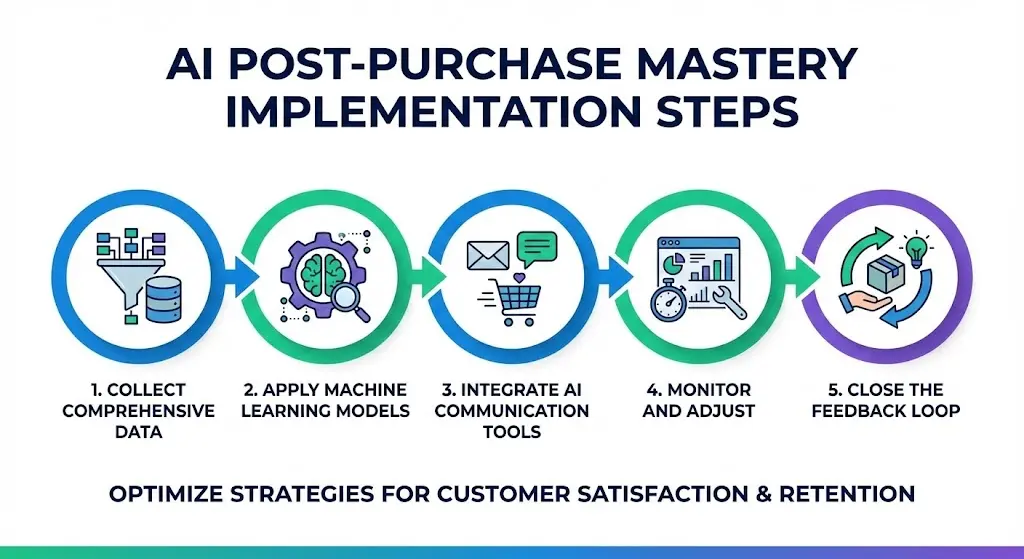
Collect Comprehensive Data: Gather detailed information about purchases, returns, customer communications, and browsing behavior.
Apply Machine Learning Models: Use predictive analytics to identify patterns in returns and repurchase potential.
Integrate AI Communication Tools: Implement automated emails, messages, and personalized recommendations post-return.
Monitor and Adjust: Track metrics such as return frequency, re-acquisition rates, and customer satisfaction to optimize AI strategies.
Close the Feedback Loop: Use insights from returns to improve products, services, and future marketing campaigns.
Conclusion
Returns do not have to be viewed solely as a loss. With AI, businesses can transform the post-purchase experience into an opportunity to retain and re-engage customers. By leveraging predictive modeling, sentiment analysis, and automated engagement, companies can personalize interactions, address customer concerns, and offer tailored solutions that encourage repurchase.
Post-purchase mastery requires viewing returns strategically, understanding customer behavior, and using AI to drive data-informed decisions. The result is a cycle where returns contribute to long-term growth rather than simply representing operational costs. Companies that adopt AI-driven post-purchase strategies are better positioned to improve customer satisfaction, increase retention, and turn potential losses into revenue opportunities.
You may also interseted in this
Dynamic Pricing 2.0: Avoiding the Race to the Bottom with AI Guardrails
