

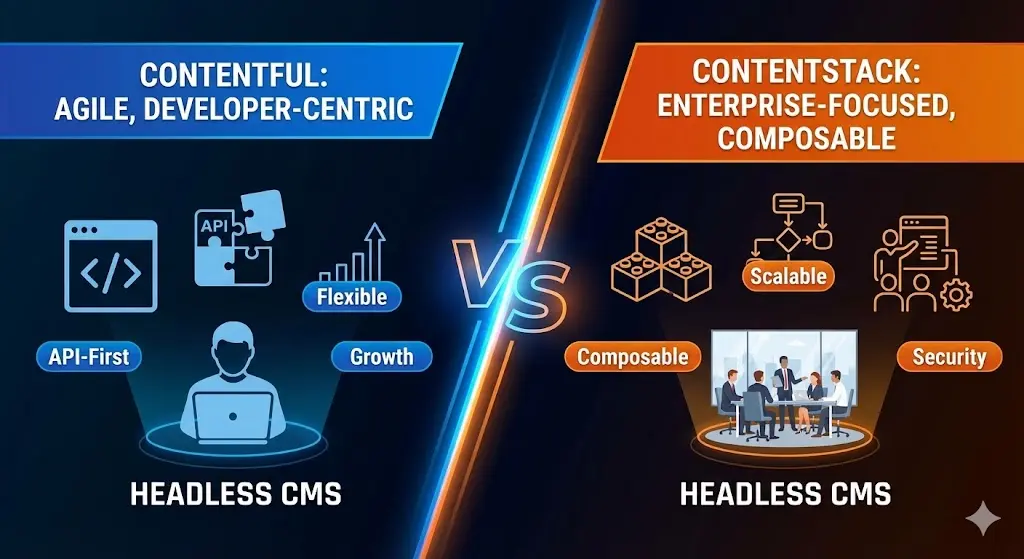
The world of digital content management is evolving at lightning speed. Traditional Content Management Systems (CMS) are no longer sufficient for organizations aiming to deliver content seamlessly across multiple channels, from websites and mobile apps to IoT devices and digital kiosks. Enter headless CMSs, platforms designed to decouple content from presentation, providing developers and marketers with the flexibility to deliver experiences wherever users are.
Among the top contenders in this space are Contentful and Contentstack, two platforms often mentioned in the same breath but with key differences that can significantly affect your project. Choosing the right headless CMS isn’t just about features—it’s about how the platform aligns with your team’s workflow, scalability needs, and long-term digital strategy. This guide provides an unbiased comparison of Contentful vs. Contentstack to help you make an informed decision.
Understanding Headless CMS
Before diving into the comparison, it’s essential to understand what a headless CMS is. Unlike traditional CMS platforms, which combine content management and content delivery, a headless CMS decouples the backend from the frontend. Content is stored in a central repository and delivered via APIs to any channel, giving developers freedom to design user experiences without constraints imposed by the CMS.
The advantages of headless CMS include:
Flexibility: Deliver content to web, mobile, voice assistants, and IoT devices.
Scalability: Handle large volumes of content without being tied to a specific presentation layer.
Future-proofing: Adopt modern frameworks and technologies without replatforming your content.
Contentful and Contentstack are among the leaders in this market, but each offers a distinct approach to headless content management.
Contentful: Agile, Developer-Centric CMS
Overview
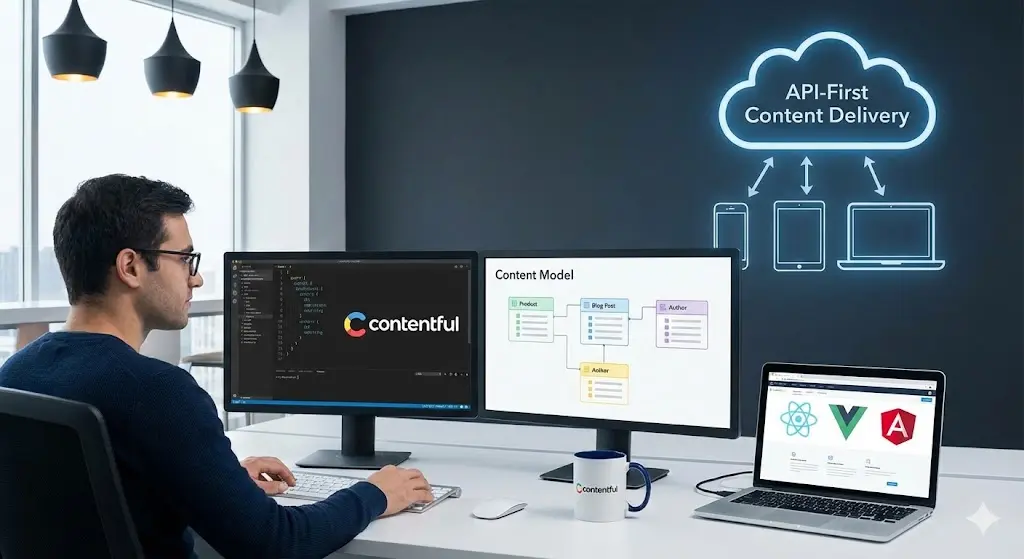
Founded in 2013, Contentful has positioned itself as a developer-first headless CMS. It emphasizes API-driven content delivery, extensive SDK support, and flexibility for teams to integrate with modern development frameworks like React, Vue.js, and Angular.
Key Features
Content Model Flexibility: Contentful allows users to create custom content models tailored to specific business needs. This flexibility makes it ideal for organizations with complex content structures.
API-First Approach: Contentful exposes powerful RESTful and GraphQL APIs, enabling developers to fetch, update, and deliver content across multiple channels seamlessly.
Extensive Integrations: Contentful has a growing ecosystem of integrations, including ecommerce platforms, analytics tools, and marketing automation software.
Collaboration Tools: The platform offers features like localization support, workflow management, and role-based permissions to streamline collaboration between developers, content creators, and marketers.
Cloud-Native: Contentful is fully cloud-based, ensuring scalability and high availability.
Pros
Excellent developer support and documentation
Highly flexible content modeling capabilities
Strong GraphQL API support for modern web apps
Cloud-native architecture for scalability
Cons
Steeper learning curve for non-technical users
Can become expensive at enterprise scale
Some users report UI limitations for content editors
Contentstack: Enterprise-Focused Headless CMS
Overview
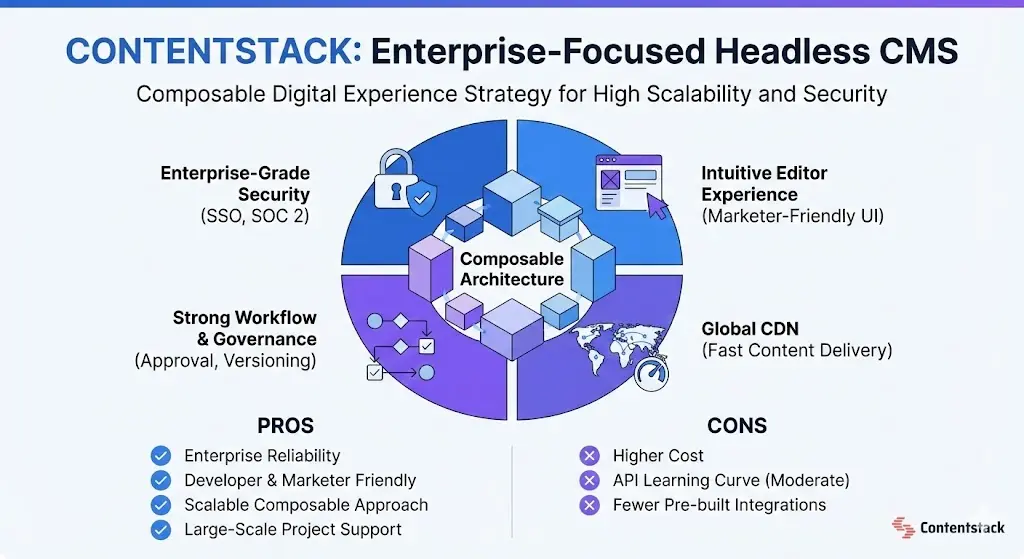
Contentstack, founded in 2013, is often seen as the enterprise-grade headless CMS, focusing on high scalability, security, and support for complex business workflows. It emphasizes a “Composable Digital Experience” strategy, enabling organizations to build multi-channel experiences with modular components.
Key Features
Composable Architecture: Contentstack promotes a composable approach, where digital experiences are built from reusable content blocks and microservices.
Enterprise-Grade Security: Offers robust security features including SSO, two-factor authentication, and SOC 2 compliance.
Intuitive Editor Experience: While developer-friendly, Contentstack also provides a clean and intuitive UI for content creators, allowing marketers to work efficiently without developer intervention.
Strong Workflow and Governance: Advanced workflow capabilities, content versioning, and approval processes make it ideal for large teams and enterprise organizations.
Global CDN: Ensures fast content delivery across regions, crucial for multinational organizations.
Pros
Enterprise-grade reliability and security
User-friendly for both developers and marketers
Composable approach enables scalable, reusable content
Strong support for large-scale multi-channel projects
Cons
Higher cost, particularly for smaller businesses
API learning curve exists but generally less steep than Contentful for developers
Fewer pre-built integrations than Contentful’s ecosystem
Comparing Contentful vs. Contentstack
1. Ease of Use
Contentful: Highly flexible but can be challenging for non-technical users. Editors may need guidance for complex content structures.
Contentstack: Balanced approach—intuitive for marketers while still powerful for developers.
2. Flexibility and Customization
Contentful: Offers unmatched flexibility in content modeling and API integrations. Perfect for projects requiring custom structures.
Contentstack: Focuses on modular composable experiences. Slightly less flexible but excels in structured enterprise workflows.
3. Developer Support
Contentful: Extensive SDKs, documentation, and community support for developers. Excellent for modern JAMstack projects.
Contentstack: Developer-friendly but with more focus on enterprise integration than cutting-edge front-end frameworks.
4. Pricing
Contentful: Offers tiered plans; can become expensive at high content volumes or for enterprise teams.
Contentstack: Enterprise-focused pricing, generally higher than Contentful, but provides robust support and features.
5. Content Delivery Performance
Contentful: Cloud-based with global CDN; performance is generally strong.
Contentstack: Optimized for enterprise-level delivery with strong CDN support and SLAs for large-scale deployment.
6. Best Use Cases
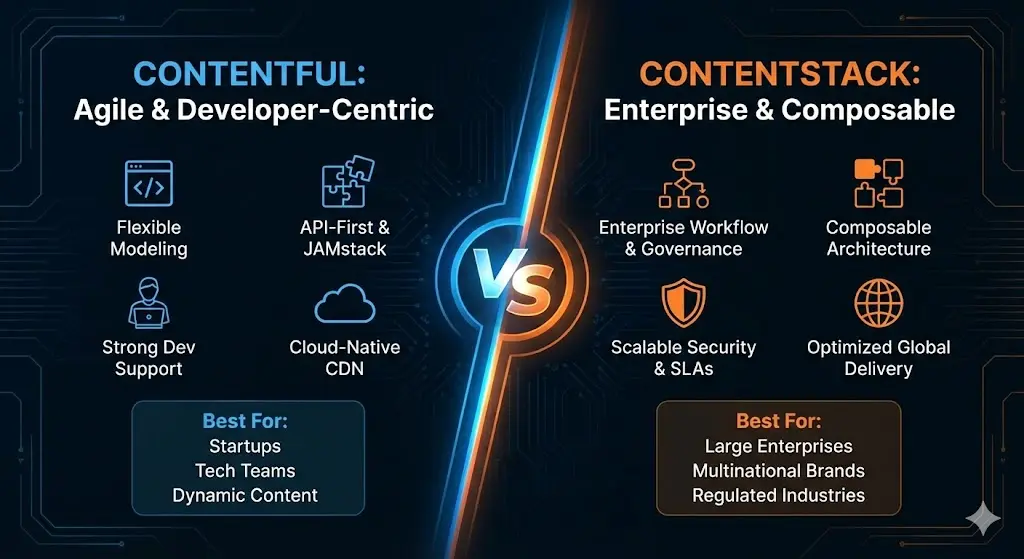
Contentful: Startups, tech-focused companies, SaaS platforms, projects needing flexible APIs and modern front-end integration.
Contentstack: Large enterprises, multinational brands, regulated industries, and projects requiring complex workflows or composable architecture.
Real-World Examples
Contentful: Spotify and Nike use Contentful to manage dynamic content across websites, apps, and marketing campaigns. Its API-driven approach allows seamless integration with modern development frameworks.
Contentstack: Nasdaq and Macy’s rely on Contentstack to manage high volumes of content securely and efficiently across multiple channels, benefiting from enterprise-grade governance and workflow tools.
Making the Right Choice
Choosing between Contentful and Contentstack ultimately depends on your organization’s needs, team structure, and growth ambitions:
Choose Contentful if:
You prioritize developer flexibility and modern front-end frameworks.
You have smaller to mid-sized teams or tech-focused content needs.
You want a platform that grows with your API-driven projects.
Choose Contentstack if:
You are an enterprise-level organization requiring robust governance and workflow.
Security, compliance, and global content delivery are critical.
You want a composable architecture for scalable, reusable content across multiple channels.
Conclusion
Both Contentful and Contentstack are top-tier headless CMS platforms, but they serve slightly different audiences and project scopes. Contentful shines in developer-centric environments, offering flexibility and modern API support. Contentstack excels in enterprise scenarios, providing secure, scalable, and composable content experiences.
Understanding your team’s technical capabilities, your business scale, and your long-term content strategy is critical to selecting the right platform. The best CMS is not necessarily the one with the most features—it’s the one that aligns seamlessly with your business goals, development workflow, and audience needs.
By evaluating your priorities carefully and considering factors such as ease of use, flexibility, developer support, pricing, and performance, you can confidently choose between Contentful and Contentstack and unlock the full potential of your digital content strategy.
