

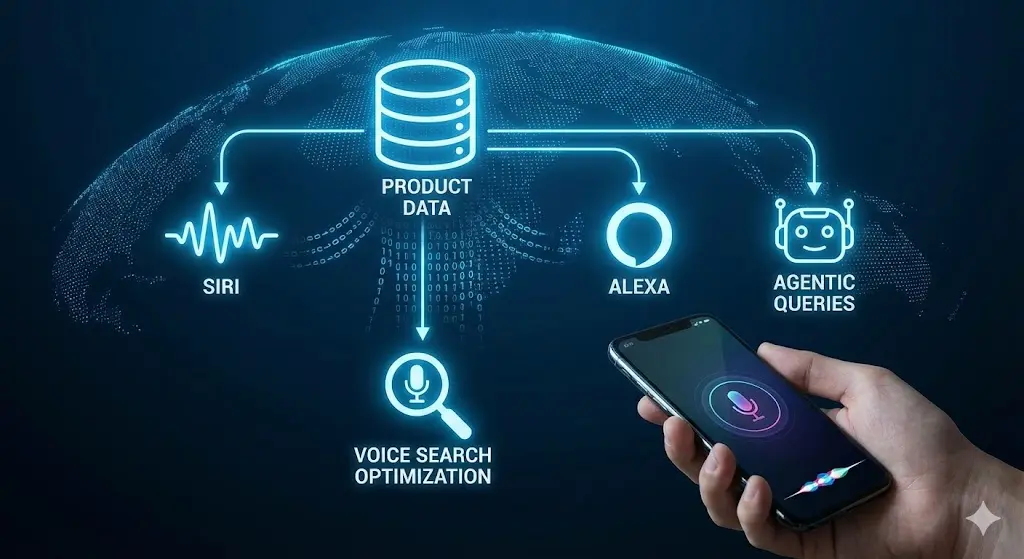
The way consumers search online is undergoing a revolutionary change. With the proliferation of voice assistants like Siri, Alexa, and Google Assistant, traditional text-based SEO strategies are no longer enough. Users increasingly rely on natural, conversational speech to discover products, services, and information. This trend is transforming e-commerce, making voice search optimization and agentic query readiness essential for businesses aiming to maintain visibility and relevance in a rapidly evolving digital landscape.
In this article, we explore advanced strategies for preparing your product data for voice search. You’ll learn how to make your products discoverable through conversational queries, ensure they can be acted upon by AI assistants, and future-proof your e-commerce presence.
Understanding Voice Search and Agentic Queries
Voice search differs fundamentally from typed search. When users speak their queries, they tend to ask full questions in natural language rather than typing a few keywords. For example, someone might type “best running shoes,” but they would ask a voice assistant, “Hey Siri, what are the best running shoes for trail running under $150?”
Agentic queries take this concept a step further. Unlike standard searches, agentic interactions involve the assistant performing an action on behalf of the user. For instance, “Alexa, reorder my favorite coffee pods” requires the system to understand not only the product but also the user’s preferences, purchase history, and contextual intent. Preparing your product data for these queries requires a dual focus: making the data easily understandable by machines while ensuring it answers human questions naturally.
Why Structured Product Data Matters
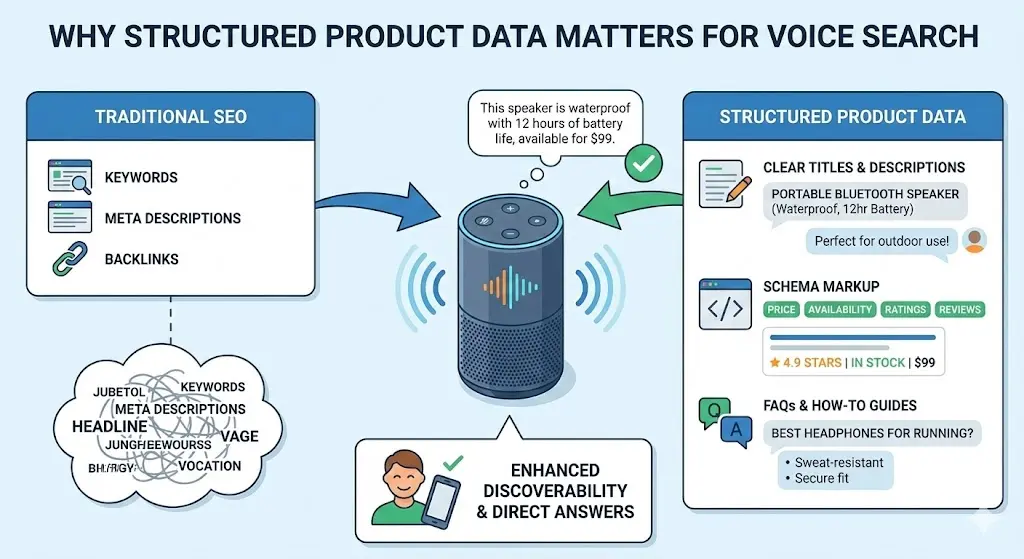
Voice assistants rely heavily on structured product data. Unlike traditional SEO, which often emphasizes keyword optimization, meta descriptions, and backlinks, voice search optimization hinges on clarity and organization. Properly structured product information allows voice assistants to extract precise answers and perform actions effectively.
Key components of structured data include:
Product Titles and Descriptions
Titles should be clear, concise, and conversational. Descriptions should answer common questions about the product, including features, benefits, and use cases. For example, instead of writing “Bluetooth speaker with waterproof feature,” write, “This portable Bluetooth speaker is waterproof and delivers 12 hours of battery life, perfect for outdoor use.” This mirrors how customers would ask questions.Schema Markup
Schema.org structured data is critical. Tag product attributes such as price, availability, ratings, and reviews. Structured data allows voice assistants to display answers directly from your site and improves the likelihood that your product appears in rich results or smart assistant responses.FAQs and How-to Guides
Incorporating Q&A content helps capture long-tail, conversational voice queries. Questions like “Which headphones are best for running?”provide direct answers that voice assistants can pull. Proper formatting—using FAQs, headers, and bullet points—enhances machine readability.
Optimizing for Conversational Keywords
Voice search is inherently conversational. Users do not speak in keywords—they use natural language and context-specific queries. This changes how brands approach keyword research.
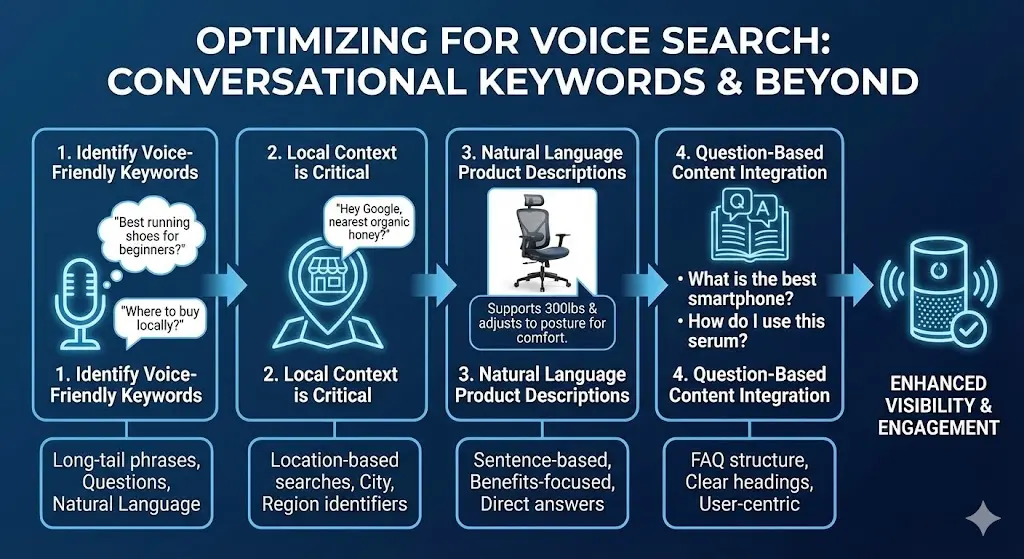
Identify Voice-Friendly Keywords
Traditional keyword tools often focus on short phrases. For voice optimization, prioritize question-based and long-tail phrases. Tools like AnswerThePublic, SEMrush, and Ahrefs can help identify what real users are asking.Local Context is Critical
Many voice searches are location-based. Hey Google, where’s the nearest place to buy organic honey? Optimizing product data with local identifiers such as city, store, or region increases visibility in hyper-local searches.Natural Language Product Descriptions
Convert technical descriptions into natural-sounding sentences. This approach not only benefits voice search but also improves user comprehension and engagement. For example, “This ergonomic office chair supports up to 300 pounds and adjusts to your posture for maximum comfort” answers potential queries directly.Question-Based Content Integration
Structuring content around the questions your audience asks is highly effective. Incorporate headings like “What is the best smartphone under $500?” or “How do I use this skincare serum safely?”
Preparing for Agentic Queries
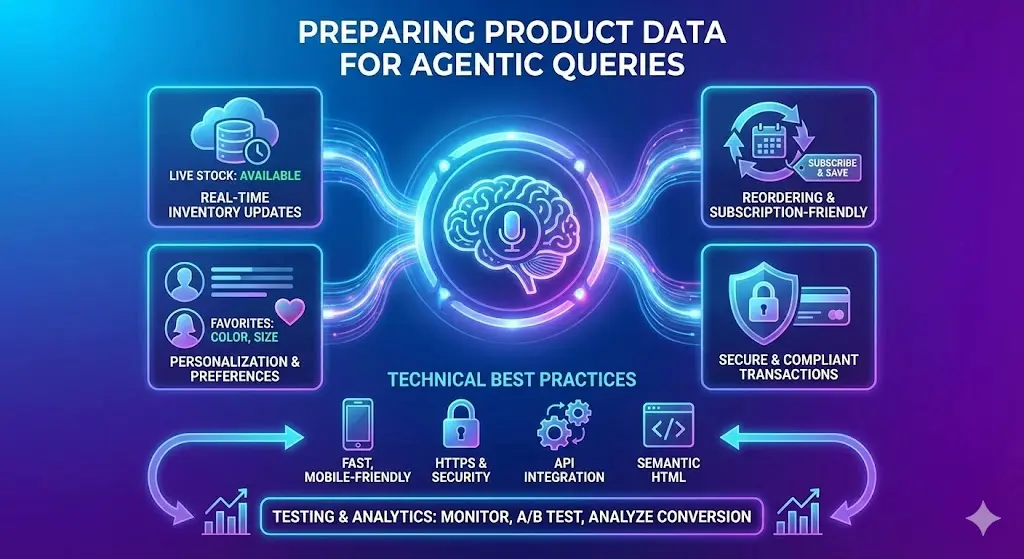
Agentic queries demand that your product data is actionable, not just descriptive. Voice assistants increasingly act as intermediaries, completing purchases, scheduling deliveries, or suggesting products. Optimizing for these interactions involves several advanced steps:
Real-Time Inventory Updates
AI assistants need current product availability. Integrating your e-commerce platform with real-time inventory management ensures users don’t encounter unavailable products when making requests.Reordering and Subscription-Friendly Products
Many agentic actions involve recurring purchases. Clearly tag reorderable items and subscription options. This enables assistants to recommend or process repeat orders seamlessly.Personalization and User Preferences
Agentic queries often rely on past behaviors, purchase history, and preferences. Providing metadata that supports personalization—such as favorite colors, sizes, or preferred shipping options—improves the likelihood your products are selected in voice-assisted interactions.Secure and Compliant Transaction Information
Security is critical. Voice commerce requires clear handling of payment and user authentication to ensure a smooth, safe transaction. Include proper metadata for secure payments and compatible checkout options where possible.
Technical Best Practices
Optimizing for voice search isn’t only about content—it requires technical precision.
Fast, Mobile-Friendly Websites: Voice searches often occur on mobile devices. Ensure pages load quickly and are optimized for mobile responsiveness.
HTTPS and Security: Secure sites build trust with voice assistants and users alike.
API Integration for Assistants: Use APIs like Alexa Skills Kit, Google Actions, or SiriKit to provide dynamic, real-time product information.
Semantic HTML: Proper use of headings, lists, and structured content improves machine readability and ensures assistants can parse content correctly.
Testing and Analytics
Voice optimization is an ongoing process. Continuous testing and analysis allow you to refine your strategy.
Monitor Voice Queries
Track the type of questions users ask through analytics platforms. Tools like Google Search Console can highlight long-tail queries. Alexa Skills and SiriKit may offer usage analytics for interactions with your products.A/B Testing Product Descriptions
Experiment with conversational phrasing, structured FAQs, and schema enhancements to determine what drives the best results in voice searches.Analyze Conversion Metrics
Track how voice-assisted queries lead to purchases or subscriptions. Insights can guide refinements in metadata, content, and personalization strategies.
The Future of Voice-Driven Commerce
Voice search and agentic queries are no longer futuristic concepts—they represent the present direction of digital commerce. AI assistants are becoming increasingly intelligent, handling complex, multi-step actions on behalf of users. Brands that prepare for this reality gain a competitive edge, improving visibility, engagement, and conversions.
Emerging trends suggest further integration between AI assistants, augmented reality, and IoT devices. Imagine a user saying, “Siri, order the same groceries I bought last week,” and having the assistant coordinate inventory across smart fridges, local stores, and delivery schedules. Businesses that optimize product data now will be ready to participate in this fully integrated ecosystem.
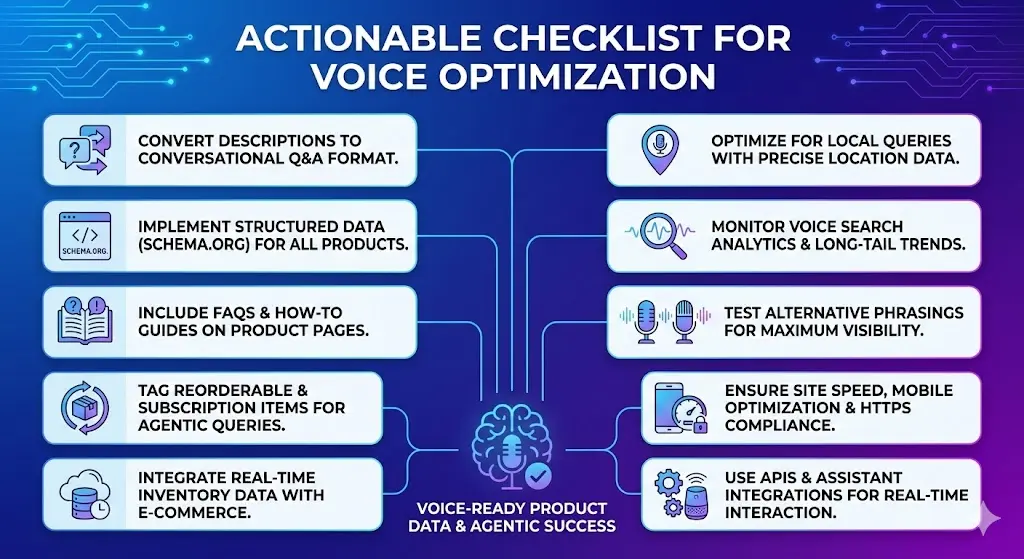
Actionable Checklist for Voice Optimization
Here’s a practical guide for preparing your product data:
Convert all product descriptions to conversational, question-answer formats.
Implement schema.org structured data for all products.
Include FAQs and how-to guides on key product pages.
Tag reorderable and subscription-ready items for agentic queries.
Integrate real-time inventory data with e-commerce platforms.
Optimize for local queries with precise location data.
Monitor voice search analytics and long-tail query trends.
Test alternative phrasings for maximum voice search visibility.
Ensure site speed, mobile optimization, and HTTPS compliance.
Use APIs and assistant-specific integrations for real-time interactions.
Conclusion
Voice search optimization is no longer a supplementary marketing strategy—it is a necessity. By preparing product data for both conversational queries and agentic actions, businesses can ensure their products are discoverable, actionable, and competitive in an AI-driven marketplace. Structured data, natural language content, personalization, and technical precision are all critical components of a successful strategy.
Brands that adopt a voice-first approach today will be better positioned for the future, capturing the attention of users who increasingly rely on AI assistants for search, shopping, and decision-making. When a user says, “Hey Google, order the best wireless earbuds available near me,” your products should be among the first the assistant recommends—and capable of being purchased seamlessly.
Optimizing for voice search and agentic queries isn’t just about visibility—it’s about creating a frictionless, intelligent, and highly personalized shopping experience for every customer.
