

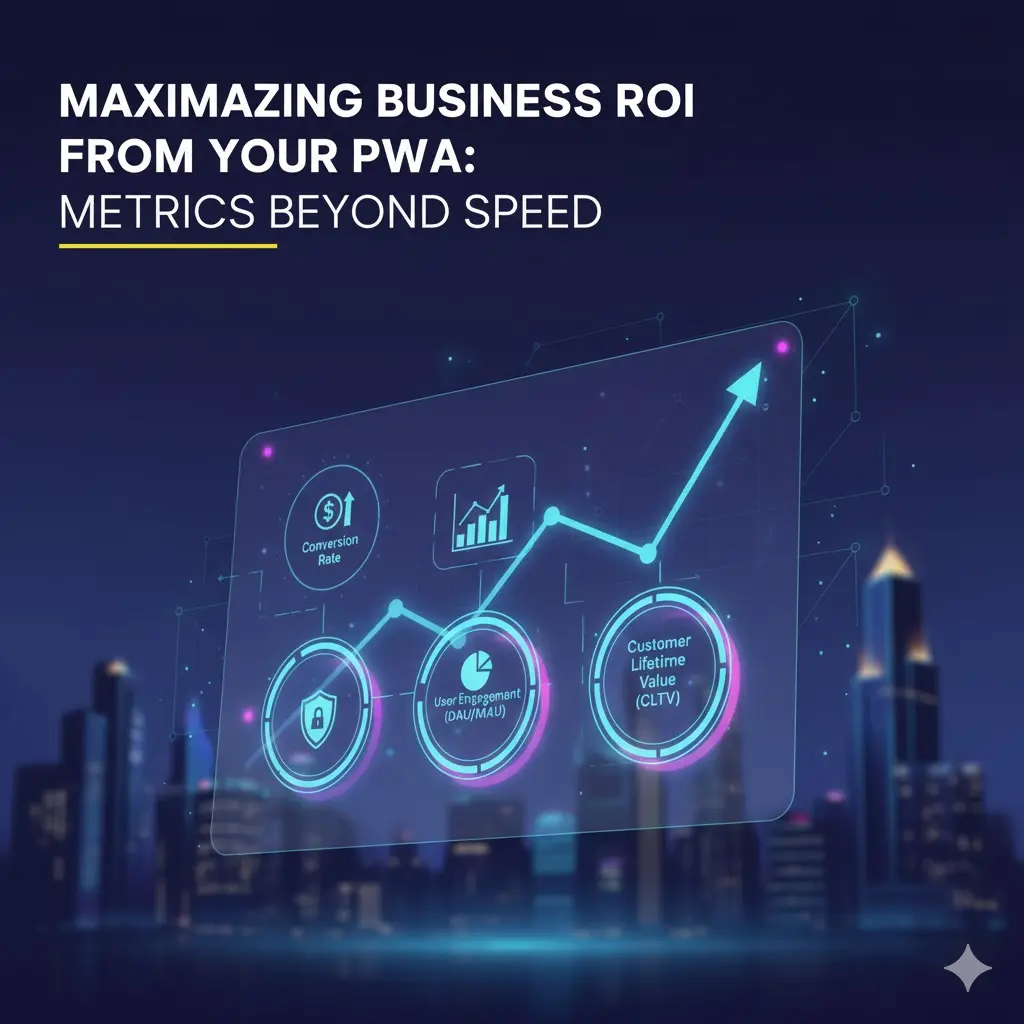
In today’s digital-first world, businesses are constantly seeking ways to deliver exceptional user experiences while maximizing operational efficiency. Progressive Web Apps (PWAs) have emerged as a transformative technology that bridges the gap between web and native mobile applications, offering high performance, offline capabilities, and app-like experiences directly through the browser. While speed and performance improvements are often touted as the primary benefits of PWAs, the true return on investment (ROI) extends far beyond mere load times. For businesses evaluating PWA adoption, understanding and measuring the tangible and intangible benefits is critical for strategic decision-making.
Understanding Progressive Web Apps (PWAs)
PWAs are web applications designed to deliver native app-like experiences without requiring installation from an app store. They leverage modern web technologies like Service Workers, Web App Manifests, and Push Notifications to provide offline functionality, fast loading speeds, and engagement features traditionally associated with native apps.
Key characteristics of PWAs include:
Offline Access: Users can access content even without a stable internet connection.
Fast Loading and Smooth Performance: PWAs are optimized for speed and reliability, reducing bounce rates.
Push Notifications: Direct engagement with users without relying on email or SMS.
Cross-Platform Compatibility: A single PWA can run on multiple devices and operating systems.
Lightweight and Installable: Unlike native apps, PWAs consume minimal storage and can be “installed” from the browser.
While these features contribute to a better user experience, they also have far-reaching implications for business ROI.
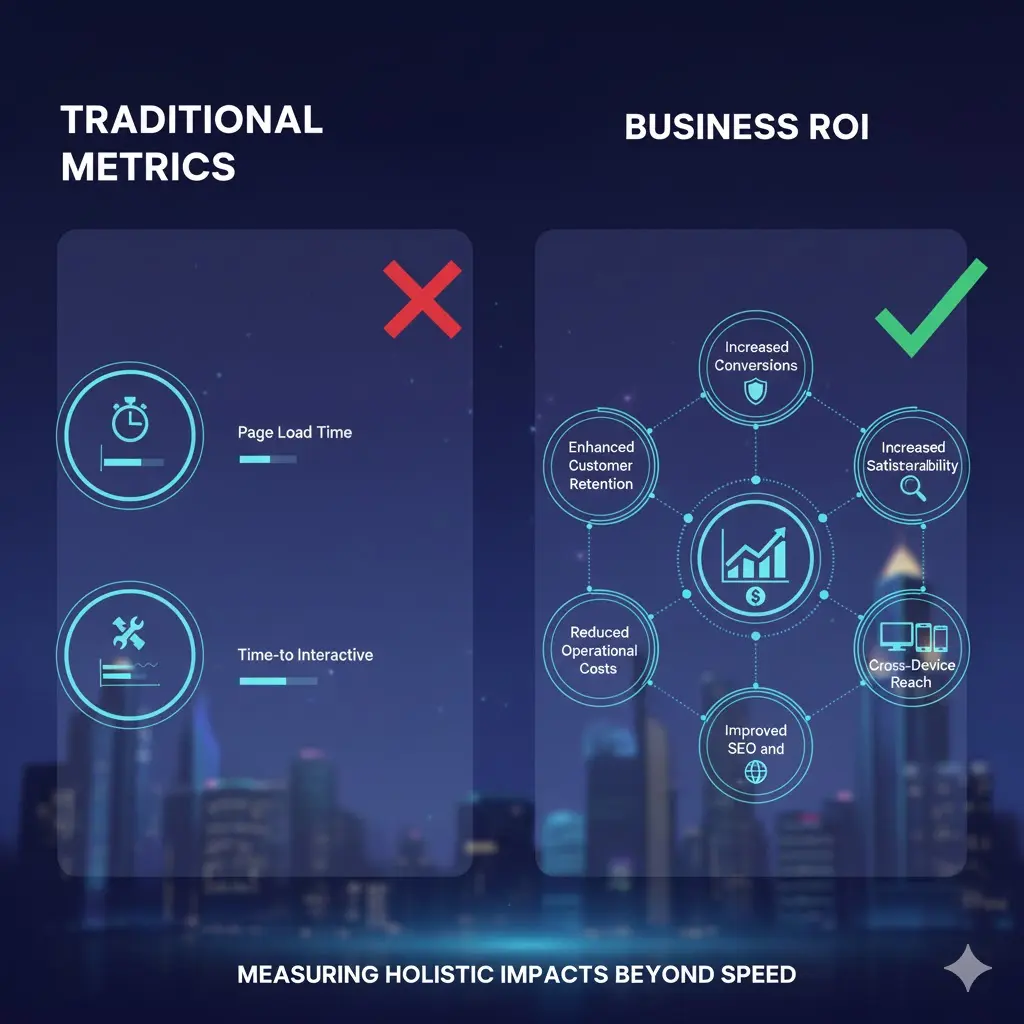
Traditional Metrics vs. Business ROI
Many businesses initially measure PWA success based on performance indicators like page load time or time-to-interactive. While these metrics are important, they do not capture the full financial or strategic impact of implementing a PWA. True ROI encompasses both direct and indirect benefits, including:
Increased Conversions: Faster, more reliable experiences reduce friction in the customer journey, leading to higher conversion rates.
Enhanced Customer Retention: Push notifications, offline access, and seamless performance improve engagement and retention over time.
Reduced Operational Costs: A single PWA can replace multiple native apps for different platforms, saving development and maintenance costs.
Improved SEO and Discoverability: PWAs are indexable by search engines, which boosts organic traffic and reduces marketing spend.
Cross-Device Reach: PWAs can run on desktops, tablets, and smartphones, expanding your audience without additional development effort.
To accurately measure ROI, businesses must go beyond speed metrics and evaluate these holistic impacts.
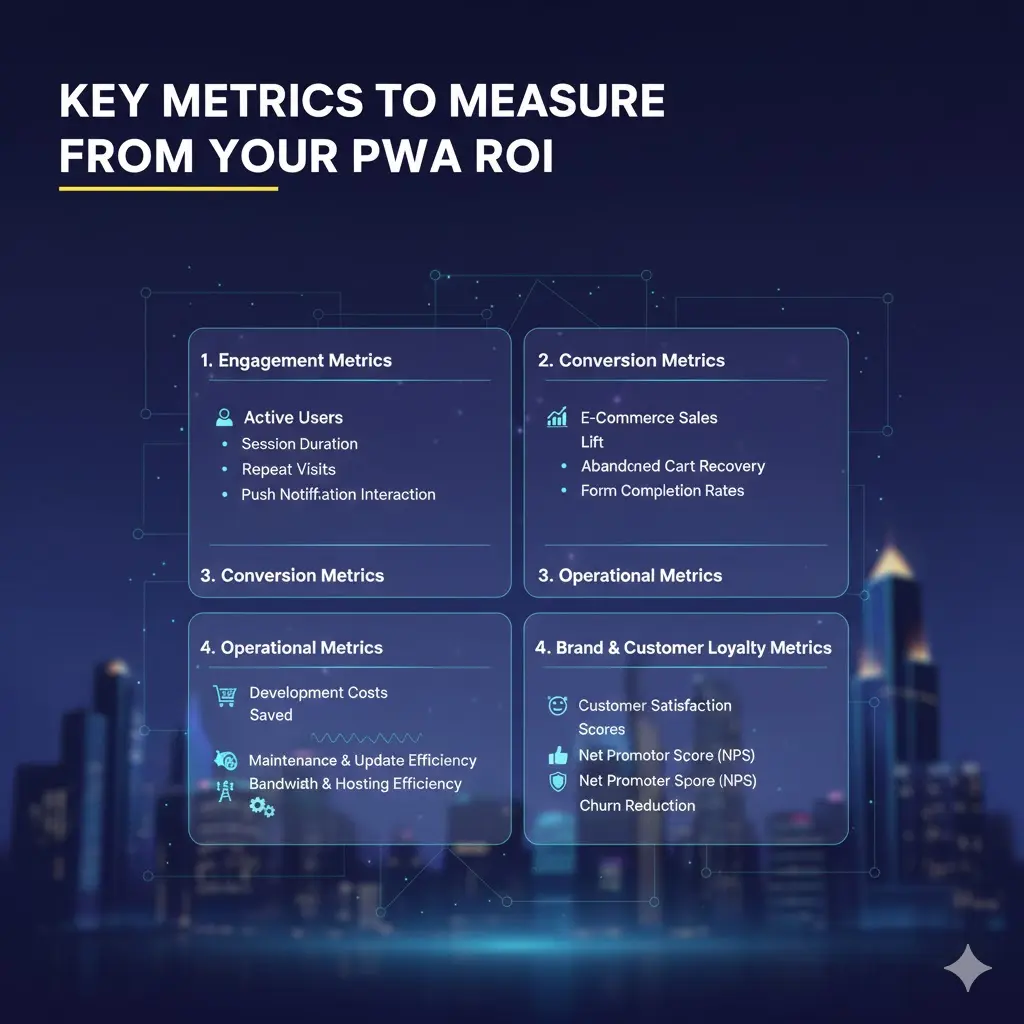
Key Metrics to Measure PWA ROI
To quantify the business benefits of a PWA, companies should track both quantitative and qualitative metrics.
1. Engagement Metrics
Active Users: Monitor the number of users engaging with the PWA on a daily or monthly basis.
Session Duration: Longer sessions indicate that users find the app valuable and engaging.
Repeat Visits: High repeat usage demonstrates strong retention and user loyalty.
Push Notification Interaction: Track click-through rates for notifications sent via the PWA.
2. Conversion Metrics
E-Commerce Sales Lift: Compare revenue before and after PWA deployment for digital commerce platforms.
Abandoned Cart Recovery: PWAs can reduce cart abandonment by loading faster and sending push reminders.
Form Completion Rates: Improved load times and offline capability can increase submission rates for lead forms.
3. Operational Metrics
Development Costs Saved: Calculate savings from building a single cross-platform PWA versus multiple native apps.
Maintenance and Update Efficiency: PWAs allow instant updates without app store approvals, reducing ongoing costs.
Bandwidth and Hosting Efficiency: PWAs are lightweight, consuming less server and network resources.
4. Brand and Customer Loyalty Metrics
Customer Satisfaction Scores: Conduct surveys to assess user satisfaction post-PWA implementation.
Net Promoter Score (NPS): Measure the likelihood of users recommending your service after experiencing the PWA.
Churn Reduction: Track decreases in customer attrition due to improved user experiences.
Case Studies Demonstrating PWA ROI
Several industry leaders have successfully implemented PWAs and reported measurable business benefits:
E-Commerce Brands: Companies saw increases in conversion rates of 20-70%, primarily due to faster load times and streamlined checkout experiences.
Travel Platforms: Airlines and travel portals reported reduced bounce rates by over 40% and higher engagement with push notifications for flight updates.
Media and News Outlets: PWAs enabled offline reading and faster article loads, leading to higher session times and increased ad revenue.
These examples demonstrate that speed alone does not define PWA ROI; engagement, retention, and operational efficiencies play a critical role.
Calculating Your PWA ROI
To calculate ROI effectively, businesses should use a formula that considers both cost savings and revenue gains:
ROI (%) = [(Revenue Increase + Cost Savings – PWA Implementation Costs) / PWA Implementation Costs] × 100
Include metrics like reduced development costs, increased sales, lower churn, and marketing savings in the calculation. Qualitative benefits, such as brand loyalty and user satisfaction, while harder to quantify, should also factor into strategic evaluations.
Conclusion
Progressive Web Apps are far more than just a speed optimization tool—they are strategic assets that can transform how businesses engage with users, drive conversions, and reduce operational overhead. To truly measure the ROI of your PWA, businesses must move beyond traditional performance metrics and consider holistic benefits: engagement, conversions, customer retention, cost efficiency, and brand loyalty.
By tracking these metrics and aligning PWA outcomes with business objectives, companies can demonstrate the real financial and strategic value of their PWA investments, ensuring that this modern web technology contributes meaningfully to long-term growth and competitiveness.
